Monumental Wright Brothers memorial hidden at RDU may get higher profile
AI-generated summary reviewed by our newsroom.
- Triangle Icon sculpture located in a place where most RDU visitors miss it.
- Two men involved in creating the memorial now trying to persuade RDU to move it.
- Airport road expansion make relocation likely, says president and CEO.
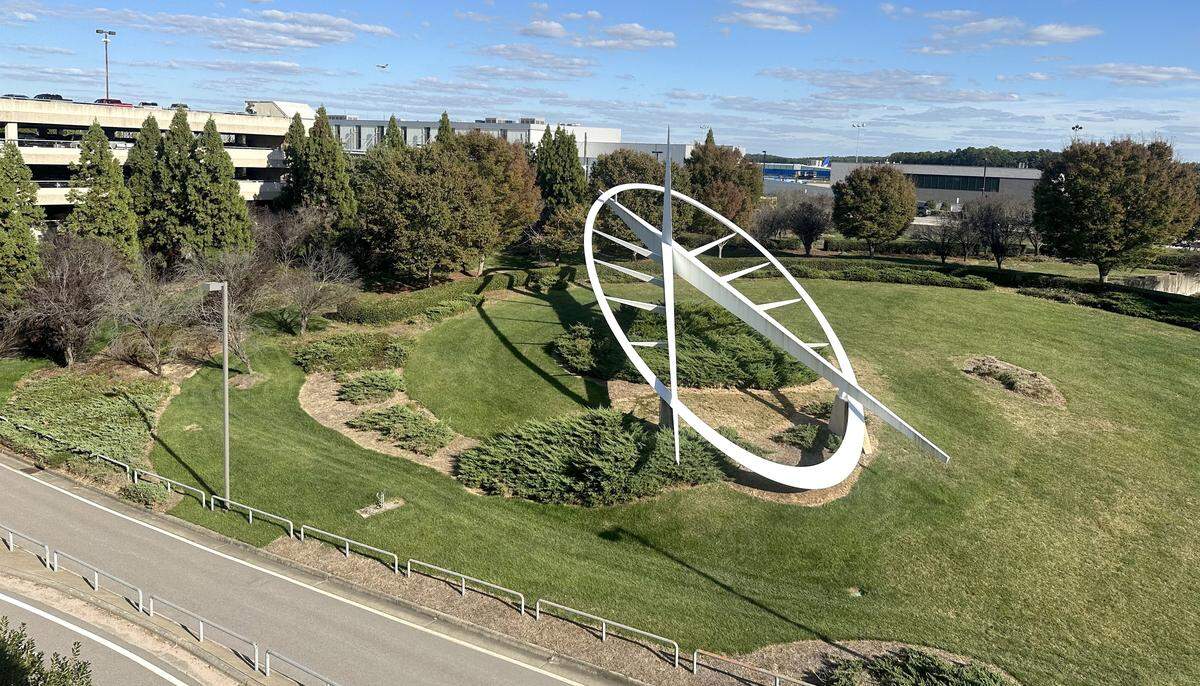
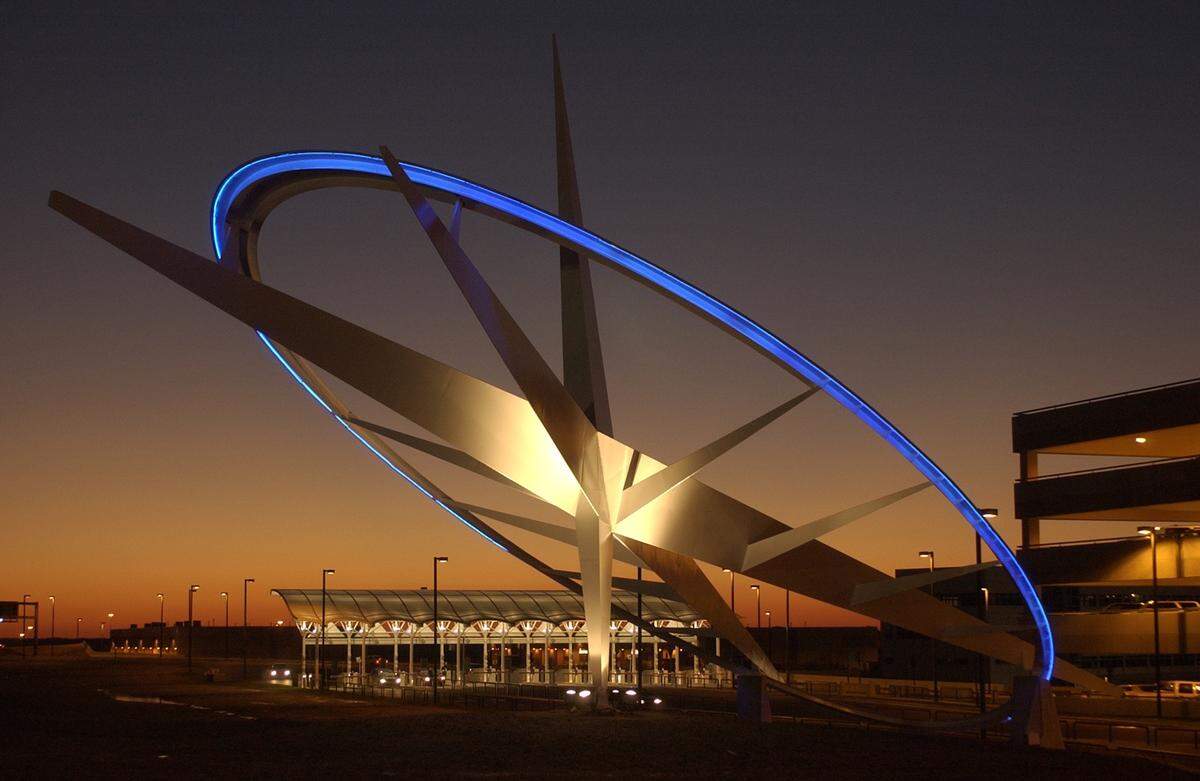
The Triangle Icon at Raleigh-Durham International Airport shouldn’t be hard to miss. The steel monument commemorating the Wright Brothers’ first flight at Kitty Hawk is a 120-foot elliptical ring connected to a 50-foot tower by a pair of giant wings.
But many airport visitors have probably never seen the sculpture, which was unveiled in 2003 on the centennial of the first powered flight.
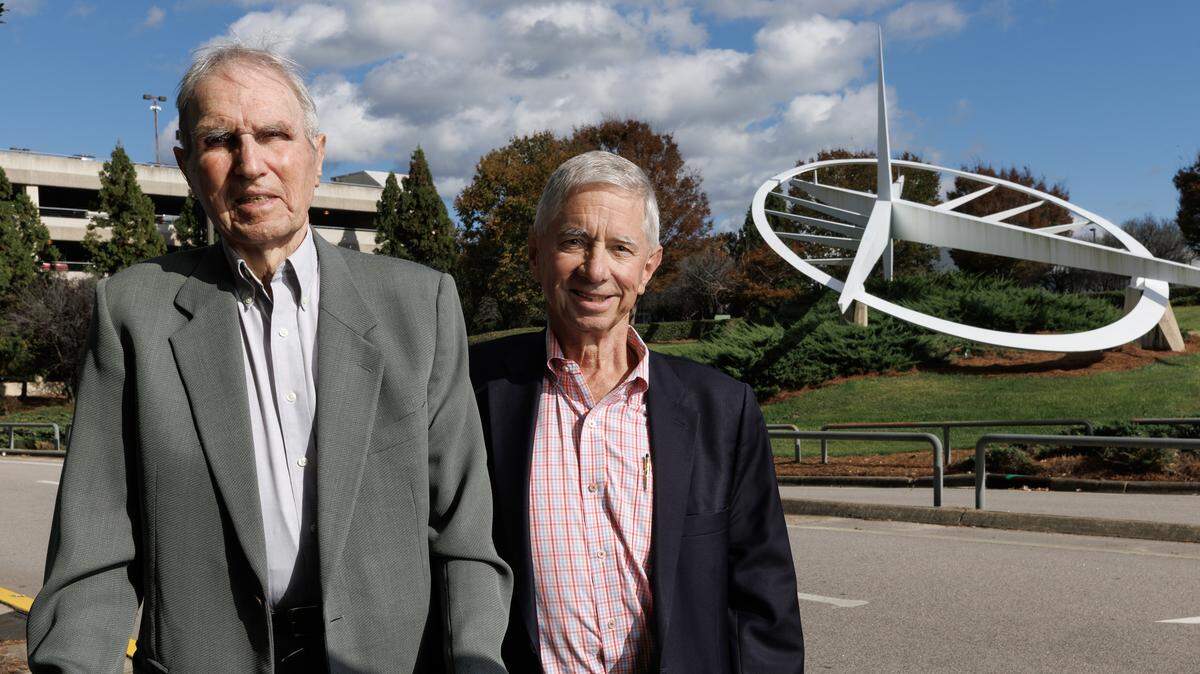
Ben Taylor and Thad Woodard are trying to change that.
The two men were the driving force behind the creation of the monument starting in the late 1990s. Now they are trying to get it moved, to give it more prominence.
“We need to put it where the maximum number of people can access it and see it and visit it,” says Taylor, a retired Raleigh architect.
Taylor and Woodard, the retired president of the N.C. Bankers Association, have never been happy with where the Triangle Icon ended up. It stands down a hill from John Brantley Boulevard, the road that circles the airport campus, across from what is now known as Terminal 1.
The airport visitors with the best view of Triangle Icon are those entering the airport’s massive parking deck. The monument was actually oriented to face the deck’s entrance, with its back to the road and what was then Terminal A.
John Brantley, the longtime airport director for whom the road is named, said at the time that the placement was in part to acknowledge the importance of parking revenue to the airport.
“The Icon was sited in this location so it would be visible to all vehicles approaching Terminal A and the vehicles entering the garages,” Brantley told The N&O. “And to complement the garages.”
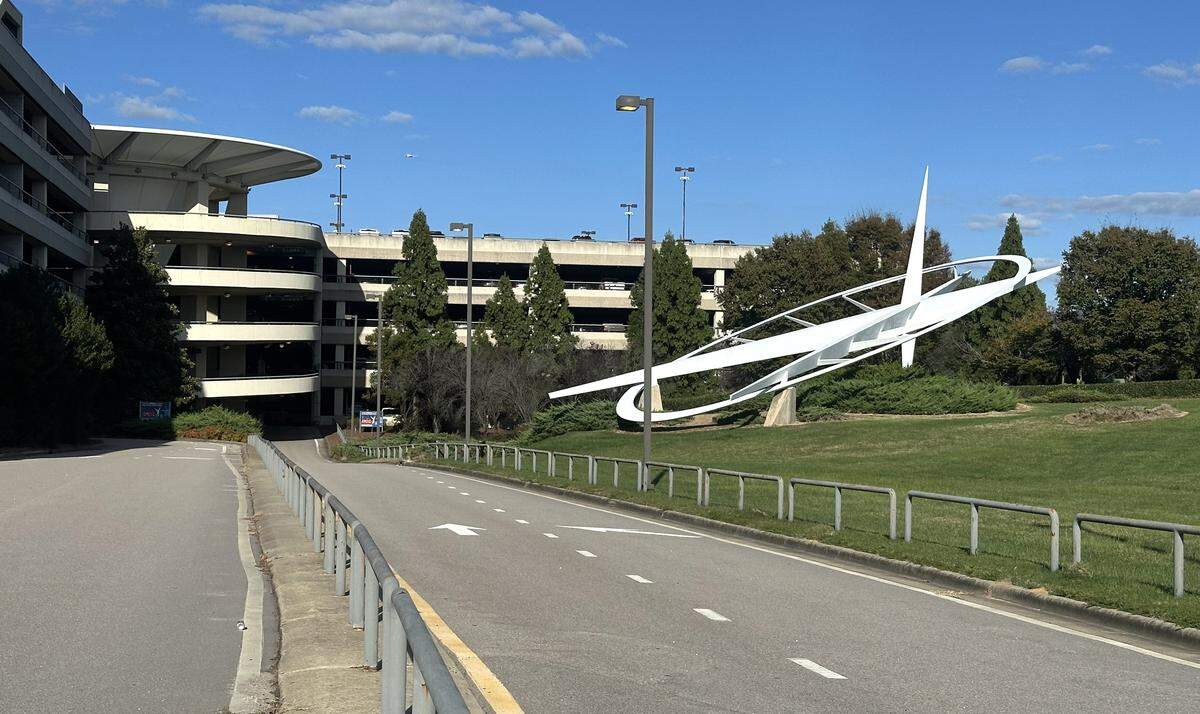
Over the years, growing trees and bushes have obliterated any view of the monument from the road. That means the only people who can see it are those entering the parking deck, if they happen to glance over.
“They put it where it cannot be easily seen,” Woodard says. “Our focus is to give that thing some air. It’s time to move the monument where people can see it and know that it’s a Wright Brothers monument.”
A monument to honor NC’s connection to flight
Triangle Icon was initially part of a much more ambitious proposal to commemorate 100 years of flight. The state’s First Flight Centennial Commission, of which Woodard was chairman, also envisioned a museum and cultural center at RDU that would link the Wrights’ achievement with the high-tech work being done at Research Triangle Park and elsewhere in the state.
Taylor and Woodard also suggested RDU be renamed after the Wright Brothers. They had hoped the airport could simply be called Wilbur and Orville Wright International Airport and become WOW instead of RDU, except that three-letter federal code was already assigned to the airport in Willow, Alaska.
At one point, they envisioned an anniversary celebration at the airport that would feature Neil Armstrong arriving at the controls of a replica of the Wright Flyer and meeting the North Carolina governor. Together, they would add the names Wilbur and Orville Wright to RDU.
Economic and other realities forced the centennial commission to scale back its ambitions, but the monument idea took root. Taylor and Woodard helped persuade the airport and the four governments that own it — Raleigh, Wake County and Durham city and county — to help cover the $500,000 cost.
Triangle Icon was designed by Wellington Reiter, an architect then working at the Massachusetts Institute of Technology. Reiter’s design included nods to the Wright Brothers; the wings symbolize flight, of course, and the ring is 120 feet across at its longest point, the same distance as that first powered flight on the North Carolina dunes.
“Each viewer will have their own interpretation,” Reiter said in 2002. “But in our experience, abstract forms will stand the test of time.”
A move is likely, airport president says
Taylor and Woodard think now would be a good time to move Triangle Icon, while the airport is going through so many changes. In addition to a new runway, RDU is expanding Terminal 2, widening John Brantley Boulevard and planning a new ground transportation center and larger Terminal 1.
Turns out they’re right about the timing. The changes to John Brantley Boulevard will likely involve expanding the road’s footprint near the monument, said Michael Landguth, RDU’s president and CEO.
“I think we’re going to have to move it,” Landguth said.
There are two options, both of which would make it easier for people to see the monument, Landguth said.
One option would keep it along John Brantley Boulevard but down the road a bit on higher ground. The other is to find a spot at the main entrance to the airport.
“The roadway design is not totally complete yet,” Landguth said. “We’re trying to shoehorn it in. We think we can do it, but I don’t want to commit until we’re sure.”
Woodard says he’s ridden around RDU with Landguth looking at the potential locations for Triangle Icon and says he’s encouraged.
“There are some high places, and the traffic it will get once it’s on its feet is tremendous,” he said. “People will say, ‘Oh my goodness, where did that come from? And who is that honoring?’ Again, in the state where man first flew, and in the state of innovation which gave rise to places like RTP, it’s emblematic of all of that.”