
Domestic violence homicides are on the rise in NC. Could a red flag law stop it?
AI-generated summary reviewed by our newsroom.
- With domestic violence homicides on the rise, some say a red flag law could help.
- Red flag laws allow firearms to be temporarily taken from those deemed dangerous.
- The recent mass shooting in Southport led Gov. Stein to endorse such a law.
READ MORE
Domestic violence in NC
Domestic violence is on the rise in North Carolina, according to the North Carolina Coalition Against Domestic Violence, which tracks domestic violence-related homicides in the state. Here’s a closer look at the stories behind the violence, possible solutions and resources if you need help.
Expand All
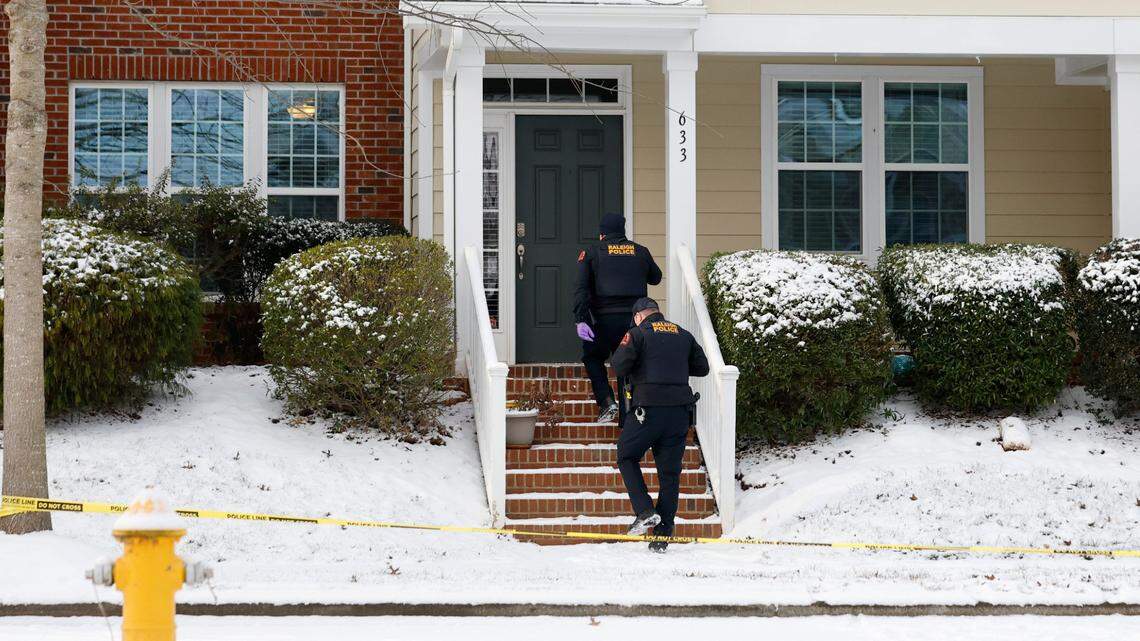
Homicides tied to domestic violence are up in NC. What this means in the Triangle

She survived domestic violence for 11 years. In one night, he stole her future.
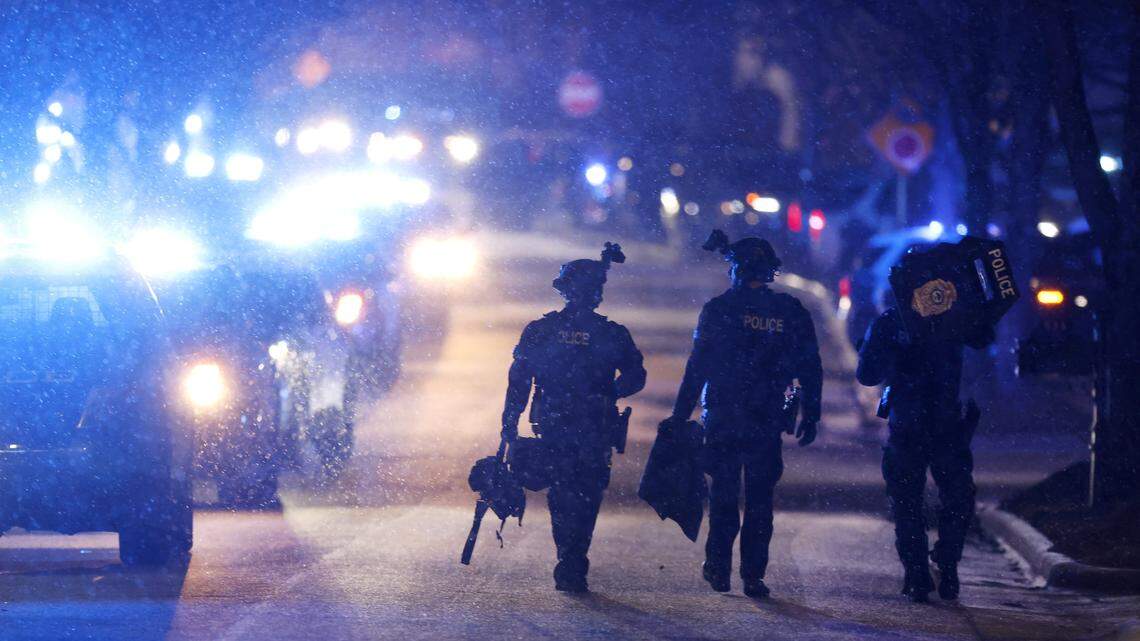
Domestic violence homicides are on the rise in NC. Could a red flag law stop it?
Experiencing domestic violence in the Triangle? These resources can help

How to tell if you are in an abusive relationship, and how to safely leave
In conversations about domestic violence and gun violence, one possible solution has grown especially popular: extreme risk protection orders, commonly known as red flag laws.
Jeffrey Swanson, a psychiatry and behavioral science professor at the Duke University School of Medicine, describes such orders as a “very flexible, targeted tool” that allows law enforcement officers to remove firearms from the homes of people who pose a risk to themselves or others.
Here’s how a typical extreme risk protection order works:
- First, a petitioner, commonly a family member or police officer, goes before a judge to request the firearms’ removal. The petitioner must provide evidence that the gun owner is a danger to themself or others.
- Next, if the evidence is convincing, the judge can order the temporary removal of the gun owner’s firearms. Law enforcement will then carry out that order.
- Finally, in a few days (the exact timeframe is up to state law), the gun owner must appear for a hearing to present their side. The judge will then decide whether to extend that temporary order for firearm removal for six months to a year or return the firearms to their owner.
The first red flag law in the U.S. was implemented in Connecticut in 1998. The bulk of states with such laws passed them after the 2018 mass shooting at Marjory Stoneman Douglas High School in Parkland, Florida, in which 17 people were killed and 18 others were injured, according to The Trace.
The laws seek to address what many see as a loophole in current domestic violence protective order practices, according to April Zeoli, the director of the policy arm of the University of Michigan’s Institute for Firearm Injury Prevention.
In North Carolina, there’s no requirement for law enforcement to search someone’s home for firearms when they’re the subject of a protective order — it’s a matter of the honor system until the court is otherwise informed of a violation. Officers often must rely on the gun owner’s word when they affirm they’re surrendering all their firearms after the initial order is served.
“Law enforcement doesn’t go knocking on the door to see if they have any more firearms to temporarily hand over,” Zeoli said. “It just doesn’t happen.”
What states have red flag laws?
More than 20 states and two U.S. territories have red flag laws, according to Zeoli. Most are too new to know if they help in domestic violence cases, she said.
They have been shown to decrease the risk of suicide. Swanson helped lead a study that looked at Connecticut and Indiana, where the orders were most often issued over concerns about self-harm.
“We calculated … that for every 10 to 20 of these gun-removal actions, one life was saved,” he said.
Whether that’s a return on interest North Carolinians would embrace remains to be seen. State Rep. Marcia Morey of Durham and Sen. Woodson Bradley of Charlotte, both Democrats, support having red flag laws in the General Assembly, but many Republicans are concerned about potential overreach, they told The News & Observer.
Morey has introduced red flag bills at least three times since the Parkland shooting to no avail, records show.
“Unfortunately, it’s pretty much taken party lines,” said Morey, a former district court judge. “It’s hard to cross party lines, but I hope that will dissolve itself soon and people will realize how important it is to save lives.”
Orange County Sheriff Charles Blackwood said he’s not convinced such a measure would succeed in North Carolina unless the criteria for classifying someone as an extreme risk are narrow.
“To say it can be better fine-tuned to make it a good idea certainly is something that I would be open to,” Blackwood said.
For Bradley, a concealed carry permit holder and a domestic violence survivor, the Republican resistance to what she considers a common-sense safety measure is frustrating. In an attempt to emotionally connect with her colleagues across the aisle, Bradley took to the Senate floor to share an incident of sexual and physical abuse she said she only survived because the perpetrator didn’t have a gun.
Afterward, a Republican senator hugged Bradley and thanked her for her openness, but added they’d never see eye-to-eye on gun policy, Bradley recalled.
“That was soul-crushing,” she said.
No Republican state legislators responded to The N&O’s request for comments for this article.
For now, it appears extreme risk protective orders aren’t an immediate possibility in North Carolina. But that may change after three people were killed and five injured in the Sept. 28 mass shooting in Southport, leading Gov. Josh Stein to call for a red flag law.
“There are people in our community who people know are a risk — a risk to others, a risk to themselves — and they should not have firearms,” Stein said at a news conference. “I think that this public will be well-served if North Carolina had a red flag law.”
No such bill had been proposed in the General Assembly as of mid-October.
This story was originally published October 22, 2025 at 5:30 AM.
