Where’s my drone delivery? In NC, it has moved to Charlotte. Here’s why.
AI-generated summary reviewed by our newsroom.
- FAA waivers spurred early drone trials in the Triangle but human trackers limited scale.
- FAA Mode C veil around Charlotte enables automated, scalable drone operations.
- Trump administration proposes BVLOS rules that would enable coast-to-coast drone delivery.
A few years ago, the Triangle was the hot spot in North Carolina for what seemed like some futuristic thing out of the Jetsons: deliveries from the sky by drone.
WakeMed was using drones to move lab samples across its campus in Raleigh. People could get prescription drugs delivered by drone to their home in Cary or dinner lowered from a drone into their backyard in Holly Springs.
Now all that has ended. Drone-maker Flytrex and operator Causey Aviation made their last food delivery from the Holly Springs Towne Center earlier this year, bringing the region’s flirtation with the future to a close for now.
But drone deliveries haven’t ceased in North Carolina, they’ve just moved to Charlotte. The reason has to do with federal regulations that allow companies to automate drone deliveries in certain parts of the country. Charlotte is one of them; the Triangle is not, at least not yet.
Drone deliveries began in the Triangle when the technology was still young, under special regulatory waivers granted by the Federal Aviation Administration. The UPS flights at WakeMed in the spring of 2019 were the first regular commercial delivery by drone in the United States.
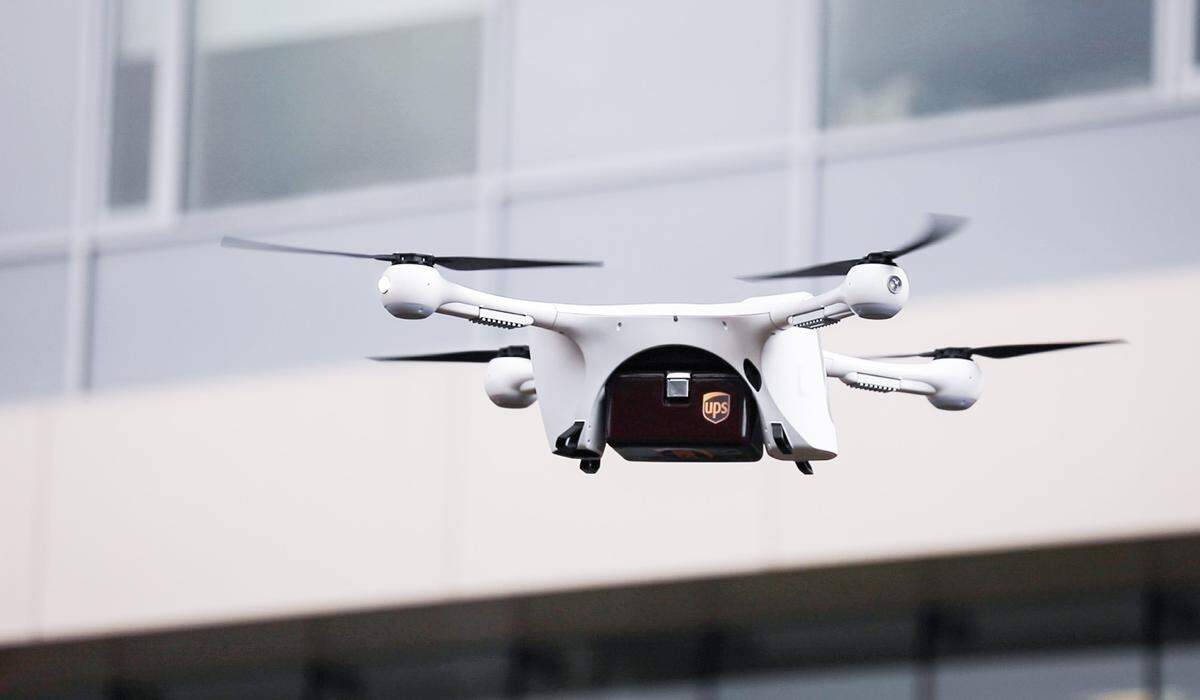
But the FAA required human drone operators to track each flight, says Jeff Causey, founder and chief operating officer of Causey Aviation. Causey’s company operated the Flytrex drones that delivered food in Holly Springs from the fall of 2021 until last July. He says the requirements that humans track those flights means the companies could not make them economically viable.
“It was a great pilot project, great customers, great city, but it was a pilot project,” he said in an interview. “And now we’re looking to really operationalize these deliveries in a way that will scale.”
By that he means automate the deliveries, so that one human pilot can track dozens of flights at a time. The FAA allows that sort of automation near about three dozen airports nationwide where all aircraft are required to electronically broadcast their positions. The only one in North Carolina is Charlotte Douglas International Airport.
“That’s why these guys are in Charlotte,” Causey said, referring to drone delivery companies that began flocking to the city this year. “It just so happens that the FAA has opened up a pathway there to scale before there’s a pathway for areas outside of that.”
As Triangle service ends, first in Charlotte begins
The first drone home delivery service in Charlotte was launched in May by DoorDash and Wing, a drone company founded by Google in 2012 and now a subsidiary of Alphabet, Google’s parent company.
Wing drones deliver drinks, snacks and meals from restaurants such as Panera Bread and Firehouse Subs within a 4-mile radius of The Arboretum shopping center off Providence Road. The company announced in the summer that it would begin drone deliveries from Walmart Supercenters in the Charlotte area next year.
The FAA allows Wing to operate up to 32 drones per human pilot, a level of automation that makes drone deliveries economically viable, says Joseph Marshall, senior manager of aviation programs at Wing. Speaking at a drone conference in Winston-Salem earlier this fall, Marshall said Wing expected to expand to as many as 20 locations in Charlotte in coming months and then in cities such as Atlanta, Houston, Orlando and Tampa.
“It’s really amazing that we’re at this point in the industry where growth is actually possible and feasible,” Marshall said.
What Charlotte and those other cities have in common is an airport with what’s known as a Mode C veil. The veil refers to an area 30 nautical miles from the airport and up to 10,000 feet of altitude where all manned aircraft are required to report their location via transponder to each other and air traffic controllers.
Because drone systems can use these signals to detect and avoid other aircraft, the FAA doesn’t require humans to watch each flight, Causey said.
“If you have a Mode C veil, there’s a pathway to use automation,” he said. “If you look at the cost of additional human beings versus the cost of automation, automation scales and human beings don’t scale.”
More changes in federal regulations ahead
The federal regulations that favor some places for drone deliveries over others are likely to change again in the coming months. The FAA is working on a new set of regulations to allow drones to fly “beyond visual line of sight” across the country. The agency released a draft in August and is expected to finalize them next year.
The drone industry has been eagerly awaiting those regulations, says Jason Schronce, deputy director of programs and planning at the N.C. Department of Transportation’s Division of Aviation. The Trump administration has made it a priority after the president issued an executive order in June calling on the government to help “unleash American drone dominance.”
“That is driving a sense of urgency from the federal level,” Schronce said.
NCDOT has taken steps over the years to encourage drone operators to do business in the state. A big one was to complete an environmental study required by the federal government that allows drone companies to operate in the state’s largest metro areas.
That blanket study was one reason Ohio-based Drone Express is expanding to North Carolina, said Russell Kline, the company’s chief regulatory officer.
“That basically created the playground for us to come in and fly in an area that already had an environmental assessment done,” Kline said at the Winston-Salem conference. “Those environmental assessments are typically multi-year, hundreds of thousands of dollars, if not more, for each location. So North Carolina made a very smart move in doing that.”
Drone Express was also attracted to the state by a ground-based radar system called ATLAS developed in Winston-Salem by the nonprofit AeroX. The system, the first of its kind in the country, allows drones to detect and avoid each other and other aircraft, Kline said.
In a country where tens of millions of packages are shipped each day, drone delivery remains a niche. But regulatory hurdles aside, drone companies expect demand for aerial deliveries will take off in coming years, driven both by customers and the companies that sell to them.
“I think we’re finally to the point where the Walmarts of the world, the Door Dashes and other strategic partners, understand that this is really possible and are willing to put more money into it,” said Marshall of Wing.
Wing, which has made deliveries from 18 Walmart supercenters in the Dallas-Fort Worth area, says the retailer plans to expand drone deliveries to 100 more stores next year in Charlotte and other cities — all of them with a Mode C veil.
This story was originally published December 9, 2025 at 10:59 AM.