
Folk artist Clyde Jones, a Picasso with a chain saw, famous for critters, dies

AI-generated summary reviewed by our newsroom.
- Clyde Jones, folk sculptor called the driftwood Picasso, died at 86 or 87.
- He carved thousands of painted critters with a chainsaw from found wood.
- His Bynum roadside Critter Corner display became a regional landmark.
Clyde Jones, the self-taught folk artist who carved thousands of eccentric “critters” with his chain saw and found international fame as “the Picasso of driftwood,” has died.
He was 86 or 87, depending on which year he was born, which he confessed being unable to remember.
In declining health for several years, Jones succumbed Wednesday to a variety of age-related illnesses and had entered long-term care, where friends played banjo by his bedside, according to a GoFundMe page set up for expenses.
“I told him I hoped he was at peace in there,” wrote Julie Trotter. “That he had done a lot of good. Made millions of kids happy. Brought folks a lot of joy. Told him that folks everywhere love him and his art.”
.JPG "IMG_Raleigh_secondary.jp_4_1_EO4QVONL(2).JPG")
What’s more precious than a young’un?
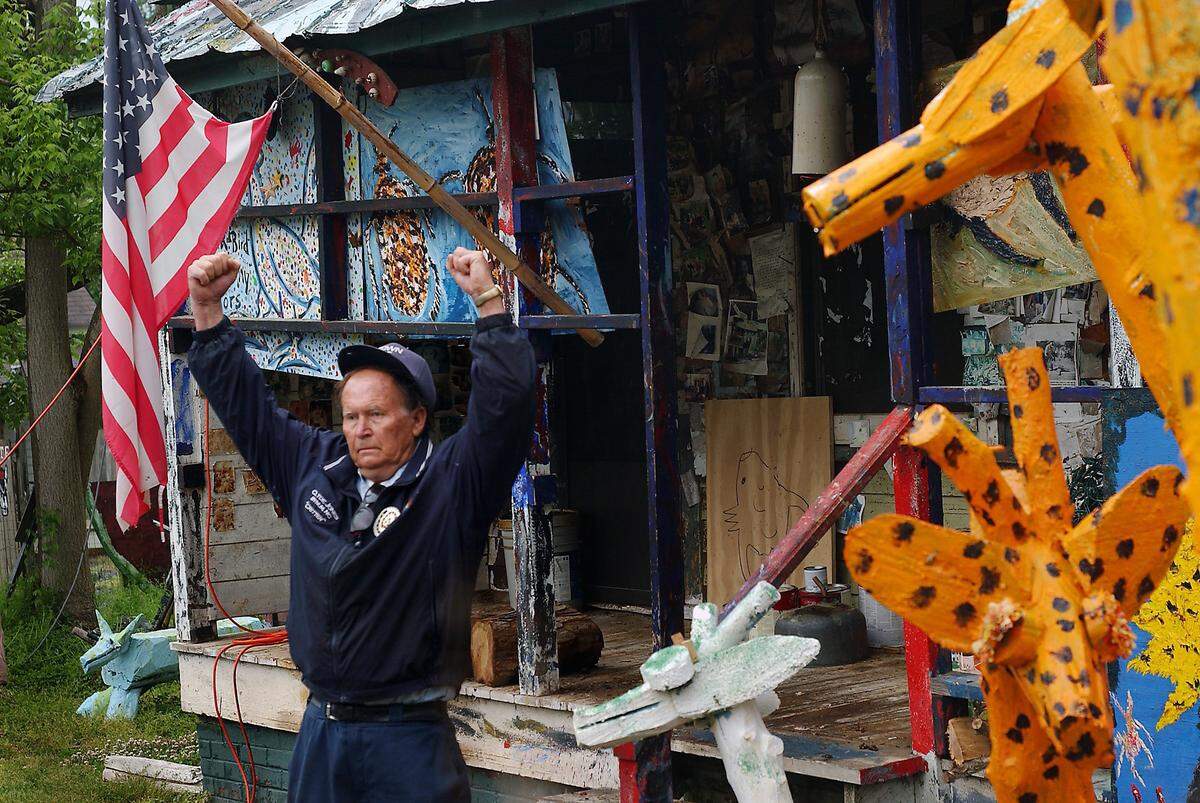
Jones spent his life in the small Chatham County mill town of Bynum, where his yard off U.S. 15/501 grew to a well-known roadside attraction. With its sign reading “Critter Corner,” it caught the eye of passers-by with its menagerie of wild-eyed animals painted yellow and blue, sporting racquetballs and daisies for eyes.
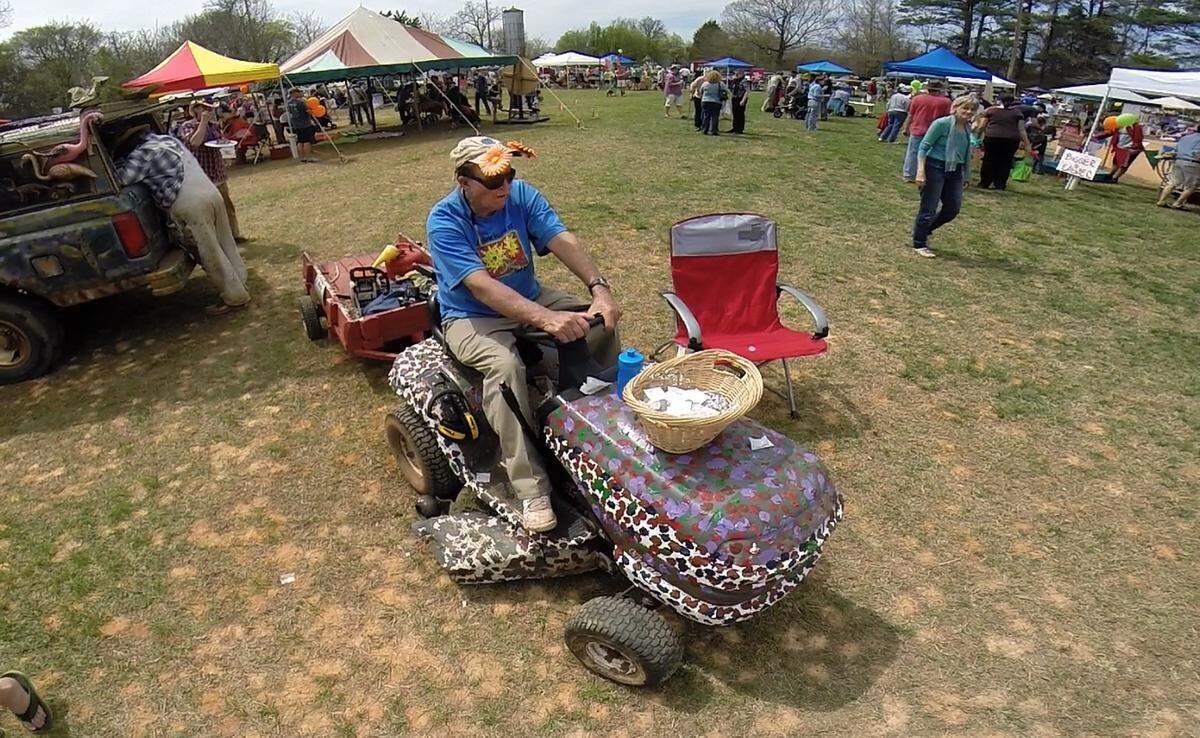
He rode around town on a purple lawn mower painted with sparkles, often in a baseball cap, usually accompanied by a dog named Speck — now interred in his yard and surrounded by critters. He lived otherwise alone in a house that sported paintings of penguins, dolphins and other sea creatures.
Jones never accepted money for his work, once turning down an offer from ballet star Mikhail Baryshnikov. He had one of his giraffes sent to the governor’s mansion for First Lady Mary Easley in 2005, decorating it with daisies for eyes.
He preferred giving his art away, especially to children or charities that helped them, and he showed his chain-saw skills at hundreds of schools around North Carolina, offering kids a turn with his hammer.
“I’d go out of my way to give ‘em to a young’un,” he told The N&O in 1987. “What’s more precious than a young’un?”
That vision comes from the folk
He rose to fame along with Wilson whirligig artist Vollis Simpson, both of them fixtures of the visionary folk art movement that gained popularity around the 1980s, celebrating untrained, rural artists with a mystical eye.
Throughout his decades of creating, Jones would see his work grace the roof of Crook’s Corner restaurant in Chapel Hill, the Bynum General Store, the Smithsonian, the American Visionary Art Museum in Baltimore and the Great Wall of China.
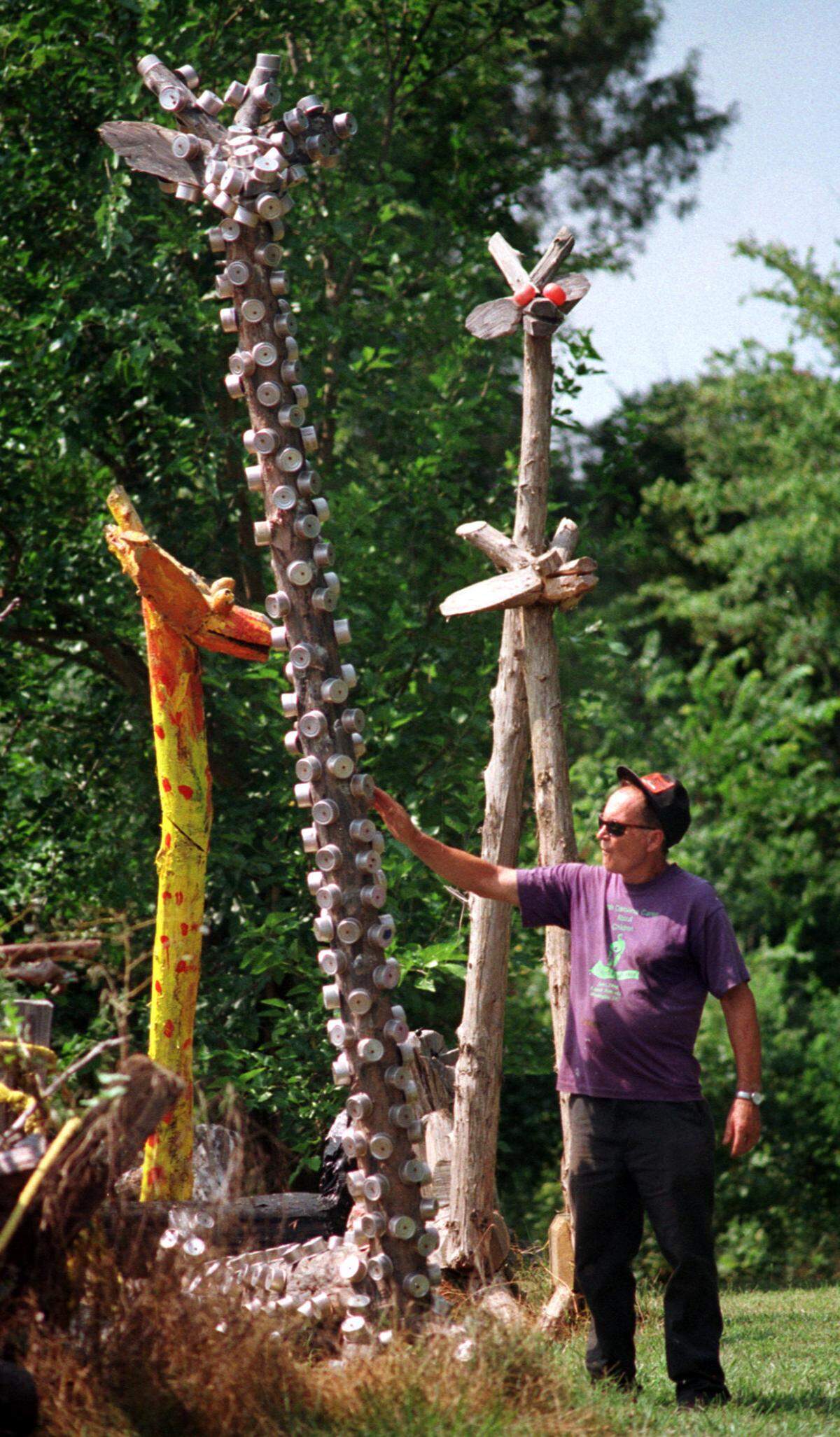
He kept them rough-edged and crude — natural, he would say. Sometimes his creatures stood more than 10 feet high, polka-dotted and they seemed to laugh to themselves over a silent joke.
“The critters which Clyde Jones constructed transcended time and connected us to the stories of our childhood wanderings about the big world outside our bedroom and backyard,” said Will Hinton, a Louisburg artist and professor. “A grinning smile of joy was always my response to seeing his gifts of hand and heart. This ain’t something you learn in art school. This vision comes from the folk.”
This story was originally published December 24, 2025 at 4:59 PM.