
Falling NC carbon emissions will rise again as Duke Energy recommits to fossil fuels
AI-generated summary reviewed by our newsroom.
- State DEQ reports 21% emissions drop since 2005 but predicts a 7% rise by 2030.
- Duke plans to extend coal and expand gas use, aligning with a projected emissions rise.
- Hearings start March 30; commission will decide by year-end; hikes slated for 2027–28.
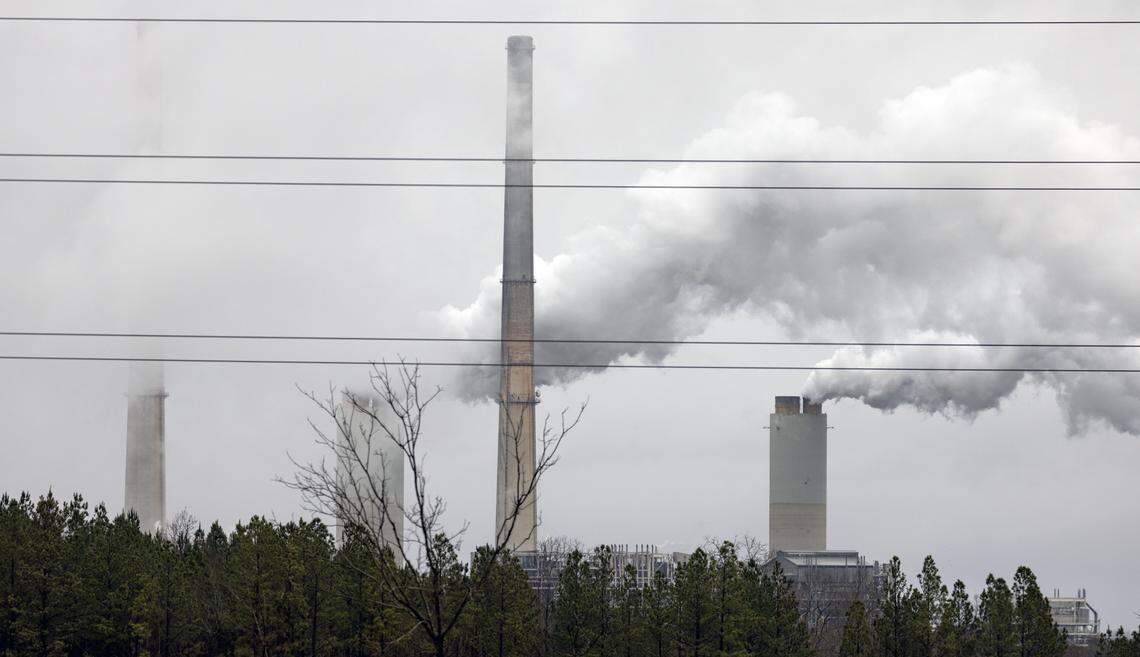
After tracking nearly two decades of declining greenhouse gas emissions in the state, North Carolina environmental officials expect pollutants to begin rising again as Duke Energy recommits to burning natural gas and coal for power generation.
The state Department of Environmental Quality last month updated the state’s greenhouse gas inventory, which shows that from 2005 to 2022 — the most recent year for which data are available — North Carolina reduced gross greenhouse gas emissions by about 21%. That drop came even with the state’s population growing 23% and the gross state product, a measure of industrial growth, increasing 38% over the same period, DEQ said.
The update also includes projected estimates of greenhouse gas emissions through 2050 and predicts that through 2030, emissions will rise 7% before beginning to drop again through 2050.
The increase would coincide with Duke Energy’s plan announced last year to extend the life of coal-fired power plants in the state and to expand the use of natural gas, both of which contribute to greenhouse gases. The subsequent drop would coincide with the company’s plan to scale back the use of fossil fuels and eventually retire coal-burning plants operating in the state.
The emissions inventory update doesn’t include possible increases in greenhouse gas emissions that may result from the Environmental Protection Agency’s decision in February to repeal federal emissions standards for cars and trucks.
Where do greenhouse gases come from?
In North Carolina, vehicles account for 39% of greenhouse gas emissions. Power generation produces 28% of emissions, according to DEQ. Industry, agriculture, solid waste and wastewater management, homes and commerce generate the rest.
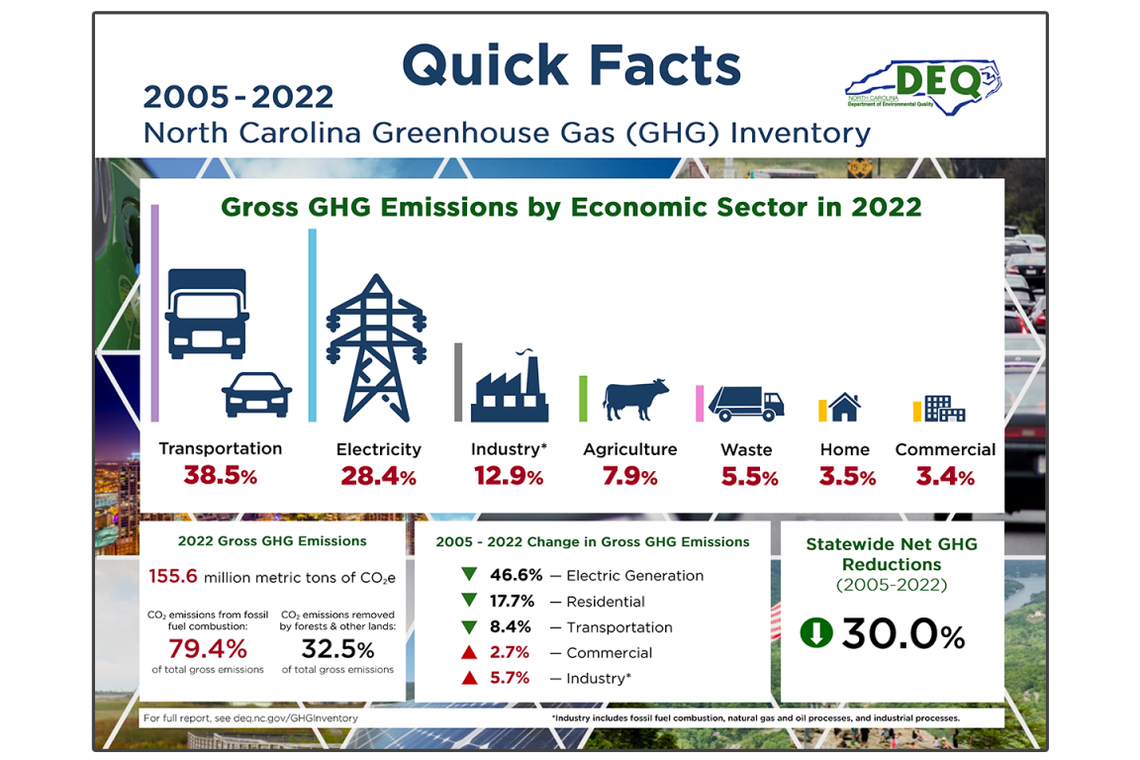
Since 2005, emissions from electricity generation have dropped by about half, the state says. Automobile emissions have dropped as well with improved engine and fuel standards in newer vehicles.
North Carolina has complied with every federal health-based air-quality standard since 2015, according to DEQ, and residents have seen fewer unhealthy air-quality days as a result. From 2015 to 2025, DEQ recorded two days of “Code Red” air-quality days, compared to 83 Code Red days from 2005 to 2014.
On Code Red days, the elderly and those with respiratory issues are cautioned to limit their exposure to outside air.
Climate scientists also say greenhouse gases are the biggest cause of climate change because they rise and trap heat in the Earth’s atmosphere. Average global temperatures have risen by about 2 degrees since the late 1800s, NASA says, contributing to increasingly extreme weather events such as hurricanes and tropical storms, droughts and flooding rains.
Duke plans to keep fossil-fuel plants online for now
Duke Energy has said it needs coal and gas to continue to provide affordable, reliable power for the state’s growing population, for the manufacturing sector that continues to expand, and for the data centers needed to run AI.
Critics and climate scientists say the company must transition to renewable energy sources to help slow climate change and complain that Duke is putting profits ahead of the health of residents and the environment.
.jpg "unnamed (2).jpg")
“While the energy sector is not the primary contributor to greenhouse gas emissions, Duke Energy is doing our part,” company spokesman Bill Norton said Friday. “We’ve made tremendous progress in reducing emissions while protecting reliability and keeping costs low for our customers.
“Because of North Carolina’s tremendous economic success, we expect carbon emissions from the energy sector to slightly increase into the 2030s. Based on our long-term plan now being evaluated by state regulators, CO2 emissions are projected to rapidly decline starting in the mid-2030s as we bring online a diverse array of carbon-free resources, including new nuclear that is available 24/7.”
Environmental groups such as NC WARN say it isn’t clear Duke and other energy companies will be able to affordably develop new nuclear power plants such as “small modular reactors” that can operate safely and reliably.
Duke has said it wants to make efficiency upgrades at coal plants such as the ones at Belews Creek, which just received a $34 million grant from the U.S. Department of Energy to help with the work. The company also wants to make upgrades to four nuclear power stations in its network.
The company has 5,120 megawatts of solar connected to its grid serving North and South Carolina, but says solar underperforms in winter, meaning other energy sources are needed for peak demand.
Drew Shindell, a former NASA scientist and now Nicholas Professor of Earth Science at Duke University, said coal-fired plants are an especially poor alternative to cleaner energy sources.
“They are not economical even if you do not account for all the air and climate pollution,” Shindell said. “These things are hugely in the negative, causing way more damage than they are producing in income. They are terrible. There is no way their lifetimes should be extended.
“If anything, they should be phased out more quickly.”
Duke has asked the N.C. Utilities commission for two rate increases to help pay for the upgrades it plans, one in January 2027 and another in 2028. Together, they would raise residential rates for Duke Energy Carolinas customers by 16% and for Duke Energy Progress by 18%, the company says.
The N.C. Utilities Commission will begin holding public hearings on the request March 30 around the state and online, and will make a decision by the end of the year.
This story is available free to all readers thanks to financial support from the Hartfield Foundation and Green South Foundation, in partnership with Journalism Funding Partners, as part of an independent journalism fellowship program. The N&O maintains full editorial control of the work. If you would like to help support local journalism, please consider a digital subscription, which you can get here.
