
Marine known as ‘The Kid,’ killed at Guadalcanal 84 years ago, comes home to NC
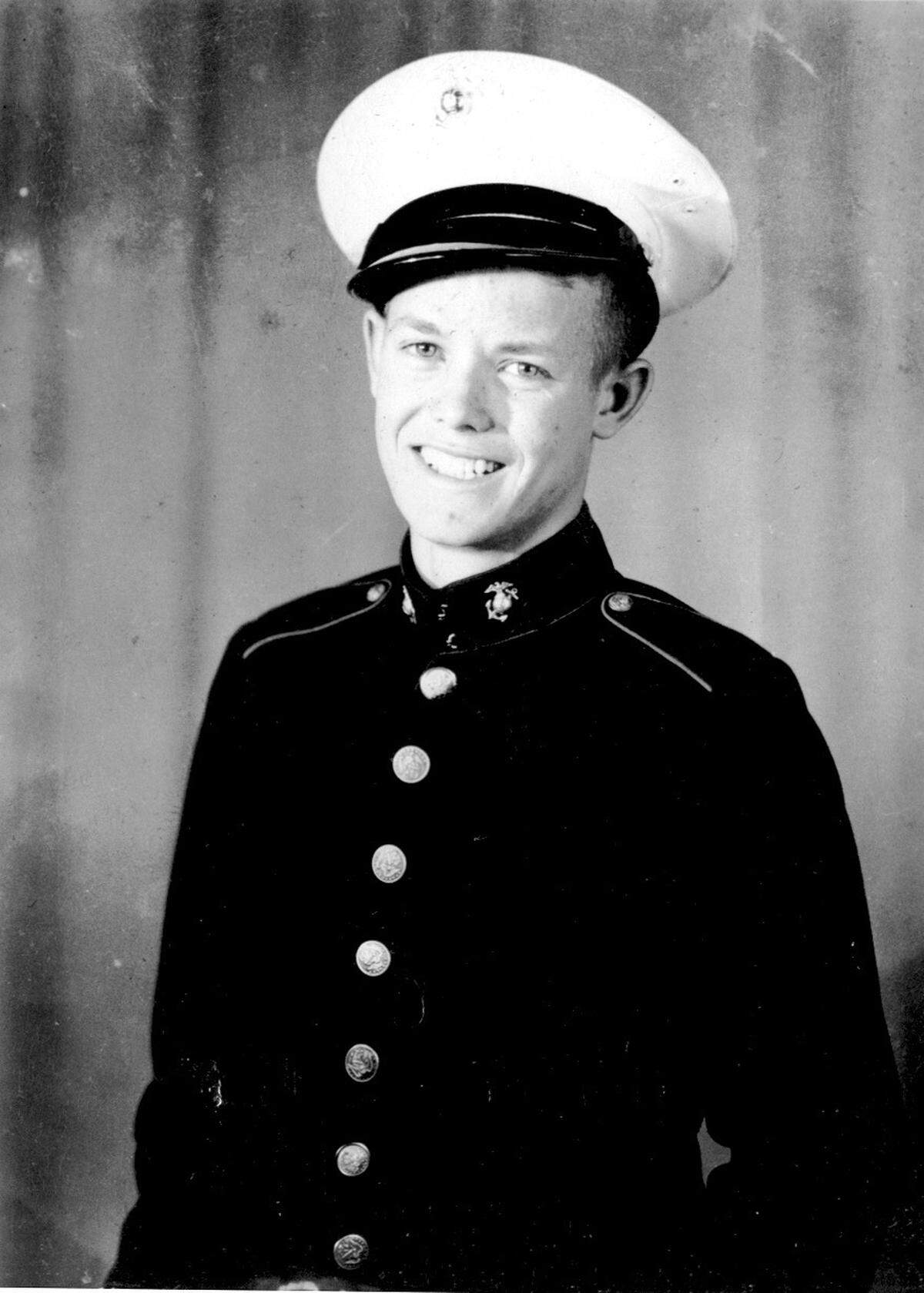
.jpeg "Pvt. Luther Rhodes, a Marine killed at Guadalcanal in 1942, finally comes home to Henderson County, NC.")
As a new Marine, Pvt. Luther Rhodes looked every bit like a skinny, tow-headed boy fresh off the family farm — too young to shave, so tender at 17 that his parents had to sign a permission slip.
He left the tiny mountain town of Fruitland and joined bigger, harder Marines at Parris Island, where he took enough bullying and threw back enough punches to earn a pair of affectionate nicknames: “Dusty,” or just, “The Kid.”
In 1942, “The Kid” would ship out to the Pacific land on Guadalcanal, where he died from a gunshot to the head in a fierce nighttime battle with the Japanese along the Matanikau River — killed 7,000 miles from home.
Rhodes would stay missing and unidentified for 84 years, so long that his youngest brother Marvin gave up hope of a reunion with the brother he knew only from photographs and stories.
But DNA technology finally caught up with “The Kid,” and on Saturday, March 28, he came home to Henderson County at last, buried with full military honors.
“It was heart-breaking,” Marvin Rhodes, 84, told The N&O. “But rewarding.”
‘Don’t bump him on the ground’
As a teenage Marine, “The Kid” saw some of the fiercest fighting of World War II, and the massive casualties on Guadalcanal combined with hasty burials, tropical climate and bureaucratic confusion all prevented his quick homecoming.
Consider this description from Missing Marines, a research project dedicated to recovering those fighters still missing from the war:
“The bodies were brought from the damp jungles, from the watery lagoons, from the smoky and reeking slopes of the Ridge; swathed in bandages from aid stations, covered in crusted blood from multiple wounds, sometimes intact and sometimes in pieces. Captured laborers, stripped to the waist and pouring sweat, hacked at the grass-covered ground digging grave after grave in rows of ten as the MPs glared and shouted.”
“The Kid” made enough of an impression as a Marine at Guadalcanal that his name appears in a pair of wartime memoirs. One of them, Ore Marion’s “On the Canal,” recalls a scene when his mentor, Pvt. Lawrence “Hardrock” Gerkin, learned of his death:
“Larry, I’ve been looking for you.”
“Oh?” Gerk said. “How’s the kid?”
“That’s why I came over here, Gerk,” the corporal said. “I wanted you to know the kid got hit last night.”
Gerkin choked up and let out a sob. There in front of us, in the midst of all the dead and wounded, two men from the 2nd Platoon were rolling Dusty onto a poncho. My thought then, and my vivid memory sixty years later, was how white Dusty’s light blond hair looked as they wrapped him in the poncho.
Gerkin pulled himself together and went directly to the two men who were getting ready to take the kid’s body away. He said to them, “Don’t drop that kid while you’re moving him in that poncho. Don’t bump him on the ground, or I’ll kick the (expletive) out of both of you.”
Notified accordingly
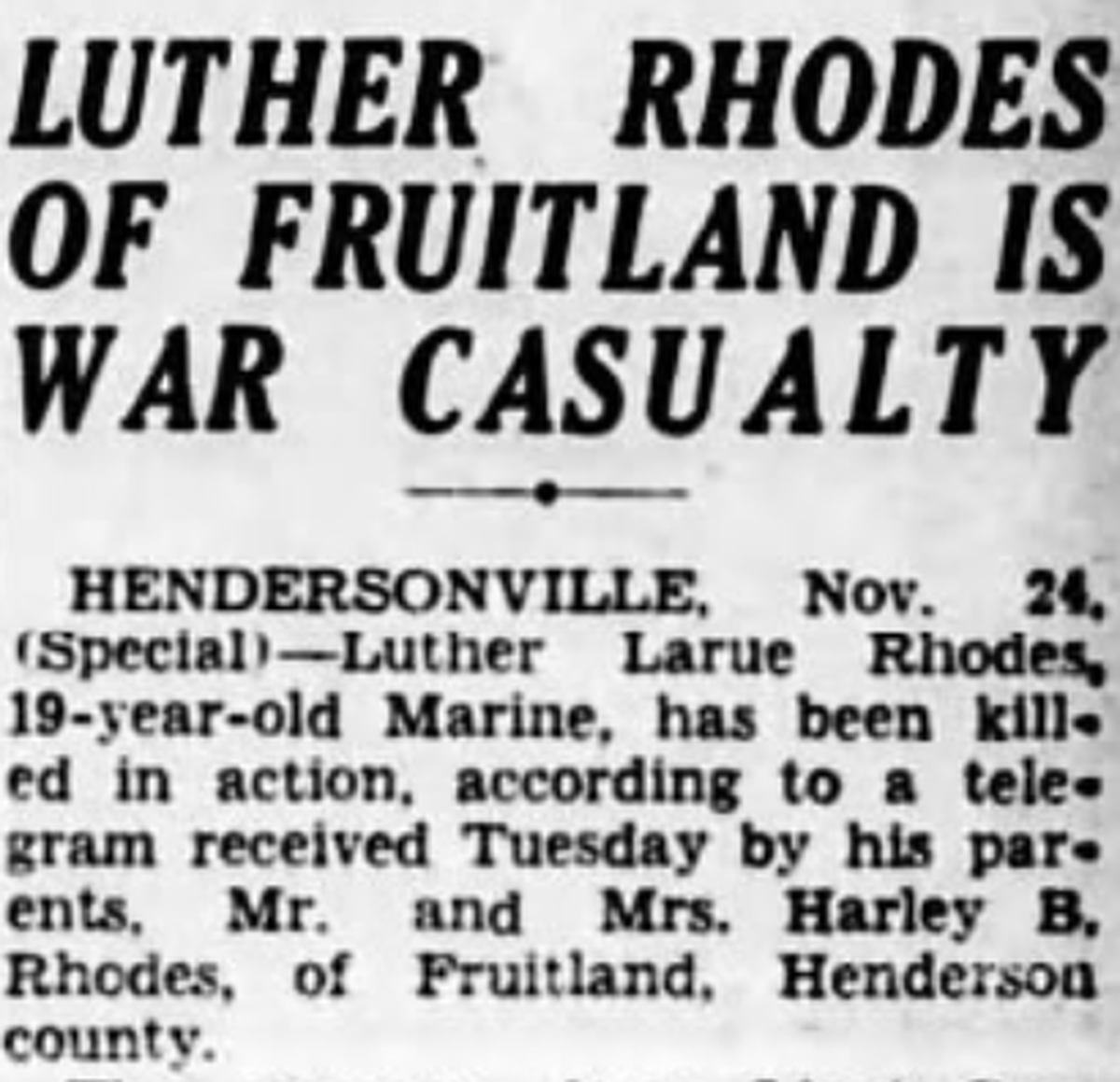
Rhodes’ parents learned of his death in a terse wartime telegram:
“Present situation necessitates temporary interment in locality where death occurred,” it read, “and you will be notified accordingly.”
In 1946, with the war finished, Harley and Lexine Rhodes wrote the Marine Corps commandant looking for answers.
“We hope to have his body returned to his beloved land,” they wrote, “the USA.”
But three years later, the government declared Rhodes’ remains unrecoverable, meaning his name did not appear on cemetery crosses or rosters in Guadalcanal, nor could he be matched with any of the unidentified remains.
Brother provided DNA sample
Marvin Rhodes never met his brother, being only 6 months old at the time of Guadalcanal.
“I had thoughts of it,” he told The N&O Wednesday. “Just proud of what he’d done. That may be part of what pushed me to go in the military myself. I was a captain in the Army for four years.”
The younger Rhodes began probing deeper into his brother’s whereabouts after he retired. In 2013, he provided a DNA sample to help root out the truth.
Eight unidentified Marines got buried in the First Division Cemetery on Guadalcanal, five of whom could be identified by war’s end. The three others could not.
One of them resembled Rhodes in age, height and dental records, but none of this could provide conclusive proof. Rhodes said that even early DNA testing could not match the remains with his brother.
Until September, when he got a phone call. The technology had made enough strides in the last few years to recognize “The Kid” and send him home.
The news made the floor of the U.S. Senate.
“He was young and slight with light blond hair and boy’s face,” said Sen. Ted Budd, a Republican from North Carolina, “but he demonstrated courage and resolve beyond his years.”
The news, Budd continued, meant something deep.
“It meant a son of the mountains who left home as a teenager to serve his country was finally coming back to the hills that raised him.”
This story was originally published April 2, 2026 at 1:46 PM.