Investors find profit in state tax law. What is the Blue Ridge Housing loophole?

AI-generated summary reviewed by our newsroom.
- Ruling lets property owners claim exemptions when nonprofits control or manage property.
- Five counties lost about $60M; loophole could cost state $80M–$100M yearly.
- State House Select Committee will review the loophole and solutions on April 15.
A state Court of Appeals panel likely didn’t realize the can of worms being opened in 2013 when it weighed in on a property-tax dispute in the far reaches of western North Carolina.
The “Blue Ridge Housing” tax loophole could save corporate housing investors roughly $80 million to $100 million a year in the near future, leaving taxpayers statewide to cover a higher share of local schools, services and program costs.
The five most-affected counties — Wake, Mecklenburg, Durham, New Hanover and Guilford — have already lost roughly $60 million in annual property tax revenues, according to an N.C. Association of County Commissioners report.
A state House Select Committee on Property Tax will consider the problem and potential solutions on April 15 in Raleigh.
What is the Blue Ridge Housing loophole?
The Blue Ridge Housing loophole gets its name from a 2012 N.C. Court of Appeals case filed by developer Blue Ridge Housing of Bakersville, LLC.
Mitchell County’s tax office initially gave Blue Ridge Housing a property tax exemption for the 24-unit Cane Creek Village apartment complex, but it overturned the decision 11 years later.
Blue Ridge Housing and its investors owned 99.9% of the complex, which was built with federal low-income housing tax credits and relied in part on federal rental assistance. NHE, a nonprofit partner with a future opportunity to buy the property, owned 0.01%.
Blue Ridge Housing took the county to court, and the appeals court ruled any legal landowner could claim an exemption if a nonprofit housing provider controlled and managed the property, no matter the percentage of ownership.
In North Carolina, the loophole is possible under a 1975 law that exempts nonprofit housing owners from paying local property taxes. Since 2021, the number of exemptions has nearly doubled, the state House committee learned in March.
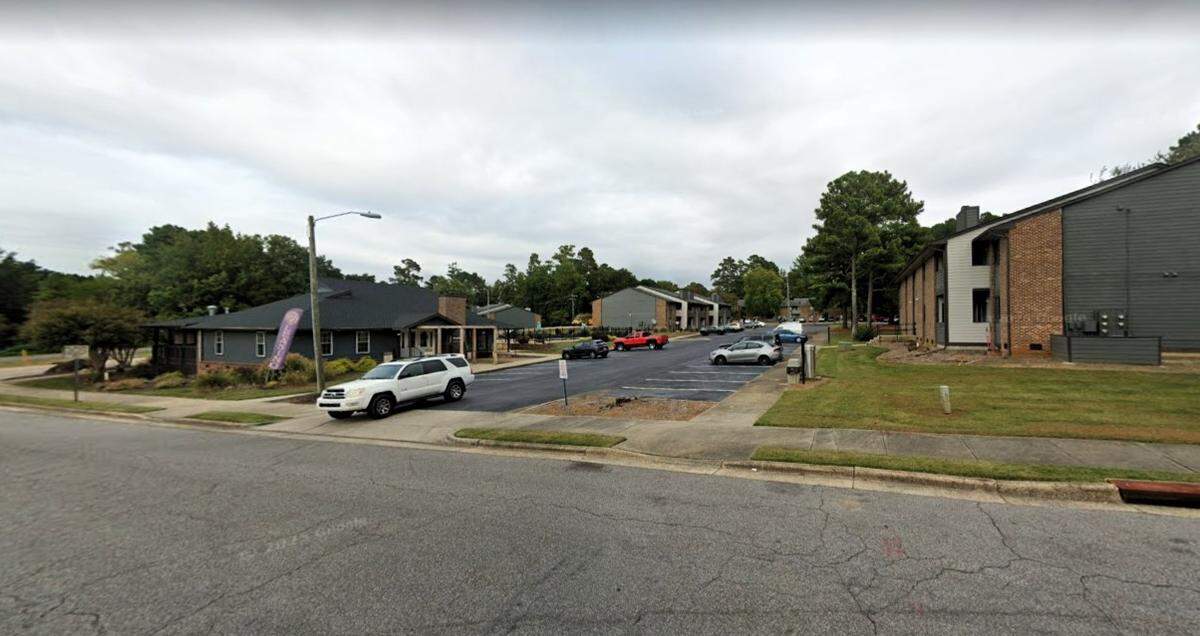
Affordable housing loophole becomes a problem
The problem arose during the recent housing boom as for-profit investors found they could benefit from partnering with nonprofits to buy older and potentially distressed properties — a maneuver that’s being referred to as “renting a nonprofit.”
Attorney firms started working with brokers to market older, less-expensive rental housing and emphasized the availability of the tax exemption, Wake County Tax Administrator Marcus Kinrade told the Raleigh City Council on March 17.
“All that started happening quickly in 2024, and then it really just snowballed in ‘25,” he said.
Since the law doesn’t define ownership or affordable housing, a property owner can get an exemption even if a nonprofit partner has a less than 1% stake. And there are no guarantees that a property will remain affordable housing long term, Kinrade said.
The loophole also lets owners renovate and raise the rent, as long as they lease apartments to working families earning 80% or less of the area median income, or $64,750 a year for a single person in Durham and Orange counties.
The area median income — roughly the midpoint of a region’s poorest and richest income-earners — is higher in Wake County.
How are Triangle counties being affected?
The city of Raleigh could lose $2.38 million in property revenues this year and $2.95 million next year, The News & Observer has reported. Wake County’s projected loss is $4 million this year and $6.2 million next year, the county’s tax administrator has said.
In Orange and Durham counties, the combined tab is approaching several million dollars. Here’s what the records show:
Durham County: Processed 43 applications in the 2025 tax year, resulting in $320.67 million in exempted property value, or a $1.78 million loss of annual revenue based on the current property tax rate of 55.42 cents per $100 in assessed value. The county has 42 applications for 2026 and expects to “aggressively surpass” the previous total.
Orange County: The loophole affected five properties valued at a total of $56.6 million this year, creating a $742,844 loss of property tax revenues. Four more property owners are seeking exemptions next year, for a total potential revenue loss of about $1 million, data shows.
Carrboro is the most significantly affected town — followed by Chapel Hill and Hillsborough — due in part to older, more affordable apartment complexes. The Chapel Hill-Carrboro City Schools are also losing significant public dollars, data shows.