
Alligator found in Johnston County, far from its natural range, NC officials say
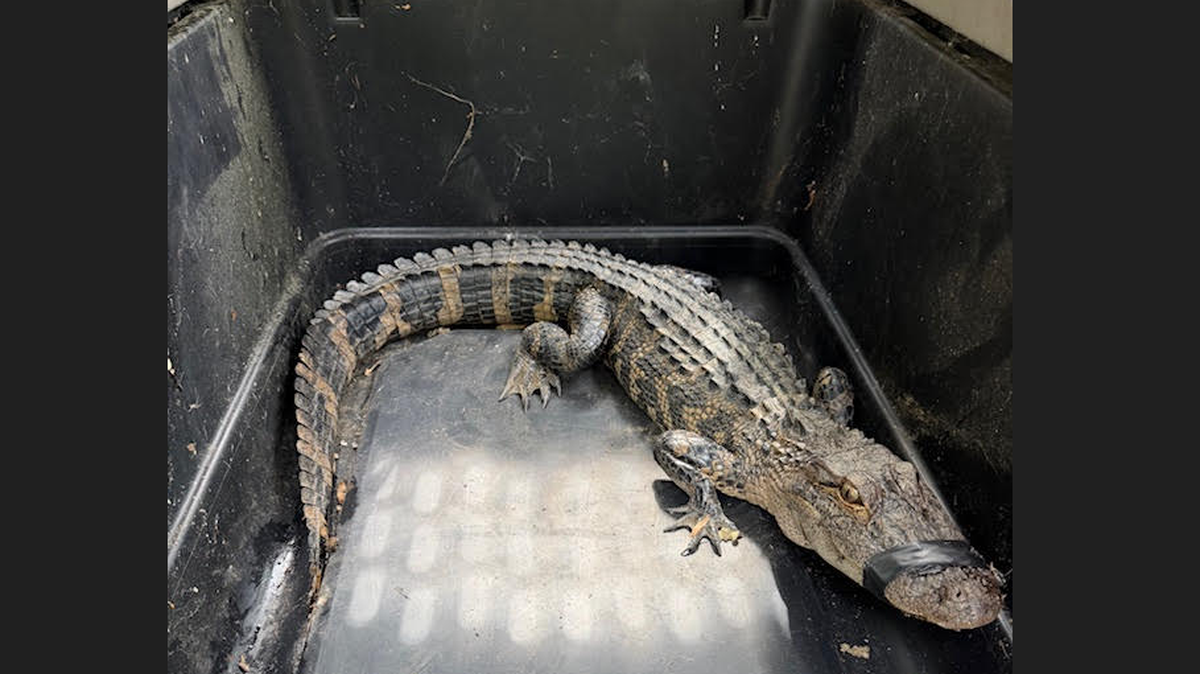
Alligators are not native to the Raleigh area, but one was just caught along the 3000 block of N.C. 231 in nearby Johnston County, according to the N.C. Wildlife Resources Commission.
It was discovered by a property owner, who noticed something with very big teeth was in his pond.
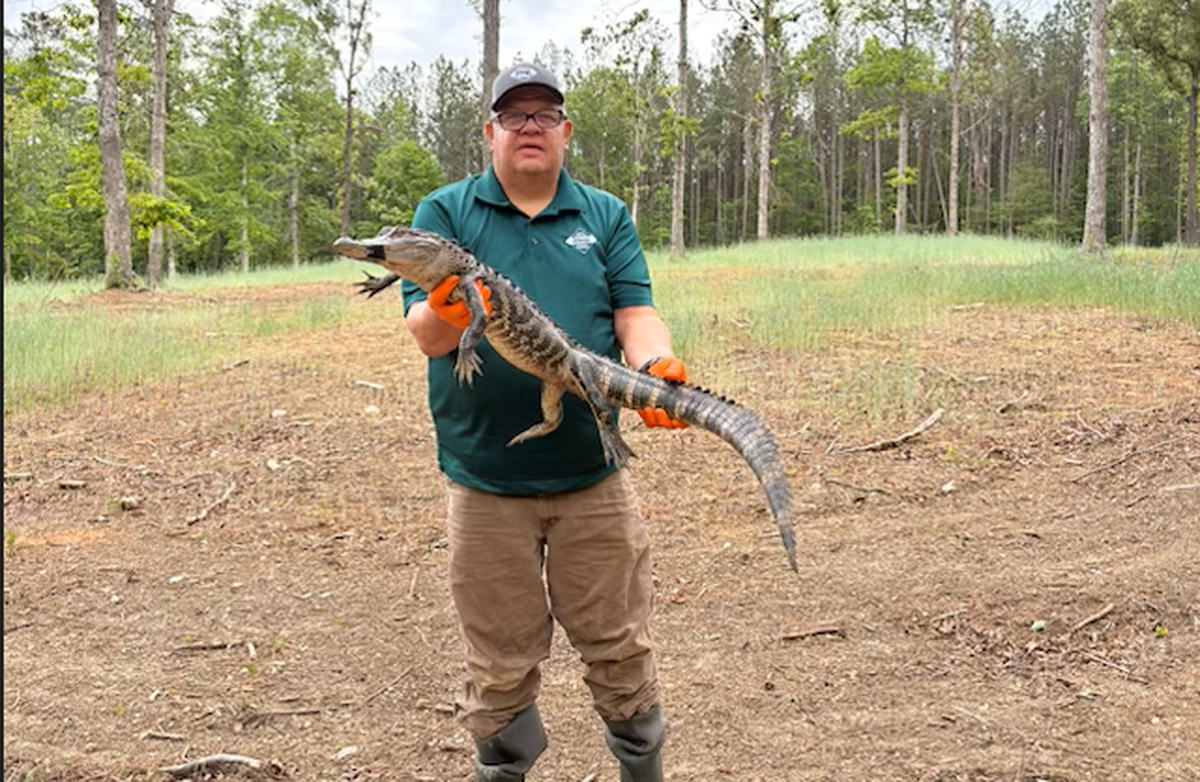
“He called and said: ‘There’s an alligator in my pond.’ So I went out there and sure enough, there was an alligator in this little half-acre pond,” District 3 Wildlife Biologist Greg Batts said.
“That’s about 70 miles as the crow flies from where you’d find an alligator, and about 200 miles in terms of river travel.”
The alligator was captured on Wednesday, and measured at 4 feet, 2 inches. That’s smallish in North Carolina. Full-grown females reach 9 feet in state, and males will top 13 feet and weigh 500 pounds, the commission says.
Once bound with electrical tape, the gator was put in a dog kennel and hauled to the Broadway Zoological Park in Harnett County, where it will stay. Releasing it back into the wild is not an option, because it’s unclear if the alligator carries diseases not found in the native population, Batts said.
How did it get there?
It will likely never be known where the alligator came from. However, state officials say it got in the pond with the help of someone acting illegally.
Alligators cannot be kept as household pets in North Carolina, but that doesn’t stop some people from trying.
“It has gotten to the point where we get three to four alligators a year in the Piedmont. It’s our belief that people had it as a pet, it got too big, and they released it,” Batts said.
“They are cute when they are 12- to 14-inches long, but then they get big and too unruly to deal with.”
The site where the alligator was found in Johnston County is not far from the Little River, and it’s possible someone freed the alligator there, and it found the pond while wandering, Batts said.
This marks the third alligator caught in Johnston County since 2018, he says. Two have been caught in Wake County since 2020 (one more than 6.5 feet long), and three were caught in the same pond in Wayne County, Batts said.
“This is not about alligators making their way from the coast. Alligators don’t live in the Piedmont for a reason. The middle part of the state is too cold for them,” he said. “When you move things from areas they are native to, they are always a problem. It alters ecosystems and there are unintended consequences. ... It’s also dangerous. Alligators bite.”
Where alligators live in NC
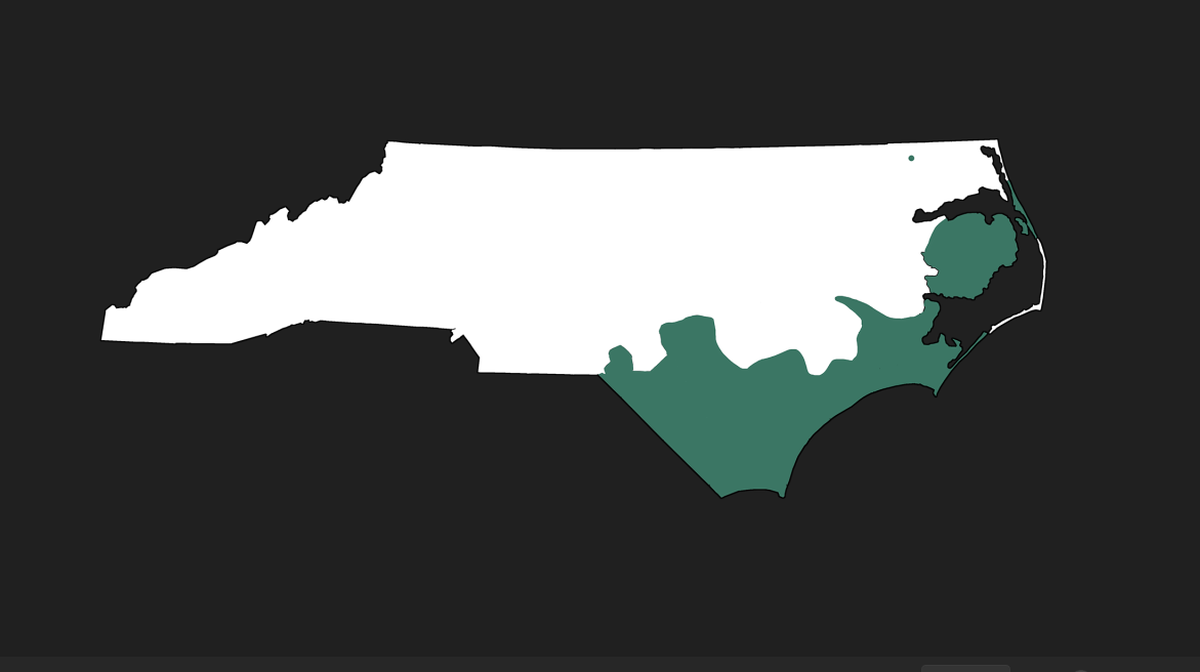
Eastern North Carolina is the northernmost range for alligators in the U.S., and most of the state’s alligator-related nuisance calls come from New Hanover and Brunswick counties, the state says.
“In North Carolina, they inhabit freshwater areas mostly east of Robeson County northward to Gates County,” the commission says. “The largest populations live in the coastal counties of Brunswick, New Hanover, Craven, Columbus, Onslow and Pender.”
Much of that region is also a coastal tourism hub, which means visitors may find themselves suddenly crossing paths with potentially deadly alligators.
The Gatorwise program (www.gatorwise.org) offers safety tips on how to handle such encounters.
- Assume alligators are present. Alligators can live in any body of water within their range. Alligators are very good at hiding. They will see you before you see them. There could be alligators in places where you have never seen them before, especially after storms or floods.
- Never feed alligators. Feeding alligators on purpose or by accident may cause alligators to associate people with food. Intentionally feeding alligators is irresponsible, illegal in most states, and dangerous for you and others. Feeding other wildlife near water can attract alligators and cause alligators to lose their natural fear of people.
- Never harass, capture or handle an alligator. Attempting to approach, capture or handle alligators increases your risk of injury or death. These behaviors are irresponsible, illegal and dangerous, regardless of the alligator’s size. View and photograph alligators from a distance.
- Maintain awareness anytime you are in or near water. Always observe alligator warning signs. Stay away from the water if you see an alligator and keep your distance from alligators you see (at least 60 feet). Avoid swimming in areas with dense vegetation. Alligators hide in vegetation in and around the water. Only swim during daylight hours. Alligators are most active between dusk and dawn. If an alligator approaches you, immediately move a safe distance away.
This story was originally published May 8, 2026 at 3:58 PM.