
Remember the RBC Center? $7 parking? Much has changed since 2006 Stanley Cup run
AI-generated summary reviewed by our newsroom.
- Parking at the RBC Center cost $7 in 2006 and $65 if paid in advance.
- Raleigh population grew from 363,000 in 2006 to 514,000 today.
- Raleigh had three Confederate monuments on the Capitol grounds removed in 2020.
The last time the Carolina Hurricanes hoisted the Stanley Cup, 30,000 fans packed into the sizzling-hot parking lot of what was then called the RBC Center — a riotous celebration that drew Caniacs from Gov. Mike Easley to a 6-year-old girl.
That time-machine moment from 2006 shows how far Raleigh has traveled in the two decades and finally finds its hockey team skating back into the finals.
For one:
Raleigh couldn’t hold a parade in its largely empty downtown because it was still tearing the pedestrian mall off Fayetteville Street, which hadn’t hosted a crowd of any size since the mid-1970s.
For another:
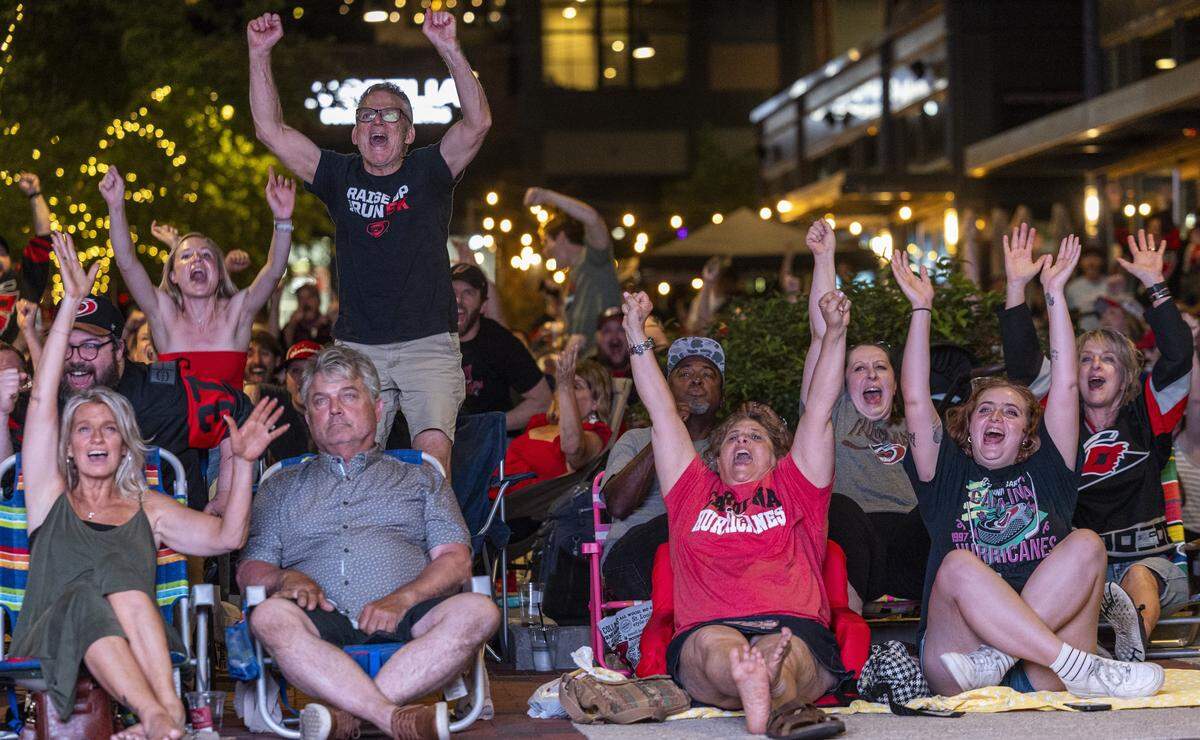
The screaming fans at the RBC all have both hands raised in the air. The reason? Nobody had an iPhone yet.
So let us step back to June 2006 and see what else is new:
Money hockey, beer bets
Parking at the RBC Center cost $7 in 2006; now it’s $65 if paid in advance.
A beer back then ran maybe $8; now, expect $15 and higher.
A child-size sweater sold for $37, less than half of today’s $85.
And a ticket would set you back $120 for the cheap seats; now you’re lucky to sneak in under $750.
Back then, the Canes’ opposing team came from Canada, not Las Vegas.
So then-Raleigh Mayor Charles Meeker bet the rival mayor of Edmonton a case of beer the Canes would win, choosing Carolina Pale Ale because almost no other Triangle-made beer existed. Current Mayor Janet Cowell put up some NC barbecue — a classic bet.
Smaller city, downtown squabbles
On the Canes’ last run, Raleigh boasted only 363,000 people compared to 514,000 today — a 41% jump between Stanley Cup runs.
Interstate 540 traveled only a quarter-circle around the city compared to the full loop of today.
Raleigh-Durham International Airport had just one terminal, not two.
A long-gone Moore Square restaurant named Duck and Dumpling got mentioned among Raleigh’s top restaurants, and Horniblow’s Tavern, now a forgotten relic, captured attention by setting up inside unwelcoming industrial space.
And while Raleigh struggled to revitalize downtown with a revamped Fayetteville Street open to cars, it also squabbled about the decorations:
It nearly added an electronic multimedia sculpture from Spanish sculptor Jaume Plensa, which would have covered an entire block, before naysayers nixed it for good, angering the donor who put up $2 million.
Critics also pooh-poohed a row of chandelier-shaped sculptures on terra cotta poles, citing poor taste.
Meanwhile, the city council feuded over whether to allow a fake stucco exterior on the downtown Marriott hotel, which collected $20 million in taxpayer money.
And in a flourish, Raleigh blew up its boxy, two-story convention center that blocked Fayetteville Street on the south end and started constructing the new one a block away, which at $225 million ranked among its most expensive buildings ever.
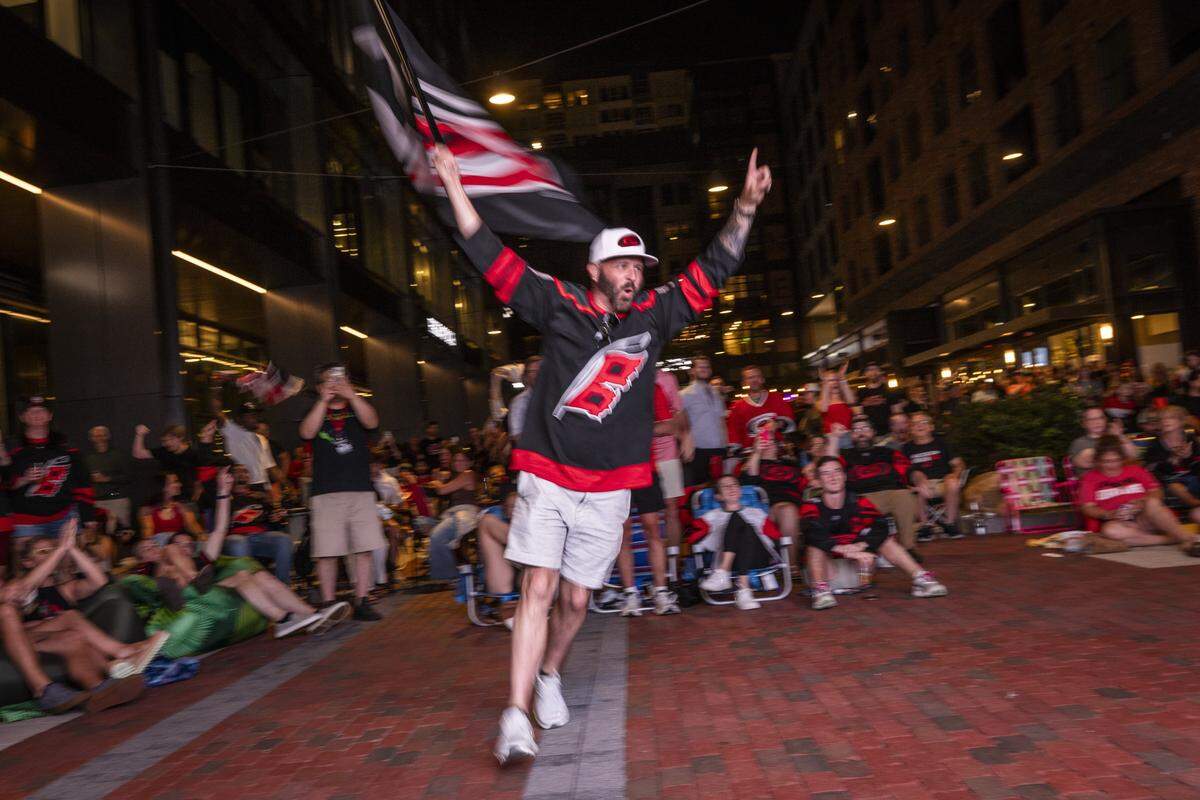
This time, the city has a downtown fit for parades.
A new era
When the Canes last won it all, Raleigh had three Confederate monuments on the Capitol grounds, all of which got taken down in 2020.
In 2006, President George W. Bush was pushing for a nationwide ban on same-sex marriage. This week, Raleigh began celebrating Pride Month.
Back then, Tiger Woods missed his first-ever major golf tournament.
Michael Jordan became part-owner of the Charlotte ... Bobcats?
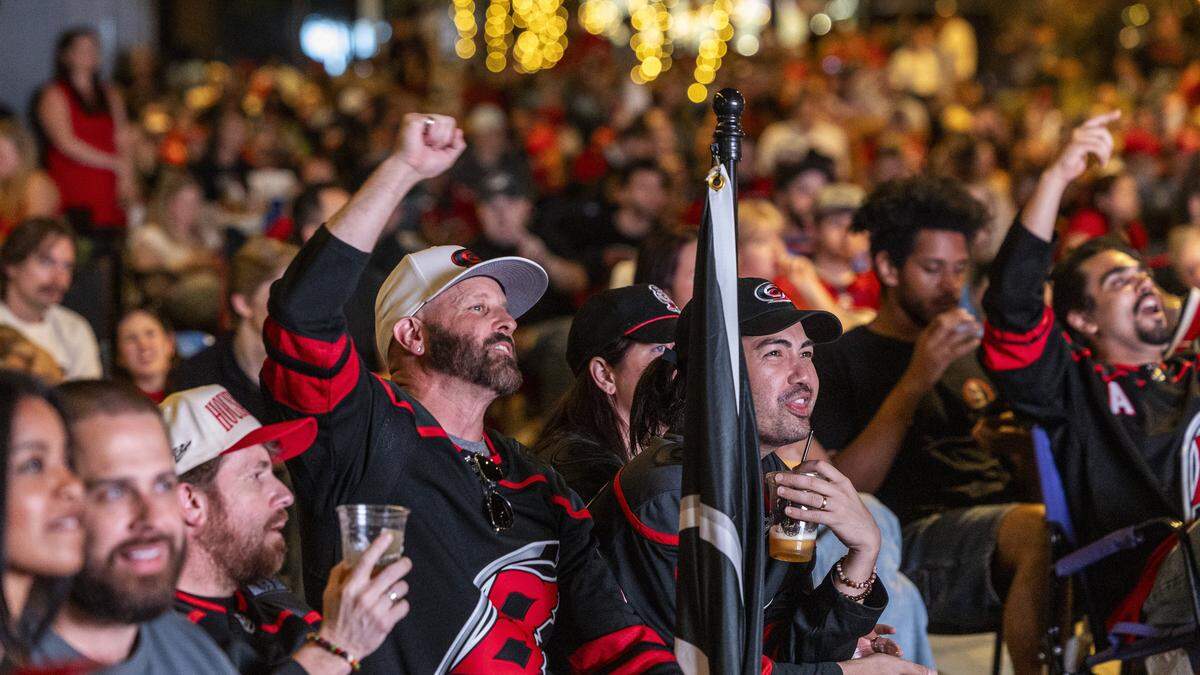
And now the Carolina Hurricanes return to the Stanley Cup Final, backed by the same old Raleigh — grown wildly different.