
This year, Holly’s Nest will take in 150 baby deer orphaned by passing cars
AI-generated summary reviewed by our newsroom.
- Holly’s Nest averages about 150 deer a year, not all from vehicle collisions.
- The Worthams run North Carolina’s largest deer rehab and had 50 fawns on Friday.
- Peak season will bring five to eight new fawns per day for about a month.
The collection of hard-luck critters relaxing around Holly’s Nest Animal Rescue already includes four beavers sleeping in the bathtub, a skunk nestled in the back bedroom and a one-legged duck nicknamed “Pogo Stick” hopping around the pond outside.
But peak deer season hits sometime around Tuesday, and for the next month or so, Holly’s Nest will take in five to eight new fawns every day — most of them orphans, their mothers killed by cars.
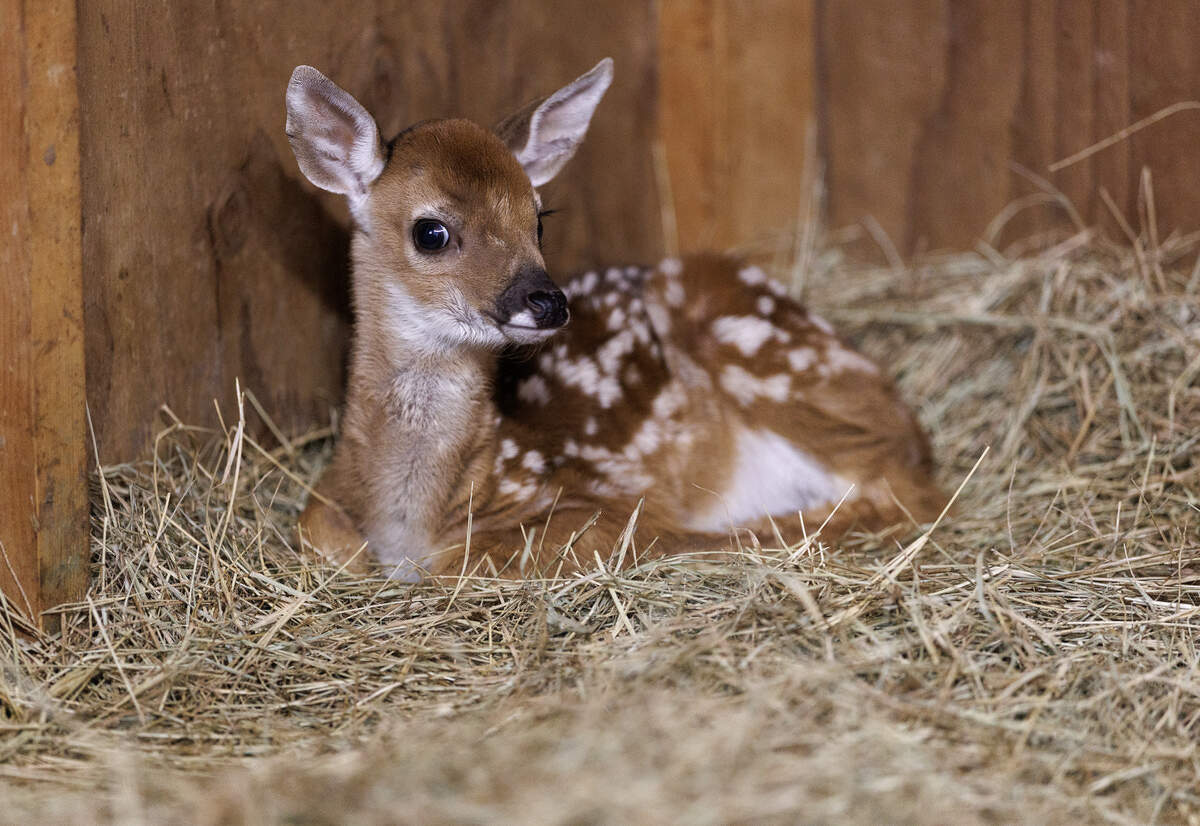
Byron and Kim Wortham feed them all by hand through baby bottles, watching them stumble around their 100-foot enclosure on wobbly legs, batting their long eyelashes, recuperating under the cover of cut tree branches until their white spots disappear and they’re old enough to wander back into the hard world.
On their 12 acres outside Sanford, the Worthams run the largest deer rehab in North Carolina, and they represent the last hope for a yearly average of 150 four-legged strays. On Friday, they had 50.
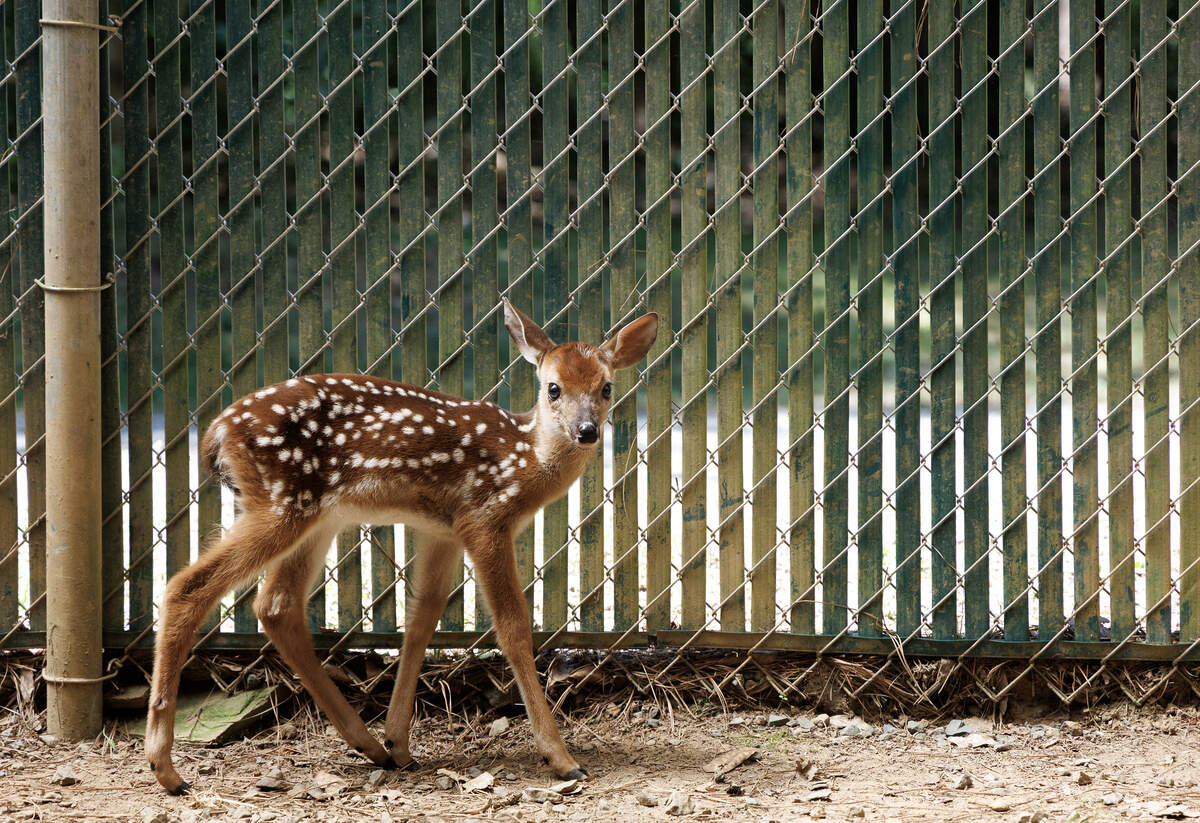
The fawns who arrived with an umbilical attached because their mother gave birth after being hit. The babies who kept nursing even after their mother had passed. The rare piebald deer in the back bedroom with the skunk, resting in a playpen because it was born with its hooves turned backward.
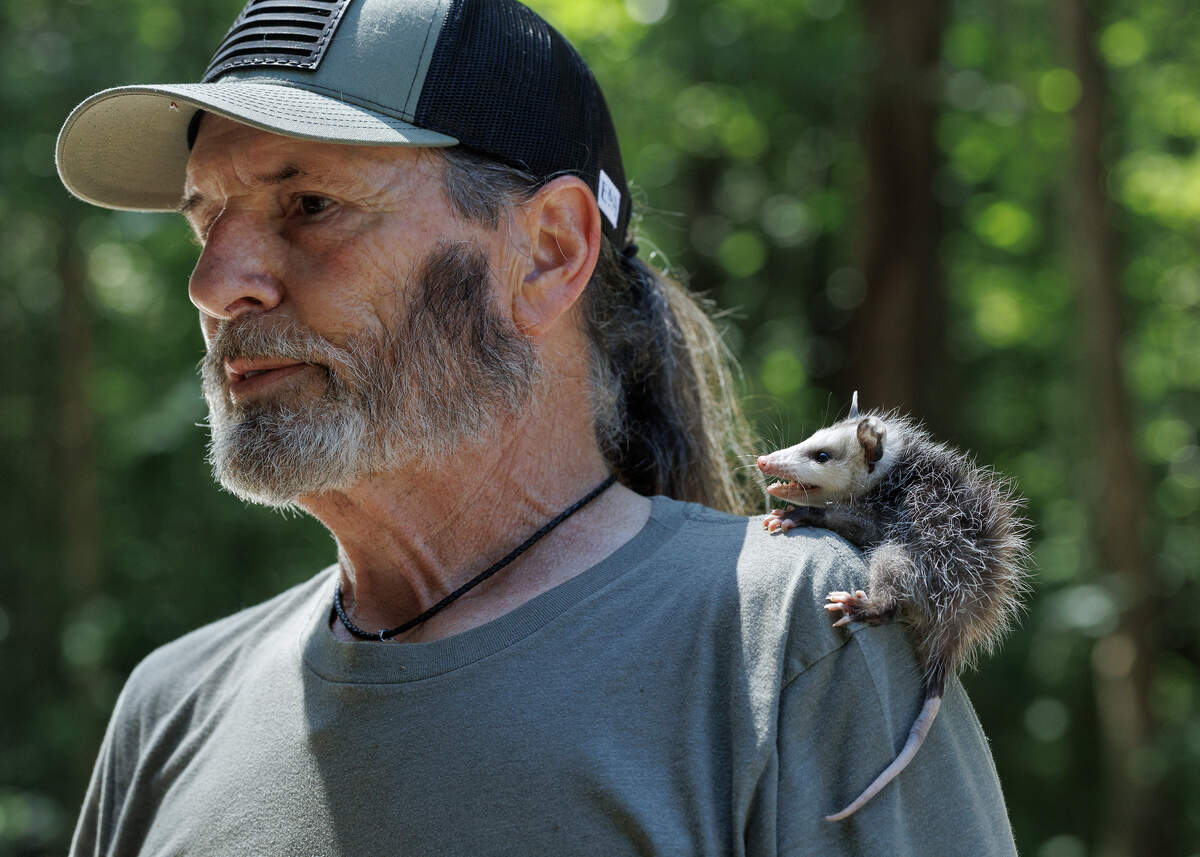
“By the end of June, I’ll be making 100 baby bottles to feed the deer,” said Byron Wortham, a baby opossum perched on his shoulder and occasionally burrowing into his hair. “Absolutely. And doing it twice. That’s just the deer. I have four baby beavers in my bathtub. I have a skunk.”
“Let’s help where we can”
Every few minutes, Wortham’s phone goes off with coyote howl for a ringtone.
He picks up to answer and hears those callers report fawns wandering alone, and he asks them: Are the fawns crying? For how long? Do you see flies circling their rear-ends? Because otherwise, the mama deer is probably taking a break, feeding herself so her milk sacs stay full.
But some callers plain hate deer. They complain in New England accents about deer eating azaleas, nibbling Japanese maples and jumping out into the highway. But Wortham knows the deer were here first, and they’ll likely take back the land we spoil one day.
If the people who use terms like “nuisance animals” could stand close enough to a fawn to count the speckles on its back, they might leave out a bowl of azalea leaves as an offering.
Nature is hard to scorn when it nuzzles your leg.
“I give it a chance,” Wortham said. “About 95% of what I take in is because of man. It’s man’s responsibility to take accountability for it and say, ‘Let’s help where we can.’”
Smokey the Bear
Wortham grew up on a tobacco farm in Fuquay-Varina and, at age 7, sent away $100 for a lifetime subscription to Wildlife in North Carolina magazine.
“I wanted to be Smokey the Bear,” he said.
Park rangers made too little money, so he drove for UPS until he could retire.
Then in their life’s saddest chapter, Kim and Byron Wortham lost their 18-year-old daughter Holly to a car accident in 2004. Their rescue represents both a tribute to Holly, an animal lover, and a way to turn grief into joy.
They keep a barn owl named Arthur. They house a pair of macaws named Jimmy Buffet and Bruce Springsteen in an enclosure topped by a recycled satellite dish, and the radio plays classic rock for them all day. The raccoons rest in hammocks and the foxes sleep in dog beds.
“I don’t understand bats,” Byron Wortham said. “But I’m registered for them.”
People don’t donate to wildlife charities as much as they do dog and cat shelters. Epic Games CEO Tim Sweeney has provided them with thousands of pristine acres to release their animals — even the beavers.
“They can’t be shot,” Kim Wortham said. “They can’t be trapped.”
“Isn’t that cool of him?” Byron asked.
But you can’t adopt a groundhog. You can’t cuddle a raccoon. A great horned owl won’t perch on a twig and chirp.
Someone has to tend to creatures that scratch, claw and hunt by dark of night — the animals who run when they hear us coming.
Holly’s Nest is a registered nonprofit that relies on donations to care for hundreds of wild animals every year. Donations can be made at www.hollysnest.org/donate or at Holly’s Nest, PO Box 4086, Sanford, NC, 27331. Call (919) 499-7006 or (919) 499-7776.