How North Carolina scientists are growing a solution to mining’s toxic legacy
AI-generated summary reviewed by our newsroom.
- NC State researchers use plants to mine rare earth metals from contaminated mining sludge.
- The team applied a novel technique to measure metal in plants without destroying them.
- Collaborators are developing a biological process to dissolve plants and extract metals.
Toxic waste, cancer and ecological degradation — these are just a few impacts of mining rare earth metals, which are essential for everything from smartphones to wind turbines.
Researchers at North Carolina State University are working to change that. They’re using plants to extract valuable metals from contaminated soil and water, a process known as phytomining.
“At the current rate of use, we don’t know where we’re going to get enough rare earth elements to sustain the green energy transition,” said Colleen Doherty, associate professor of molecular and structural biochemistry at NC State. “All this discussion about how electric cars aren’t as environmentally friendly, that’s because of the mining.”
One of the worst impacts of mining is acid mine drainage, or AMD. This occurs when a chemical reaction converts elements in exposed rocks into sulfuric acid, releasing both valuable and toxic metals, polluting waterways and harming wildlife.
A Lake Jordan of acid
Currently, mining produces between 17 and 27 billion gallons of AMD each year — imagine the entire drinking supply of Lake Jordan as a fishless pool of toxic sludge covered in an orange-brown film.
Even after treatment, AMD is left as a thick orange sludge that must be permanently stored in lined ponds.
This sludge still contains many valuable rare metals, but they exist in such low concentrations that traditional methods can’t profitably extract them.
That’s where the NC State researchers hope to make a difference. They aim to clean up the sludge and reduce costs by harnessing the power of plants.
“That’s really the niche for phytomining,” Doherty said. “There’s value in the rare earth elements sitting around in an acid mine drainage sludge pond. That’s a liability, so if we can use the plants to offset the cost, that’s a better use of this technology.”
Plants have been mining since the 1990s
Using plants to extract metal isn’t new: research on using plants to mine nickel began in the 1990s. However, expanding the process to less common metals has gained increasing attention over the last 20 years, and Doherty’s team solved a key problem: when to harvest the plants.
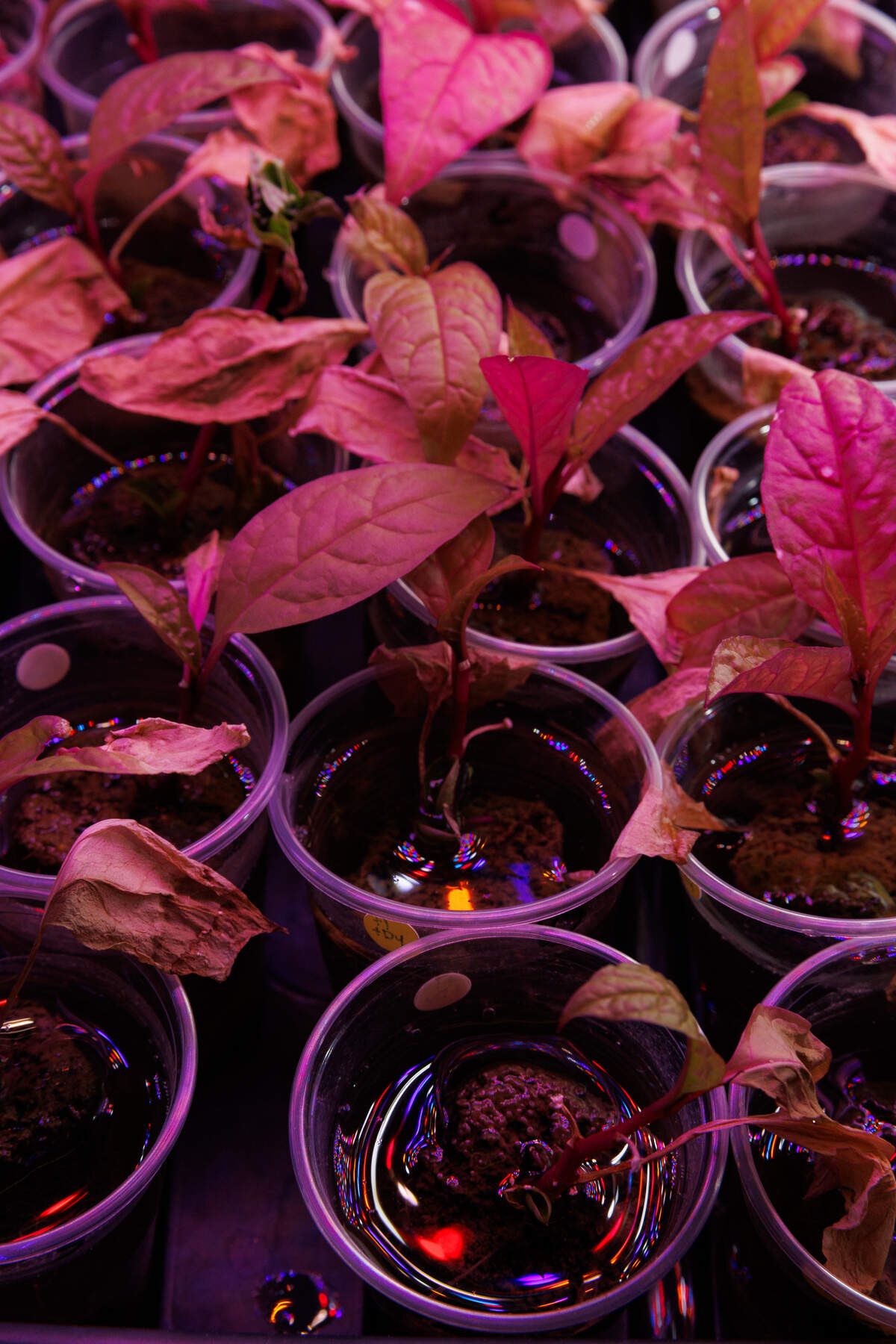
In a new study published in Plant Direct, the team took one step closer to sustainable mining by measuring the levels of rare-earth metals in pokeweed without destroying the plants. Pokeweed, a plant native to North Carolina, can absorb rare earth metals and survive in toxic AMD.
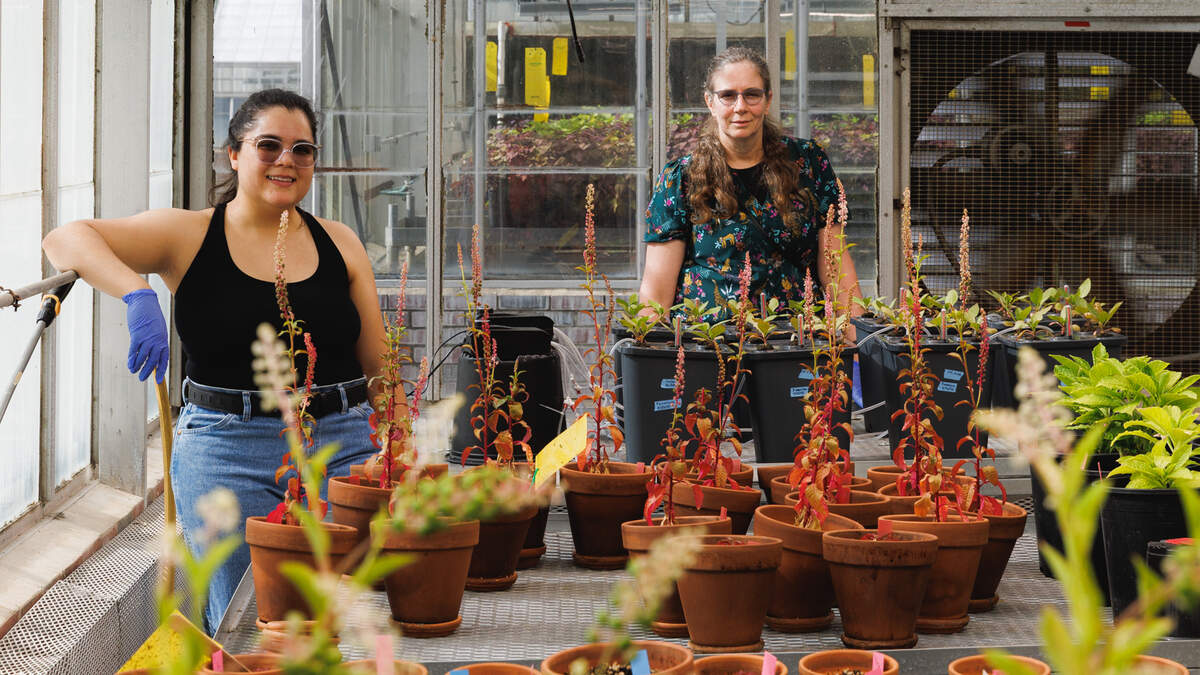
Edmaritz Hernández-Pagán, a former NC State doctoral student, led these efforts in collaboration with Michael Kudenov, distinguished professor of electrical and computer engineering at NC State.
“I’ve always been interested in using nature to solve man-made problems, so I was excited to work on this project,” Hernández-Pagán said. “The techniques that were already established were not very sustainable or accessible. The whole process is very complicated, and you have to destroy the plants.”
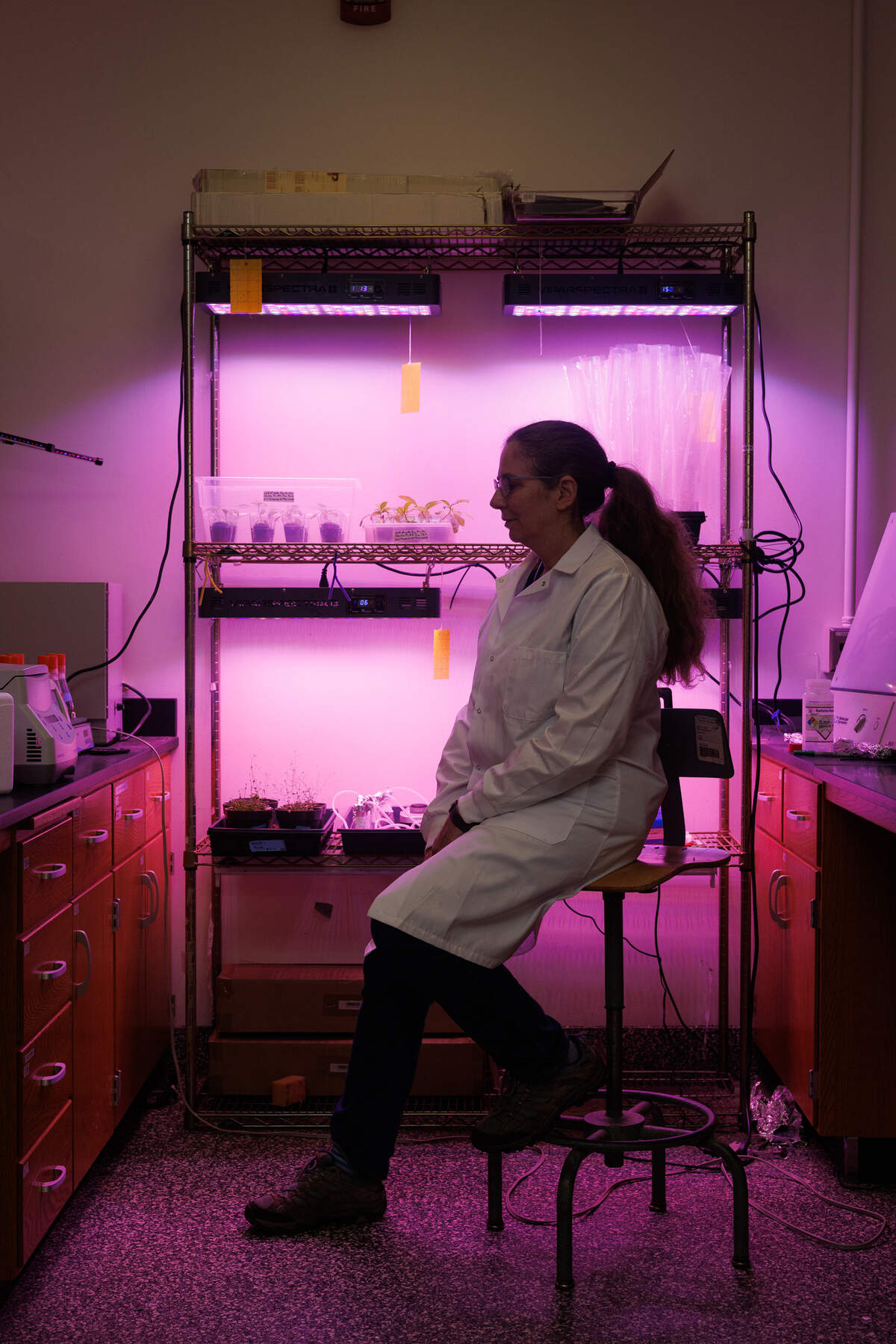
Doherty’s team instead used a method known as fluorescence spectroscopy.
Instead of harvesting whole plants, researchers take a hole-punch from a single leaf, treat it with chemicals, and shine a light on it. By analyzing the intensity and duration of reflected light, they can cheaply and efficiently calculate how much metal is in the plant.
This not only allows researchers to harvest plants at optimal times, but also could help them breed the best-performing plants, making the entire process more efficient.
Yet, sustainability extracting metals from the plants themselves remains a challenge.
“You cannot imagine a greener process than a plant gently plucking a metal from the ground,” said Daniel Dailey, a Columbia University doctoral candidate and collaborator on the research. “But when you just go and turn around and burn it and convert it to carbon, then it kind of defeats the purpose.”
Dailey’s team is developing a process using bacteria to dissolve the plants and extract metals, with no burning or synthetic chemicals.
“I think we’re the first people ... that have done this process biologically,” Dailey said. “Instead of just dumping some acid that was synthetically produced on it, we can use biology to get it out of the sludge and then to get it out of the plant.”
Phytomining doesn’t just offer an opportunity to increase sustainability; as the United States competes with China for access to critical minerals, rare earth metals also play a strategic role.
“Right now, China produces 80% of them; most of the world depends on China,” Doherty said. “After China withheld them from Japan after a political skirmish, everybody started scrambling to get their own sources.”
Phytomining isn’t a fantasy
Despite remaining hurdles, Doherty remains inspired by the possibility that this research can be further expanded and implemented.
“The pokeweed in my backyard right now grew two full feet in two months in a drought,” Doherty said. “That’s phenomenal. How many other plants are in our backyards that are doing these magical properties that we don’t know anything about?”
Hernández-Pagán also emphasized that phytomining isn’t just a fantasy. U.S. based company Metaplant began commercially phytomining nickel in northern Albania in 2024.
“A lot of people think this is impossible,” Hernández-Pagán said. “I want people to know it’s already happening, especially for things like nickel, and we’re working really hard to make it ready for rare earth metals.”
This story was originally published June 13, 2026 at 8:30 AM.