Small, green and looking for love: Why the frogs at this Wake park are so loud
Queenk, queenk, queenk.
On summer nights, Downtown Cary Park comes alive with a wild chorus echoing from the ponds. It’s not a quirky new sound system — it’s the green tree frog, the headliner of Cary’s summer nights.
Most easily heard late at night or after a rain, these tiny crooners have become local celebrities. When the Cary Report posted a video on social media featuring the frogs’ calls, it racked up more than 80,000 views and dozens of comments from people across the Southeast who recognized the familiar soundtrack of summer.
Other users shared that the little singers, most often heard near the park’s stormwater pond, enhance their enjoyment of the park.
“I love hearing them walking through the park this time of year, surrounded by their chorus,” one commenter wrote.
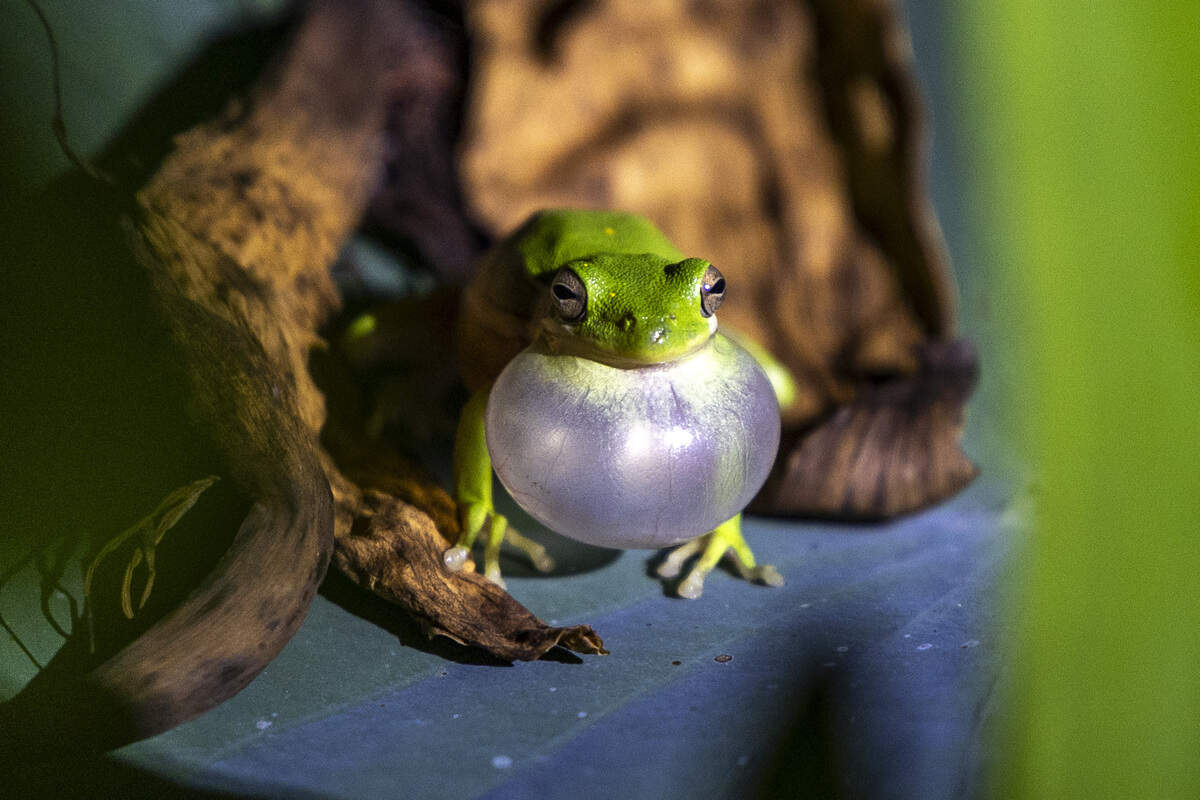
The chorus of green tree frogs is about both love and competition. During breeding season, typically April to September, males gather in boisterous groups around ponds, inflating their vocal sacs and calling out again and again in search of a mate.
Once one male begins, the others join in, trying not to be outshined, crescendoing into a cacophony. Females judge the calls, listening for qualities that signal health and stamina. If a male can call loudly and quickly, he’s probably well-fed and in good health, making a good mate.
Cary Park designed with amphibians in mind
Their presence at the park is no accident, said Patrick McMillan, the park’s horticulturalist and a former Clemson University professor.
“When we were planning the design of the park, we did want to create a low country marsh habitat for amphibians,” McMillan told The News & Observer in a phone interview. “We have over 150 different native marsh species growing in and around the pond now, so it’s ideal for providing breeding habitat for amphibians.”
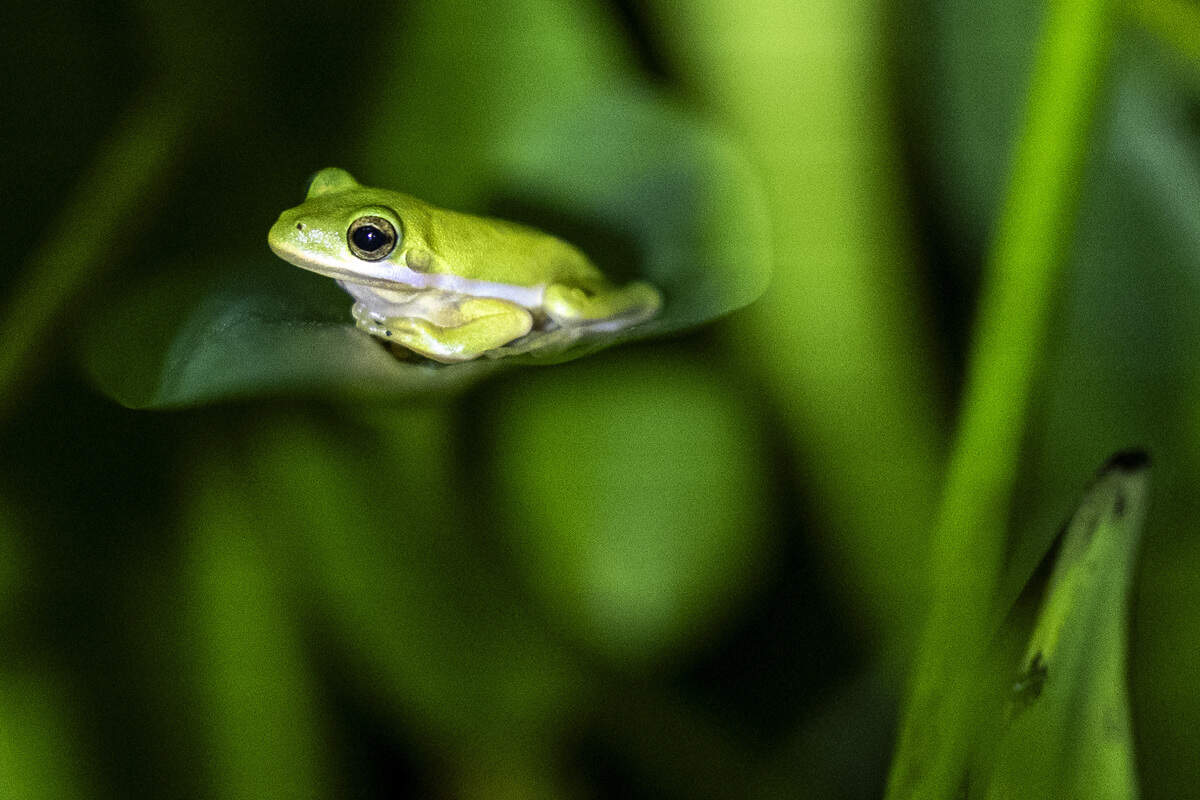
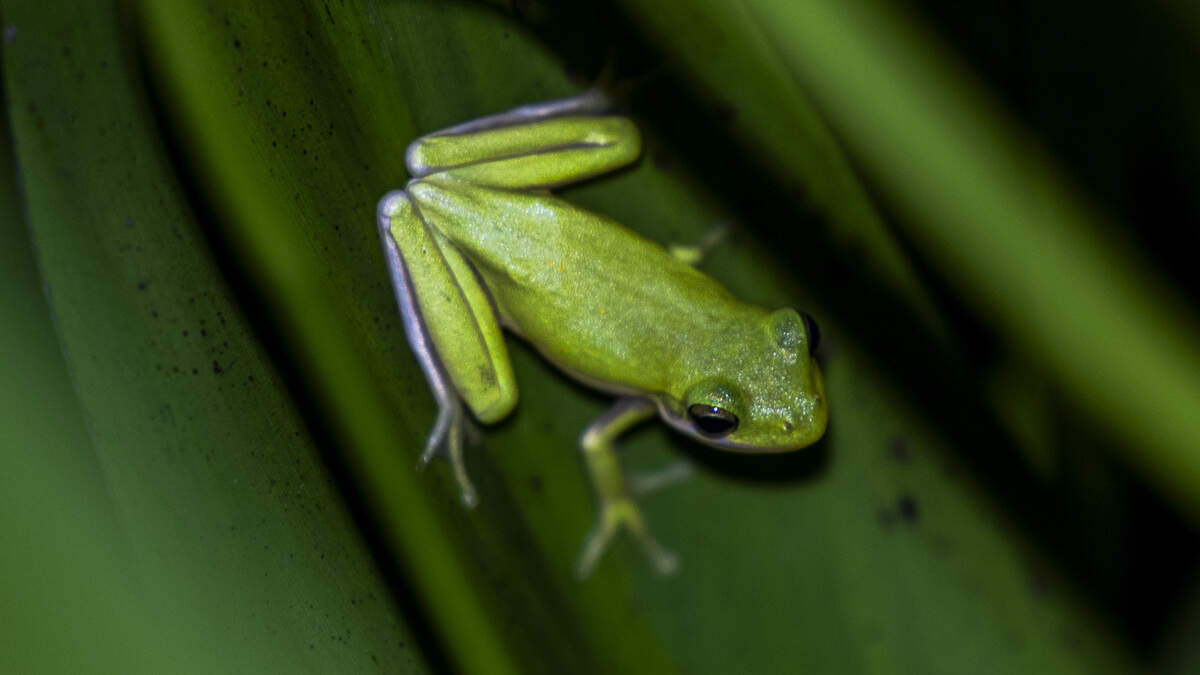
By day, green tree frogs keep a low profile, hiding under leaves or tucked away in shady vegetation to stay cool and moist. When night falls, they come alive, leaping from perch to perch and showing off their acrobatic skills while hunting for flies, mosquitoes, cockroaches and ants.
The pond was intentionally left without fish to help amphibians reproduce, McMillan said. While green tree frogs will reproduce in water with fish, many frogs and toads prefer to lay eggs in vernal pools — temporary pools that dry up — to avoid predators.
Some small fish have appeared naturally, arriving via eggs transferred by other animals.
“We were fishless for a really long time, and now we have lined topminnows and mosquito fish in the pond,” McMillan said. “The less fish you have, the better reproductive success for amphibians.”
That’s why Downtown Cary Park is a prime habitat. The small ponds are full of floating vegetation, perfect for green tree frogs to lay eggs, while the lower risk of eggs getting eaten also benefits the other eight frog and toad species found in the pond.
Frog Idol: Cary edition
But why are the frogs so loud now?
Finding love isn’t easy when background noise from traffic and visitors can be as loud as a vacuum cleaner. These little crooners have to step it up, inflating their vocal sacs to sing at 100 decibels.
That’s like listening to a leaf blower 3 feet away, but small, green and looking for love.
Scientists have even found that female green tree frogs can inflate their lungs to filter out background noise and focus on the calls of their suitors.
More than just singers
On a recent visit, the high-stakes amphibian competition was in full swing, with families using flashlights to search for different frog species in the stormwater pond.
McMillan noted these visits are a natural result of making the park wildlife-friendly.
“I really enjoy working for the park in particular, because the emphasis when we built the park was on incorporating wildlife and people to enrich the experience of both, and that’s really happened here,” McMillan said.
Green tree frogs face real challenges, despite their energy and adaptability. Since they breathe through their skin, frogs and other amphibians are highly sensitive to water pollution from agricultural and industrial runoff.
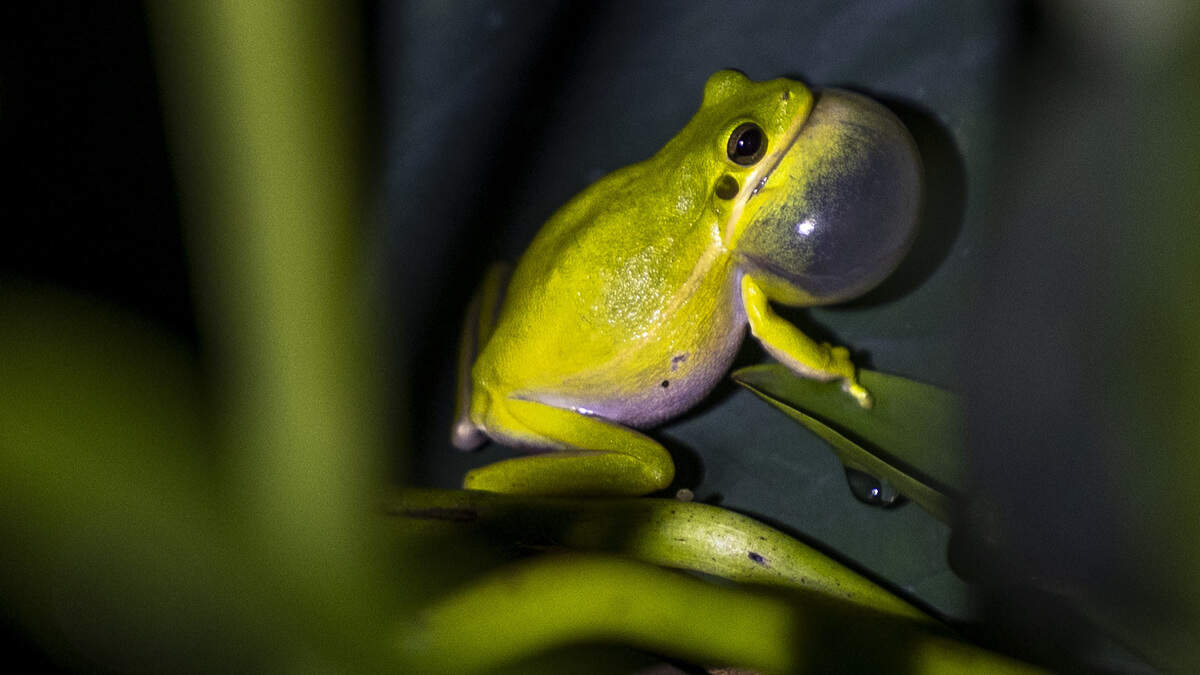
Still, the frogs are thriving at Downtown Cary Park, where their symphonies represent a mix of science and some serious courtship.
McMillan encourages visitors to hear it for themselves.
“The ‘wonk wonk’ call that the green tree frog makes, it starts… to play off of each other when you have so many calling at one time and it just… becomes almost a drone of calls,” McMillan said. “It’s really something that you have to experience to understand.”