A school in Goldston, NC, is accused of a racist event. What to know about the town.
Some students at a K-8 school in the rural town of Goldston are accused of staging a mock “slave auction” in which Black students were “sold,” according to reports by angry parents that were acknowledged by school district officials.
Now the town of less than 300 people in central North Carolina is drawing a lot of attention.
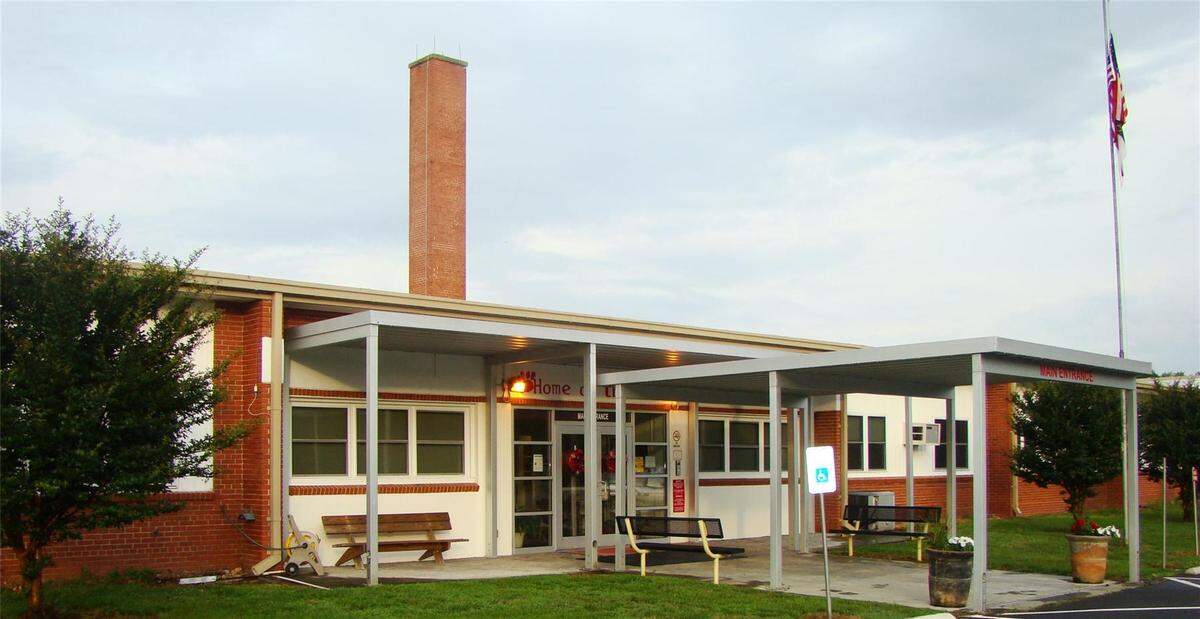
The incident occurred at J.S. Waters School, but details are scarce.
A letter from the Chatham County superintendent doesn’t describe the incident. But a school parent in contact with district officials wrote a Facebook post that included details about the “slave auction” and a video that used the N-word.
The incident, first reported by The News & Observer, generated a swift reaction online from community members, activists and other organizations.
Around 50 people met on Zoom to discuss the issue with Ashley Palmer, the parent of one of the Black students subjected to the racist incident, The Chatham News + Record reported. Those included school board members, leaders of Chatham’s NAACP chapter, the senior pastor of the Word of Life Christian Outreach Church in Siler City and Chatham Organizing for Racial Equity.
The school has about 200 students, 68% of whom are white, 12% Black, 12% Hispanic and 6% of two or more races, according to recent school data.
But what’s the otherwise quiet town of Goldston like?
“Small town, U.S.A.”
Goldston is located between two metro areas, about 45 minutes from both Greensboro and Raleigh.
A train track runs through the center of town, which has a handful of shops, eateries and churches.
The town’s population is mostly white: 89%, according to 2019 American Community Survey data. Five percent of the population is Black, 2% Hispanic and 4% identify as two or more races.
The town’s now-gone Goldston High School counts among its alumni legendary country singer Charlie Daniels, who graduated in the class of 1955 and is from the nearby town of Gulf, according to Chatham Magazine.
It’s “small town, U.S.A.,” says one longtime resident, who thinks it’s not the kind of place where a racist incident like the one at J.S. Waters School would happen.
“We have a great little town. It’s a small town. We’re very close-knit,” said Denise Dunn, who has lived near Goldston for three decades, in a phone interview. “It’s a great community to live in and people are always trying to help each other. We have two little restaurants, there’s a dress store, a post office.”
The town also has two auto body shops, a gas station with a convenience store, a Baptist church and a United Methodist church.
“I don’t know much about that situation,” said Dunn, 66. “But I think it’s surprised everyone in town that something like that could have taken place.”
Dunn, who is white, says she’s heard “both sides of the story” but still doesn’t know much.
She noted that the incident happened with kids she estimates to be around 12 or 13 years old, and “certainly not something that would happen in the town, with adults.”
“I was extremely surprised something like that would take place,” Dunn said.
A deep history
The town is named after the Goldston family, who settled in Chatham County in the 18th century.
Joseph John Goldston Sr. was born in 1800 and lived in Bear Creek, a township a few miles north of Goldston.
According to a historical account from 1950 published online and written by Herbert J. Goldston, the family had a history of owning slaves, which he described as “a despicable custom.”
Allan Martin Goldston, who was born in 1929, added comments to the online historical account, writing that Joseph John Goldston “had inherited around 40,000 acres and many slaves in Chatham County from his father in Halifax County.”
Today, Goldston is a charming and picturesque town with a welcoming community where folks hold close bonds with each other, Dunn said.
Dunn owned Calico Quilt Antiques, which she operated for 10 years with her mother. It closed last year, after her mother died.
The store operated since the 1980s, Dunn said, and before that was a Farmers Alliance store in a building built in 1899.
The incident at the school shouldn’t deter people from visiting the town, Dunn said.
“Goldston is a great community,” she said. “Just because this has happened it doesn’t downgrade the community at all. Anyone would be blessed to live in our community.”
This story was originally published March 12, 2022 at 12:06 PM.