
Durham’s historically Black suburbs want to control their future as growth spreads
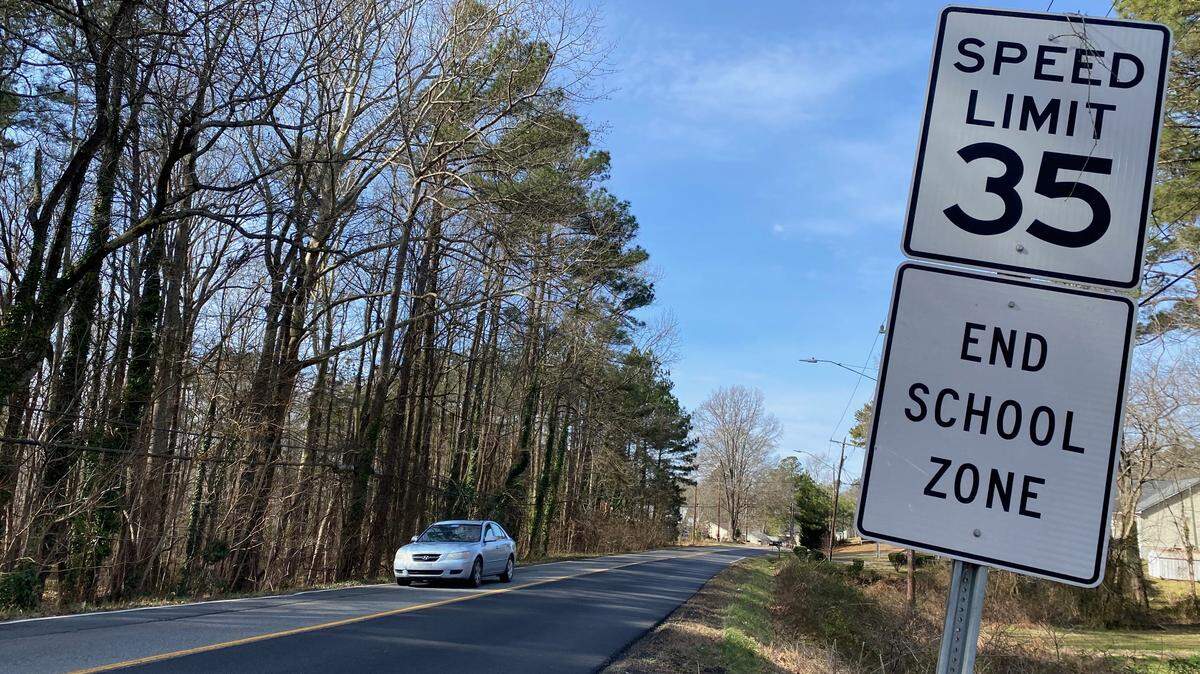
To get to Merrick-Moore Elementary School, some kids have to walk through grass along a one-lane, two-way road where cars, buses, and delivery trucks speed by at over 35 mph.
Ponsella Brown, who lives nearby, said she once had to identify the body of a boy who got hit by a car in front of the school.
Cheek Road is dangerous, residents say. And the traffic is only getting worse as more people move in.
About 18 Merrick Moore community members and their supporters spoke at Monday night’s City Council meeting against a proposed rezoning for up to 320 homes, instead of the 202 allowed under the existing zoning, on land connected to Cheek Road.
They won the battle; the City Council unanimously rejected the proposal.
But the future of historically Black and low-income neighborhoods like Merrick Moore remains uncertain, as developers continue to buy land and build homes for $200,000 and up across Durham.
‘Something needs to be done about this road’
The proposed development wasn’t the neighbors’ only concern.
“The bigger part of the picture was getting the city to acknowledge its inequity around infrastructure,” said Bonita Green, a leader of the Merrick Moore Community Development Corp.
The City Council continues to rewrite zoning rules that allow for more housing in rural parts of Durham, without considering the impact on traffic or on low- and fixed-income residents, she said.
Cheek Road has needed improvements for decades, said Green, whose father previously led the community organization.
“People are going to build. I can’t control that,” she said. “But something needs to be done about this road, and we’re not going to sit back and take it.”
Is more development inevitable?
Horvath Associates and Joven Properties wanted to build 320 townhouses and single-family homes on the 101-acre project site.
To build that much housing on 2720 Faucette Ave., the City Council would have needed to change the land’s zoning from Residential Rural to Planned Development Residential.
Without the rezoning, the developer’s alternative was to build 202 units as a conservation subdivision, according to a presentation by Tim Sivers, president of Horvath Associates.
Sivers had also offered a range of incentives to encourage the council to support the zoning change.
Those incentives included one-time contributions to Durham Public Schools and the city’s dedicated housing fund of $20,500 and $40,000, respectively.
The developer also committed to build a sidewalk connecting Merrick-Moore Elementary School to the new homes, Sivers said.
Those offerings were not enough to quell some neighbors’ traffic concerns.
“What about the other areas that have kids walking, that have no sidewalks?” Brown asked.
Before voting, Mayor Pro Tem Jillian Johnson said she felt conflicted.
The lower-density alternative would likely mean bigger homes on bigger lots. A lot of the residents’ unease about razing trees and increasing traffic would happen regardless of which development got built, she said.
“There will be more traffic. The trees will be cut down. Habitats will be disturbed. Streams will be disturbed,” she said. “There won’t be sidewalks.”
Cheek Road and Junction Road, which runs along old train tracks, borders several thickets of trees and open, grassy patches. One resident, speaking against the rezoning, said a family of deer and owls live in her backyard.
Council members asked Bill Judge, assistant director of the transportation department, about upgrading Cheek Road.
Because it is a state-owned road, Judge said, Durham would have to apply for funding through the State Transportation Improvement Program, a competitive program with a small pool of money.
A project for the stretch of Cheek Road within Merrick Moore, which is about one mile, would compete against projects from Raleigh, Wake County, Granville County and Person County.
Council member DeDreana Freeman implored her colleagues to try and see what they can do about the road, which hasn’t been upgraded in at least 50 years, according to Judge’s estimate.
“The state’s not going to cover it anytime soon, but we can at least try to figure out how to put some infrastructure in place so that the children can walk to school safely,” she said.
Neighbors vs development
Before their vote, council members Pierce Freelon and Charlie Reece said they would vote against the rezoning because neighbors didn’t want it and it was in a historically Black neighborhood. Other council members indicated they agreed.
But it doesn’t often pan out that way.
In the last year, the City Council has supported a majority of rezoning requests, even as residents speak out against higher density.
Johnson said the only way the city can get cheaper housing from for-profit developers, right now, is by allowing them to build more townhouses.
“We don’t always listen to the neighbors, and if we did, it would be a real serious problem for our overall housing crisis,” Johnson said.
In 2018, a city planner estimated about 160,000 people would move to Durham within the next 30 years, and 62,200 houses would be needed for their arrival, The News & Observer reported.
People are moving into the Triangle in droves, and the pandemic isn’t stopping them.
“Many more people are coming into Durham than they are leaving, and one of the main things that will drive housing prices up is (if) we don’t let developers build,” Mayor Steve Schewel said.
Braggtown faces similar challenge
Green thinks if people had not come out Monday, the council may not have been so unanimous in their vote.
“It was a very diverse crowd last night, who were opponents, you know,” she said Tuesday. “They were diverse in race and socio-economic background.”
The opposition included new and longtime residents. Transportation and environmental activists, and a teacher also spoke against the development.
“It wasn’t just a bunch of poor people who were complaining,” Green said. “These people are their constituents, you know, and there is an election coming up.”
Among the opponents was Vanessa Mason-Evans, of the Braggtown Community Association.
The Braggtown community group successfully fought off two developments in August. Mason-Evans had argued then that the nearly 900 homes being proposed for the northern Durham community would raise property taxes and lead long-time, Black homeowners to move away.
Green said the Merrick Moore community and Braggtown community stand together in their efforts to control how much development will occur in their neighborhoods.
“We’ve been overlooked. Our voices have been quiet for years,” she said. “And, you know, we’re not taking that now.”