These Triangle agencies will resettle more than half of the Afghan refugees coming to NC
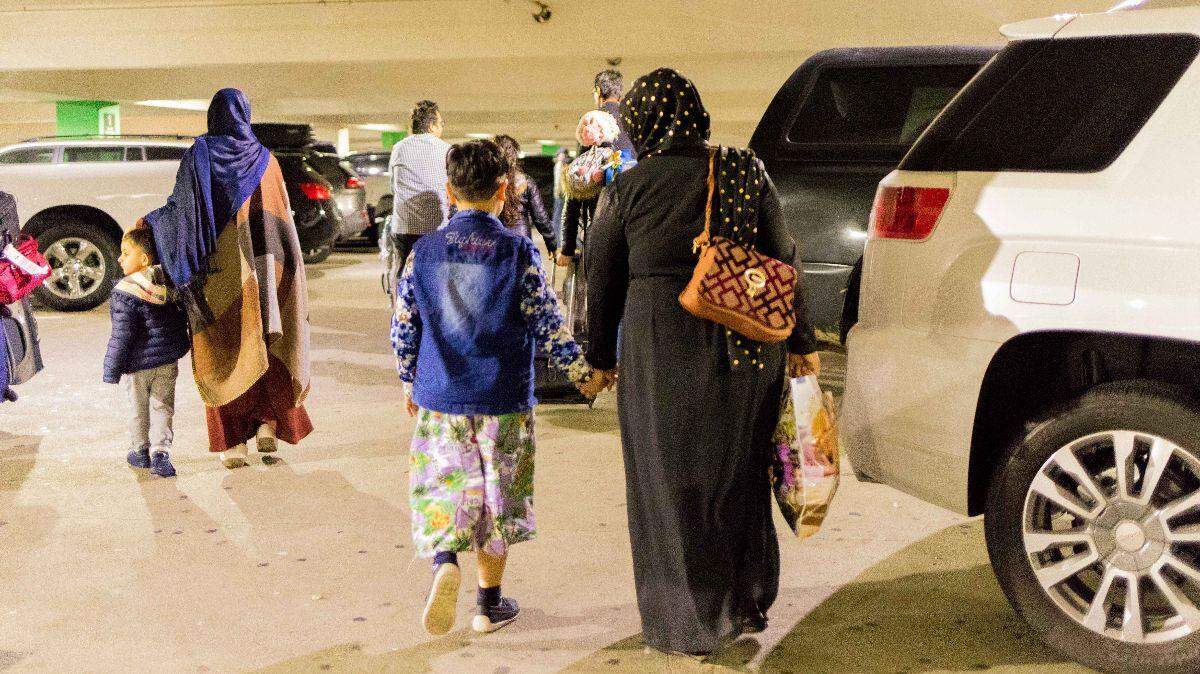
Grocery gift cards, free legal help, winter clothing ... and the list of needs keeps growing for a now estimated 500 Afghan refugees that one Durham refugee agency will be resettling in the next year.
Kokou Nayo, refugee community organizer for Church World Service Durham, says among the most important things people looking to help can contribute are financial donations and temporary housing.
Since the last week of July, the organization has helped 14 Afghan refugees, including a family of eight.
In its monthly newsletter, World Relief Durham, another agency, said it expects to resettle 380 refugees in the next year, with at least 80 of them from Afghanistan.
Lutheran Services Carolinas is a third agency affiliated with the U.S Department of State Refugee Processing Center. Their Raleigh-based office resettled 2 Afghans at the beginning of September. Through the beginning of 2022, they plan to resettle 200 Afghans in the Triangle.
Together, the three agencies will resettle more than half of the projected 1,169 Afghan refugees coming to North Carolina cities over the next six months, Carla West of the N.C. Department of Health and Human Services told The Charlotte Observer.
The six cities are Raleigh, Durham, Charlotte, Asheville, Greensboro and New Bern.
The other refugee agency that will help in the Triangle is USCRI North Carolina. The News & Observer contacted the agency but has not yet received a reply.
In Raleigh and Durham, the pending arrival of hundreds of Afghan nationals fleeing a Taliban-controlled Afghanistan seems to be well-received.
In a video update, World Relief Durham executive director Adam Clark said that in the office’s 14 years, his team “never experienced such an outpouring of community support in such a short period of time.”
The agency has received more than 900 volunteer applications.
“We have been truly blown away by the extraordinary outpouring of support this past month in response to the Afghan refugee crisis,” Clark said.
Hundreds of people have donated financially, and the agency’s Amazon wish list of items to furnish apartments for newcomers was completely filled.
But as the number of Afghans arriving increases, so will the need for assistance.
“We’re receiving these families who have been through God-knows-what, you know? Things that we can’t even begin to imagine. And we have to put a family of five in a small two-bedroom apartment,” said Collins of Lutheran Services Carolinas about housing, in particular. “It’s not bad living conditions by any means, but it’s not what they deserve.”
“I wish I could put a family in a giant house and everybody gets their own bedroom, but it’s just it’s not realistic right now,” she added.
A list Nayo emailed to The N&O included: volunteers to set up apartments, ESL volunteers to help with English proficiency, financial sponsors, gift cards for groceries, fall and winter clothing, job leads, school back packs and pro-bono immigration help for Afghans with humanitarian parole.
Humanitarian parole is a temporary status granted by the U.S. Department of Homeland Security’s Citizenship and Immigration Services in emergency situations to people “otherwise inadmissible into the United States.”
Many Afghans without Special Immigrant Visas are arriving on humanitarian parole. But it doesn’t make them eligible for refugee resettlement services and funding, and it typically only lasts for up to a year.
Both Nayo and Clark are asking people to support more funding for refugees and humanitarian parolees for the upcoming fiscal year, which begins October 1.
“Make your voice heard today to ensure that Afghan arrivals and the resettlement agencies receiving them have sufficient support to empower Afghans to rebuild their lives,” World Relief’s Adam Clark said in his newsletter.
This story was originally published September 23, 2021 at 11:40 AM.