Durham’s sidewalks are in bad shape. How the city could fix them equitably.
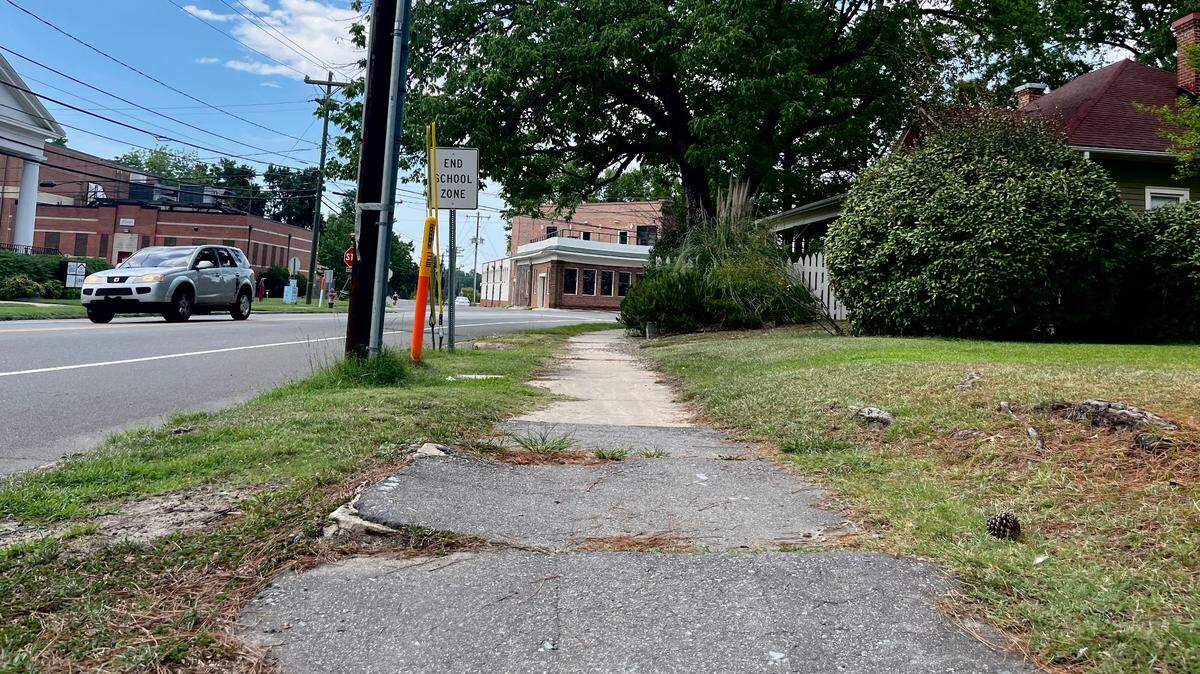
Durham’s sidewalks are in such bad shape that for every mile of sidewalk, there are over 1,000 holes, trip hazards and other deficiencies, a city-commissioned study has found.
And residents are not happy about it.
A citywide survey conducted last year found 57% of all residents and 85% of people of color were dissatisfied with the condition of city sidewalks, consultant Aaron Hester told the Durham City Council on Thursday.
Repairing the sidewalks will cost about $76.8 million, consulting firm Precision Safe Sidewalks determined.
Durham’s nearly $794 million budget for this fiscal year doesn’t include any money for sidewalk repair.
Another consultant delivered a report Thursday saying city roads were in fair condition and would take tens of millions to improve: $12.5 million a year to simply maintain, $19 million to upgrade to satisfactory, or $25 million annually to reach peak condition.
City Council members balked at the price tags.
“We really are going to have to consider doing a bond and putting that in front of the voters, because we’re hearing from them that they’re dissatisfied and ultimately they have to pay for that with their taxes.,” Councilwoman Javiera Caballero said. “I don’t see it happening with our current fiscal picture.”
“I agree with you. It’s going to be a heavy lift,” Mayor Pro Tem Mark-Anthony Middleton said.
City wants equity lens
Under the proposed plan to fix sidewalks, the firm outlined a method for prioritizing projects in a deliberately inclusive way, which council members praised.
“Durham is leading in this area, even though we’ve got a lot more work to do,” Middleton said. “This is one of the concrete examples of how equity is informing and recontouring and reconfiguring policy.”
Prior to the study, the city was relying on service requests to identify sidewalk problems. Clint Blackburn, a manager in the city’s public works department, said this was inequitable and reactive.
“We found through that that primarily service requests were being submitted by higher-income neighborhoods,” Blackburn said. “So we were having to backdoor equity by searching for other areas of the city to equally apply that money.”
The projects would be sorted by census zones (Durham has 63) and weighted by the following categories:
- 35%: Number of people of color
- 25%: Deficiencies per mile
- 15%: Income
- 10%: Number of no-car households
- 10%: Residents older than 65
- 5%: Residents younger than 18
This story was originally published August 5, 2022 at 8:37 AM.