Single-family homes planned for Durham County after Wetrock Farm ‘agrihood’ flops
Florida investors plan to build a 141-home subdivision in Bahama after a permit and site plan cleared the Durham County Board of Commissioners on Monday night.
The land was initially planned for Wetrock Farm, a housing subdivision of the same size with a working organic farm at its core.
Commissioners gave that project the go-ahead in 2015 and construction kicked off in 2019, The News & Observer previously reported, before stalling as cash dried up.
“The concept failed. Nobody showed up to buy any lots or any houses. It was an idea whose time has not yet come,” Patrick Byker, the attorney for the new developer, told the commissioners Monday.
Boca Raton based investment firm III Capital Management, Wetrock Farm’s lender, bought the acreage in northern Durham County in early 2021 for $4,765,500, property records show. The deed was in lieu of foreclosure, Byker said.
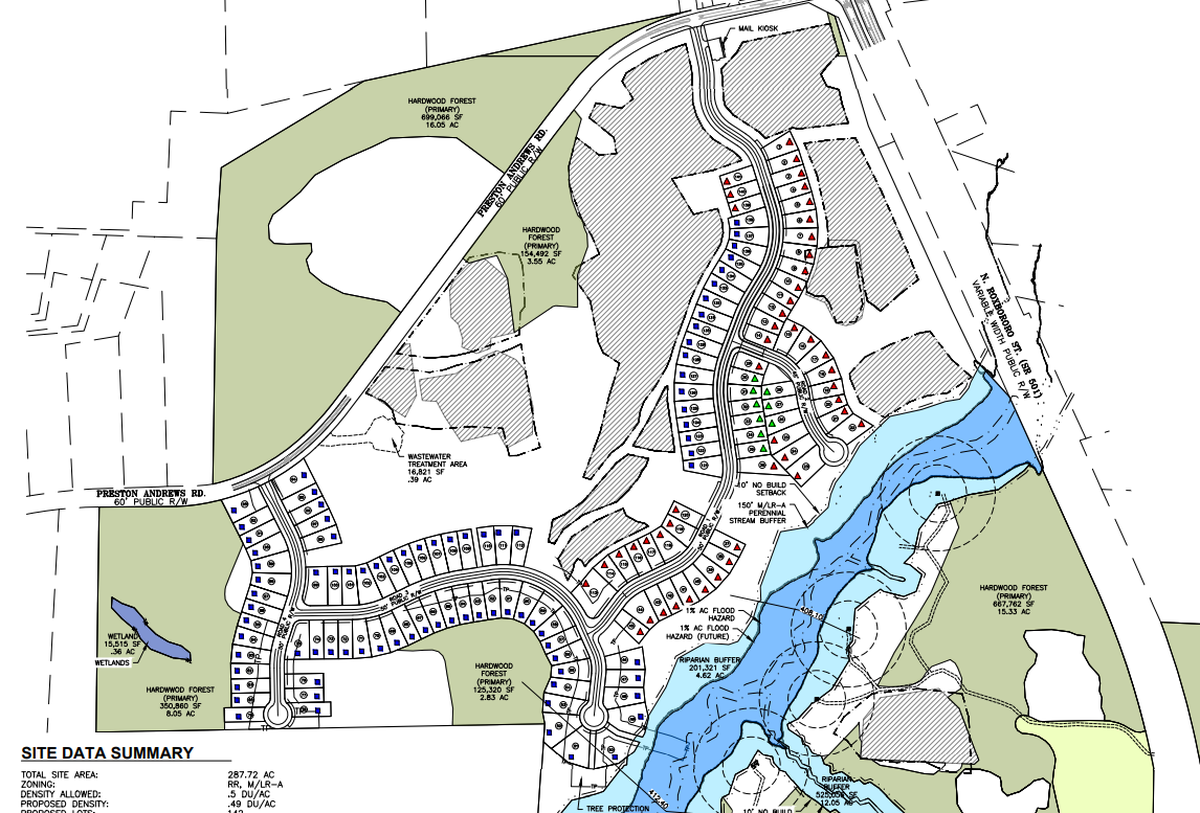
Monday night’s votes — both unanimous — were on a permit for an onsite water and sewer system and a site plan for the “conservation subdivision.”
A conservation subdivision has at least 50% of its area designated as open space. Instead of units being spread out on a large tract of land, they’re concentrated in smaller areas.
“The conservation subdivision ordinance is designed to really incentivize the preservation of environmentally sensitive land, open space and farmland in the county,” Planning Director Sara Young explained. “It has some environmental benefits. It certainly has benefits in terms of habitat preservation, and also aesthetics of maintaining a rural character in some of our rural areas.”

The future subdivision, named Mason Farms, is situated on 287 acres southwest of North Roxboro and Preston Andrews roads.
“If you’re driving down Roxboro Road, you will only see very few homes,” Commissioners Vice-Chair Wendy Jacobs noted. “Very minimal visual impact.”
Gary MacConnell, president of Cary-based engineering firm MacConnell Associates, said community water and wastewater management systems would be best suited to the site, since city lines don’t extend that far north.
“Instead of trying to manage 141 septic tanks, there’s one system that’s going to be managed basically by a private utility that’s also regulated by the state,” MacConnell said. “I can’t think of a better system to have for an area like this.”
The neighborhood will have two entrances, both on the two-lane Preston Andrews Road, where a westbound left turn lane has already been added.
Traffic engineer Mary Lynn Smith was asked by Commissioner Heidi Carter whether the site plan encouraged biking and walking.
“This area is not one that has a whole lot of existing pedestrian connectivity. I do think it would promote it internally,” Smith replied.
The two-hour discussion attracted the attention of Preserve Rural Durham members, some grateful for the conservation efforts and some pressing for more time.
One resident wearing the group’s bright green T-shirt asked that the vote be postponed 60 days because many didn’t know the property had changed hands and was undergoing redevelopment.
“We haven’t been given enough information. We haven’t been able to consult our own experts,” Katharine Ross said.
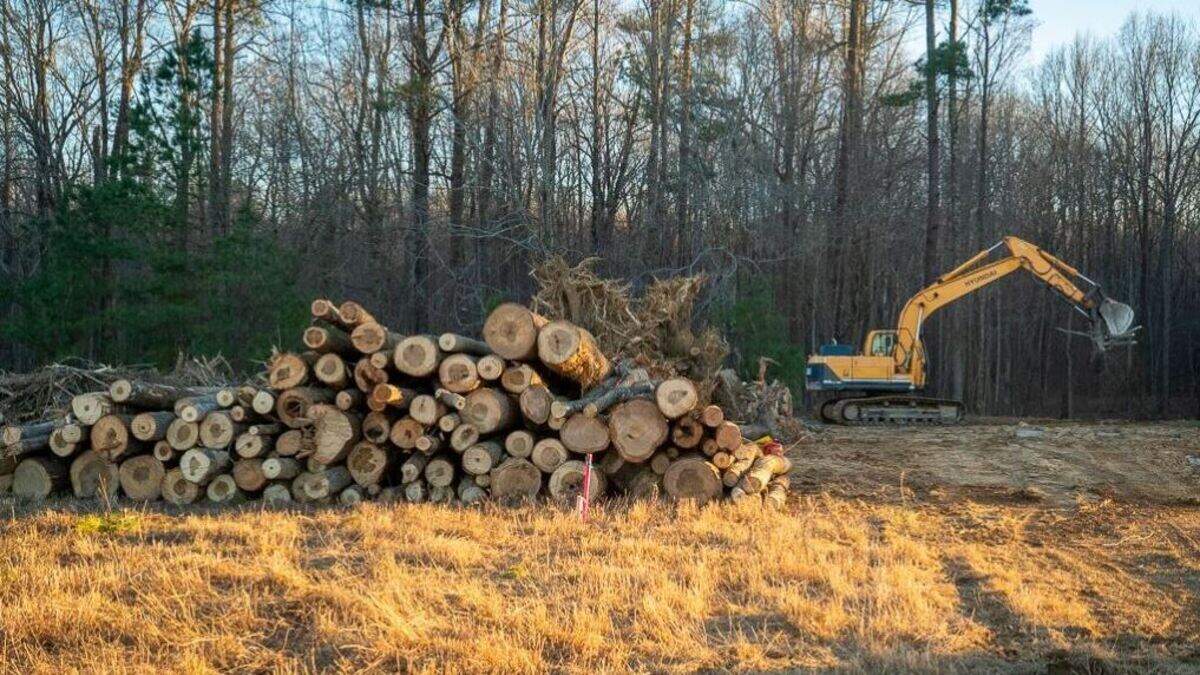
The developers managed to persuade the commissioners that since the homes were already allowed to be built by-right — meaning current zoning permitted building without a board vote — a community wastewater system would be best environmentally.
“Typically rural development ends up being by right with individual well and individual septic, meaning it is designed to support one house on one lot,” Young said.
After the meeting, Byker said they’d move to find a builder as quickly as possible.