New one-man play uncovers complexities of a Jim Crow-era murder in Durham
Eighty years after a Black Army soldier was shot and killed by a white bus driver in Durham, his story is being told in a new play.
“Changing Same: The Cold-Blooded Murder of Booker T. Spicely” tackles the injustice of Jim Crow and the ill treatment of Black men training to fight for freedom overseas.
But playwrights Mike Wiley and Howard Craft also highlight how Durham’s Black elite responded to the crime in a way that frustrated Spicely’s family and affected the bus driver’s trial.
Digging into the history yielded a more complicated story than they expected.
“You have to tell what happened, but we also have to put it in a context,” Craft said after an early public reading of the play in July. “It was very important for me and Mike to get to the complexities of it, so we judge it fairly.”
Pvt. Booker T. Spicely was living in Philadelphia when he enlisted in the Army in late 1943 and was assigned to Camp Butner just north of Durham. On his way back to camp on July 8, 1944, Spicely questioned the driver of a city bus who asked him to move to the back when several white soldiers got on.
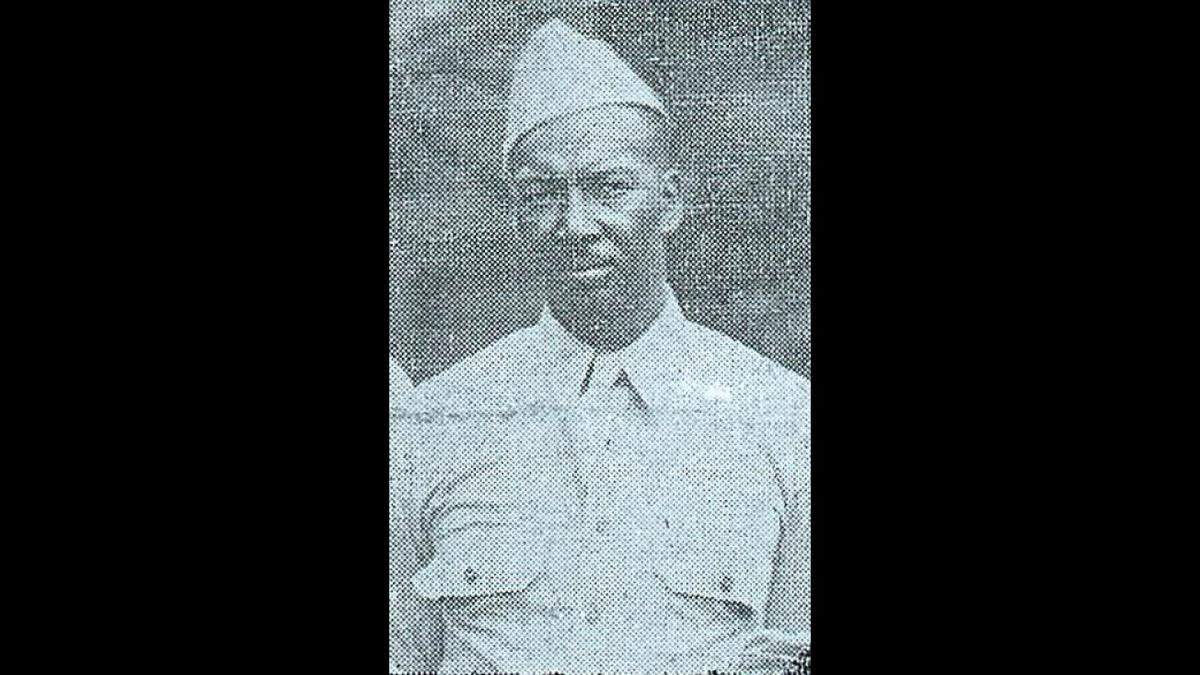
When Spicely exited through the back door at the corner of Club Boulevard and what is now Berkeley Street, the driver, Herman Lee Council, stepped out the front and shot him twice, leaving him lying on the side of the street as Council finished his route.
Council was charged with murder. Duke Power Company, which owned and operated the bus, put up the bail money that allowed him to continue working until his trial two months later and also provided his attorneys. After a full day of testimony from witnesses, an all-white jury took 28 minutes to declare him not guilty.
A one-man play with several characters
The play begins with a 99-year-old narrator, Gideon Storm, a fictitious character who says he recalls the time of the Spicely murder.
But more than a dozen other characters are real, some speaking in their own words from letters, court testimony and editorials. They include Spicely, his brother Robert, Council’s sister, the judge in the case, and soldiers, both Black and white, who knew Spicely or witnessed the shooting.
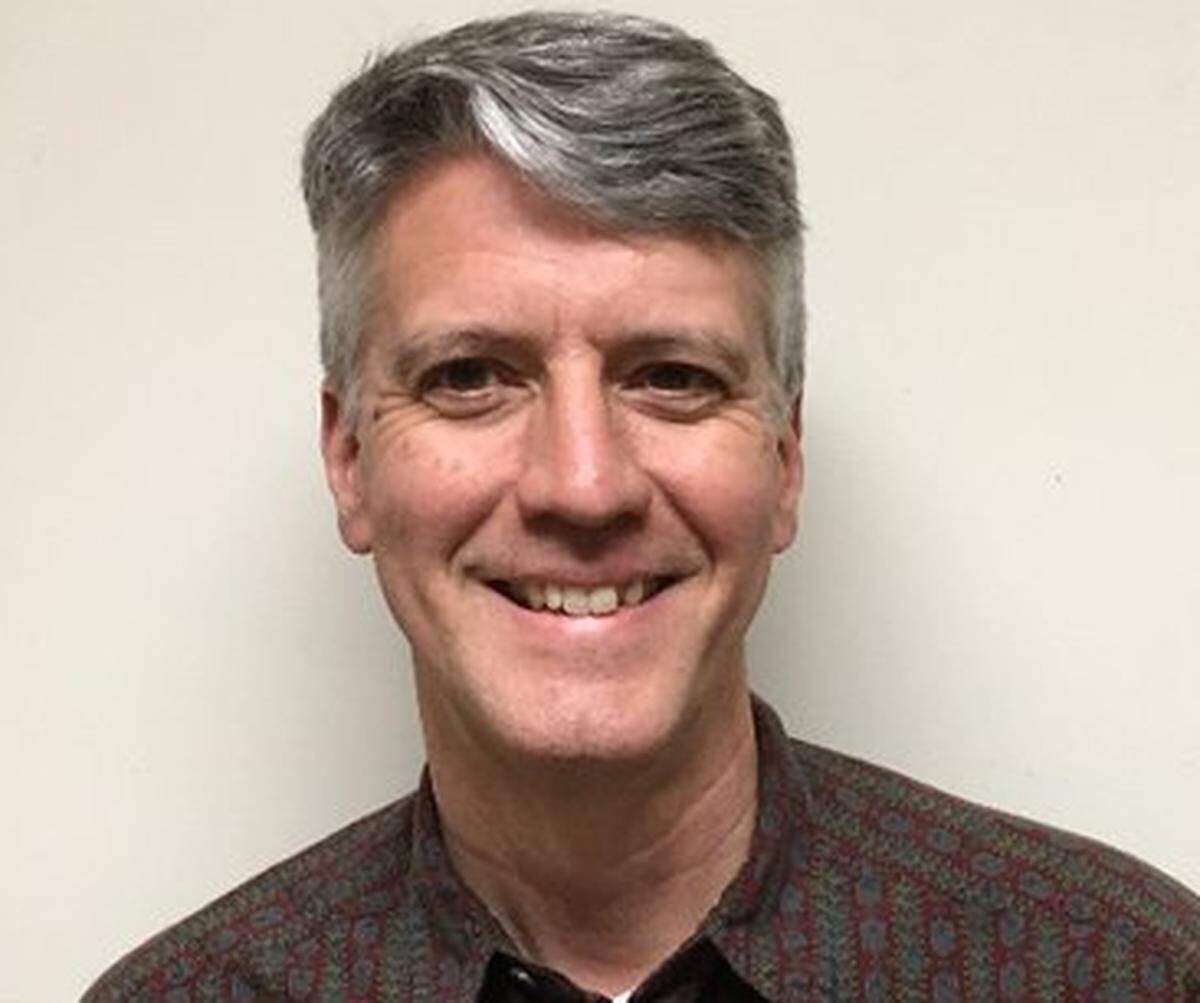
Wiley plays them all, changing his voice, diction and body language to become each one. Wiley, a UNC-Chapel Hill graduate who is currently an artist in residence at Duke University, has written and performed several plays about the Black experience in America, including previous one-man performances about Jackie Robinson and the lynching of Emmett Till.
By including so many voices, the play goes beyond the crime to show what life was like for Blacks in Durham in the Jim Crow South, said Tim Tyson, the writer and historian whose memoir, “Blood Done Sign My Name,” also told the story of the killing of a Black Army veteran in Oxford in 1970. Wiley adapted Tyson’s book for the stage.
“One of the things I admire so much about this work is that it provides a lot of historical context and a multi-sided approach to the story,” Tyson said at the reading in July.
Much of the discussion after the reading focused on the decision by the legal team helping prosecute Council to hire a local white trial attorney rather than bring in lawyers from the NAACP Legal Defense Fund. Future Supreme Court Justice Thurgood Marshall and other NAACP attorneys consulted on the case but did not appear in court.
James Shepard, founder of what is now N.C. Central University, and C.C. Spaulding, president of N.C. Mutual Life Insurance Company, were among those who feared the NAACP’s involvement would cause unrest that could undo what Blacks had accomplished in Durham. The play quotes from a letter Robert Spicely wrote to Marshall, indicating he wanted the NAACP to seek justice for his brother and felt betrayed that local leaders pursued a different strategy.
“Durham was supposed to be this magical safe place for Black people, and yet this happens,” Craft said. “And then the leaders don’t have your back. The injustice that was done to your brother is not their main concern at all.”
Play to help keep Spicely’s story alive
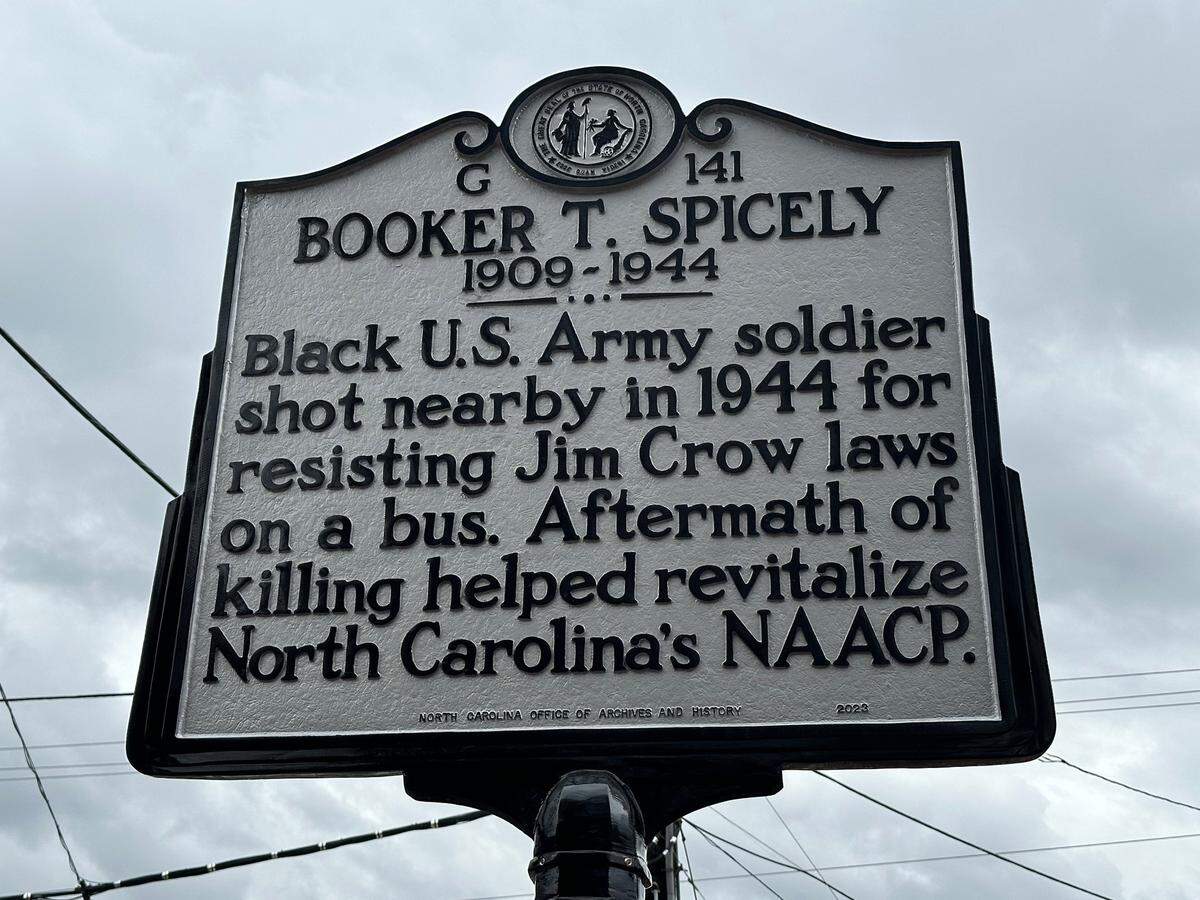
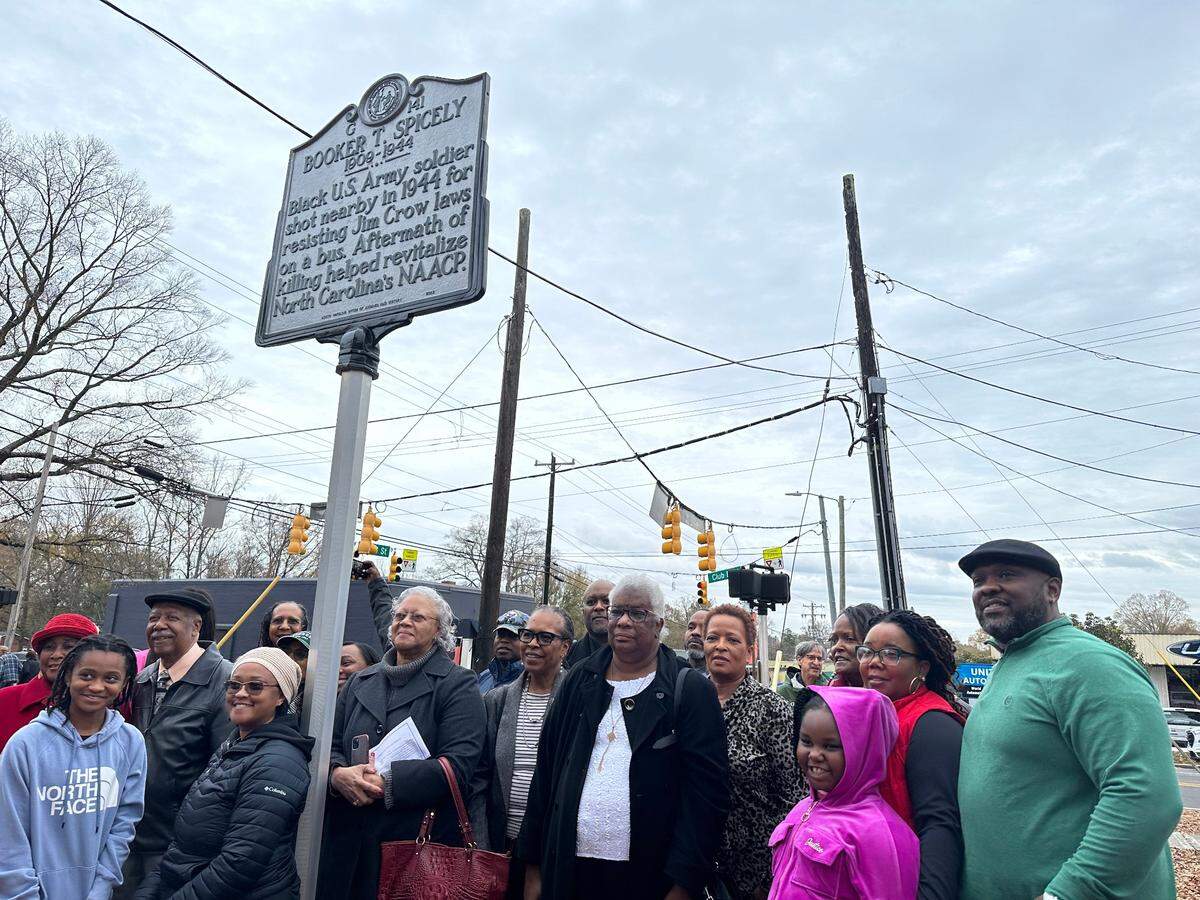
Wiley and Craft, a playwright and UNC professor, were asked to write a play about Spicely by the Booker T. Spicely Committee, a group of Triangle residents working to ensure his story isn’t forgotten. The committee was instrumental in persuading the state to erect a highway historical marker last year near where Spicely was shot.
The committee approached Duke Energy about underwriting the play, as a form of restitution for supporting Council 80 years ago, said James Williams Jr., a retired public defender for Chatham and Orange counties who co-chairs the committee. The company agreed.
The play opened Thursday, Nov. 7, at Swain Hall Black Box Theatre on the UNC Chapel Hill campus. It will be performed again Nov. 8 and 9 at 7:30 p.m. and Nov. 10 at 2 p.m.
It then moves to Brody Theater at Branson Hall on Duke’s East Campus in Durham on Nov. 14, 15 and 16 at 7:30 p.m. and Nov. 17 at 2 p.m.
Tickets are $20 for general admission or $10 for students and seniors. For more information, including links to buy tickets, go to bit.ly/4fe0Of9.
Wiley said he hopes to perform the play elsewhere, as he does with his other solo performances.
“I do a number of them around the country, in schools and colleges and communities and so on,” he said. “This will be another offering for communities to bring to their organizations.”
For information, go to mikewileyproductions.com/.
This story was originally published November 7, 2024 at 4:02 PM.