
3 Red Wolf pups born at Durham museum. Why they’re ‘crucial’ for species survival
Three of the rarest puppies in the world were just born at Durham’s Museum of Life and Science, another milestone in red wolf conservation efforts.
The pups were born May 3 to Martha, a 7-year-old female, and Oka, an 11-year-old male, and are all in good health, museum officials announced Tuesday.
The pair were matched two years ago as part of an effort to preserve genetic diversity within the critically endangered species.
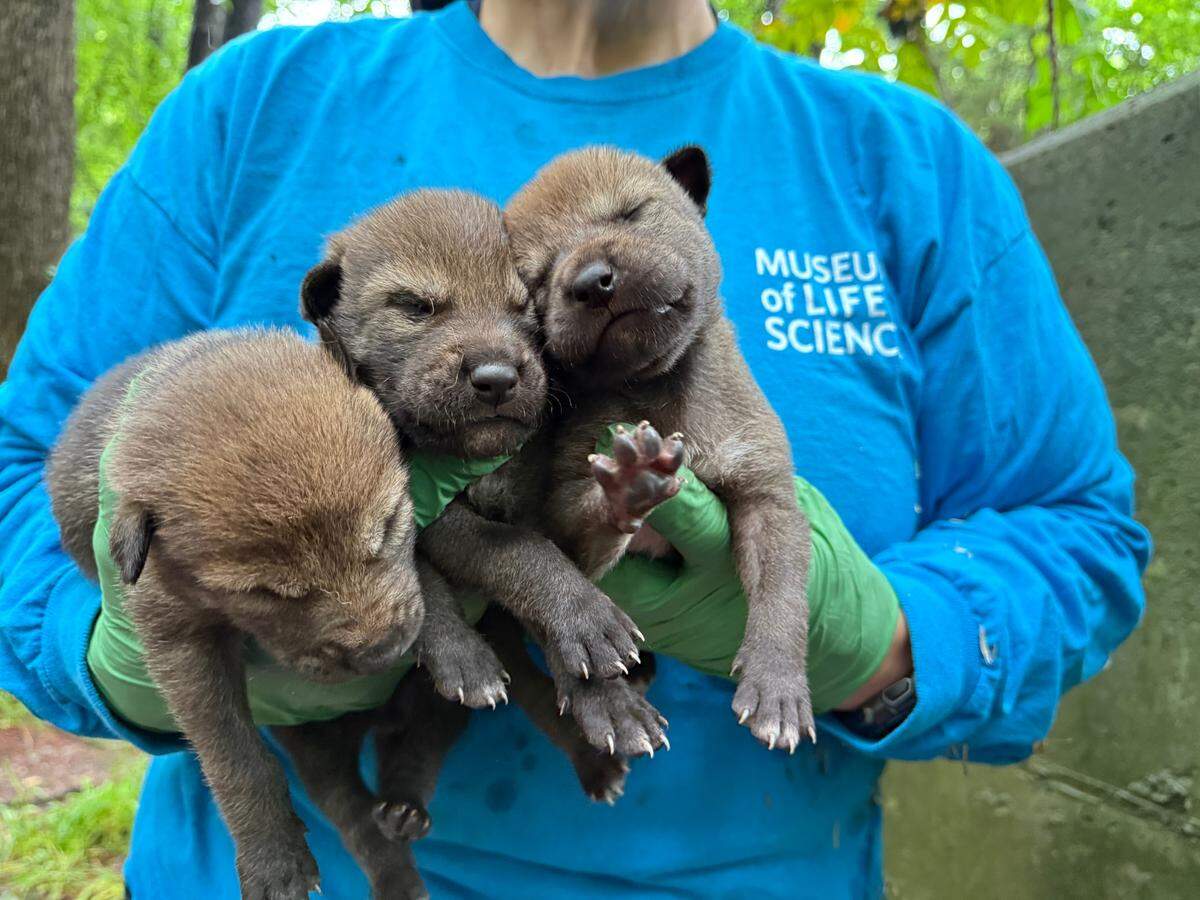
Red wolves were once a top predator throughout the southeastern United States, but their numbers have dwindled. Only about 20 remain in the wild in and around the Alligator River National Wildlife Refuge in Dare and Hyde counties. About 300 are in human care, and breeding efforts have helped save the species from extinction.
Sherry Samuels, the senior director of animal care at the museum, said each red wolf pup is “crucial” to the survival of the wolves and “offers hope for the broader Red Wolf population.”
The puppies’ birth is the second consecutive breeding season at the museum. Since 1993, there have been 23 red wolves born there with births in 2002, 2017, 2018, 2019, 2024 and this year.
Last year, Adeyha, who was born in 2014 at the New Zoo in Green Bay, Wisconsin, whelped seven puppies at the museum. She was brought there to breed with Oak, who was born at the N.C. State University College of Veterinary Medicine in 2019. The puppies were sent to other facilities when they became old enough to breed, an earlier story reported.
Museum-goers can see the puppies beginning in mid-June, the news release said. Red wolves, however, tend to shy away from crowds, and patience and quiet observation are recommended when seeing the new pups, Samuels said.
The next steps for the puppies will be made this summer at an American Red Wolf SAFE planning meeting.
The museum, at 433 W. Murray Ave., is home to black bears, lemurs and over 60 other animals on its 84-acre campus.
About the red wolf
Red wolves have cinnamon highlights in their coats, giving them their name. They are smaller and more slender than gray wolves.
Once they reach adulthood, red wolves can weigh between 45 and 80 pounds and live up to 15 years in captivity. In the wild, their life span is about seven years. They breed once a year and give birth about 60 days later, according to the U.S. Fish and Wildlife Service.
They can look like coyotes, which some conservationists believe has led to the wolves being more prone to being shot and killed. Red wolves have also been victims of vehicle strikes and loss of habitat, contributing to their decline.
The remaining, wild red wolves live in northeastern North Carolina with packs at the Alligator River National Wildlife Refuge in East Lake and Pocosin Lakes National Wildlife Refuge in Columbia.
This story was originally published May 13, 2025 at 4:57 PM.