
Durham adopts neighbor-driven road map for Northgate Mall redevelopment
AI-generated summary reviewed by our newsroom.
- Durham City Council approved the Walltown Small Area Plan for mall site use.
- Plan emphasizes housing, transit, retail and sustainability for 60-acre site.
- New zoning restricts development scope while guiding future redevelopment bids.
Durham city leaders now have a resident-driven framework to guide the redevelopment of Northgate Mall.
On Monday night, the City Council unanimously adopted the Walltown Small Area Plan, a community-informed set of recommendations for the 60-acre site and surrounding vacant properties along West Club Boulevard.
Priorities include affordable housing and retail, stronger transportation connections, and environmental sustainability. While the plan does not dictate what developers can build, it is expected to guide the council as it considers proposals for the site.
Councilman Nate Baker said small area planning gives the city a more intentional approach to development, and he congratulated Walltown residents on their “unprecedented” involvement.
“We as human beings deserve the right to be able to shape the world around us, the world that we live in,” he said. “We shouldn’t just live in the world that is shaped for us.”
A changing neighborhood
Walltown, named after George Wall, a formerly enslaved landowner, is a historic Black neighborhood in Durham.
In 1990, it was 60% Black, but by 2023, about 53% of its residents were white. Its median household income had also increased, to about $83,000, according to the Durham Neighborhood Compass.
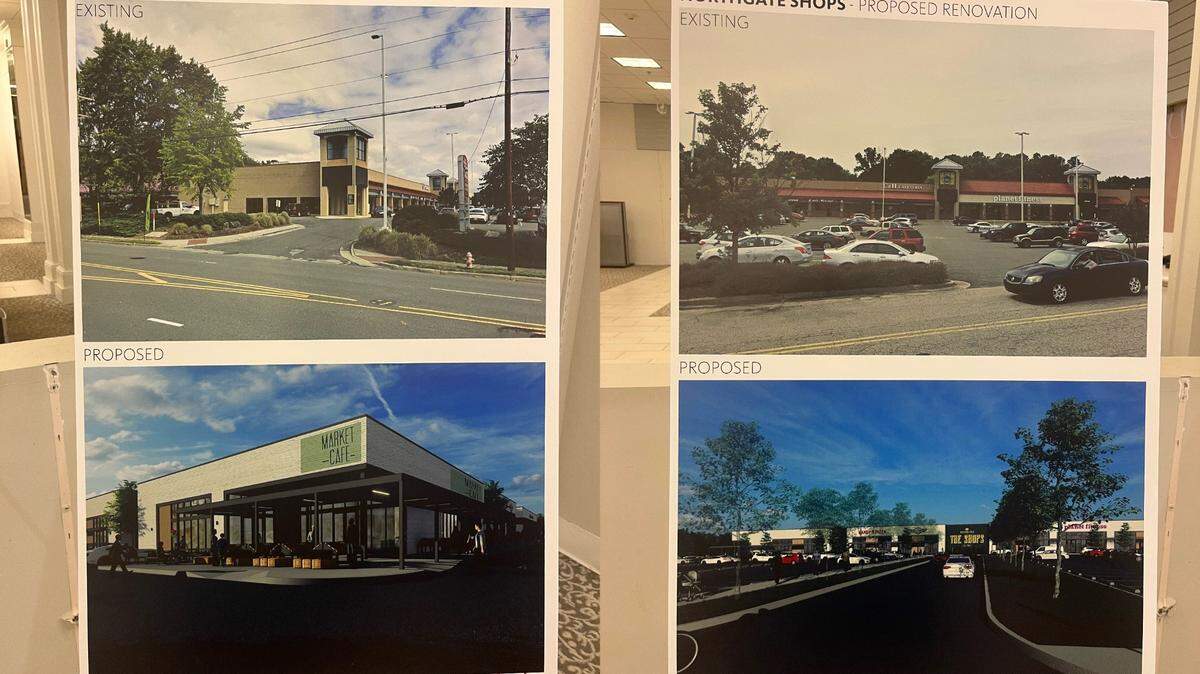
Northgate Mall opened in 1960 and was fully operational until 2017 and 2018 when its anchor stores closed. Northwood Investors, based in Charlotte, bought it in 2018 for $34.5 million with plans to transform it into a mixed-use development.
The mall closed in 2020 and Northwood eventually pivoted from mixed-use development largely due to resident pushback over the absence of affordable housing and the potential further displacement of longtime residents of color in the area.
Exact details about what Northwood might build on the site are unknown.
The Walltown Small Area Plan process began last spring. The zoning-map changes approved Monday include:
- 1400 Clarendon St., formerly zoned Established Residential, is now zoned Recreation and Open Space, which allows access to green spaces, parks and the preservation of natural areas. Housing can be built on it too.
- 1402 Clarendon St. formerly zoned Established Residential is now zoned Recreation and Open Space
- 1406 Broad St. formerly zoned Neighborhood Service Area is now zoned Recreation and Open Space
- 1305 W. Club Blvd (1.74 acres) formerly zoned Established Residential is now zoned Community Institution
- 1305 W. Club Blvd (0.04 acres) formerly zoned Established Residential is now zoned Community Institution
What’s planned for Northgate Mall?
Residents involved in the small area planning process want to see several things happen on the land:
- A “15-minute” community where residents can meet their needs on foot, bike or transit within a 15-minute trip
- Affordable housing with at least 20% of residential units priced for households at 30% to 80% of the area median income
- Affordable retail with a grocery store and shopping and business opportunities for people of color and/or who are low-income, and for local businesses
- Community-centered spaces like schools, community centers, educational facilities and arts and culture spaces
- Sidewalks, walkways and links to open spaces, as well as street improvements to Guess Road and West Club Boulevard
- Environmental sustainability measures like solar panels, EV charging stations and tree canopy coverage.
‘Not another check box’
Brandon Williams, a member of the Walltown Community Association, pushed for residents to have a voice.
“The ability for residents to shape the way our city plans, designs and builds the physical environment is critically important for establishing justice, safety and flourishing for all,” he said.
Ezra Norberg, a senior at Riverside High School, told the council that without the zoning map change for the Clarendon Street properties, building homes on the land would be a “major negative” for the community.
Norberg said many people, including he and his friends, use Clarendon Street to safely get to places without having to take Guess Road, where there is more traffic.
Cynthia Williams, chair of the Coalition for Affordable Housing and Transit in Durham, credited Baker with introducing the idea of small area planning and encouraged the council to “replicate this ... process in other Durham neighborhoods facing complex redevelopment challenges.”
Angel Dozier, a resident of the Hayti community, urged the city not to let the new plan become “just another checkbox” and to ensure the city continues to edit its Unified Development Ordinance, Durham’s legally binding development rules. The document was last updated in June.
“If the new UDO is not edited and applied justly, ethically, and with transformative wisdom, the small area plans risk becoming symbolic instead of transformative,” Dozier said.
Developer uncertainty
Mimi Kessler worries what could happen if the developers’ plans clash with what the residents want in Walltown.
“We want to decide where Durham goes from here,” she said. “Not someone from somewhere else.”
Councilman Mark-Anthony Middleton responded that there was “nothing” residents could do if the developer rejected the plan’s recommendations and told the audience he wanted to be clear on the limitations of the plan.
“If you believe [the government] can tell other people what to do with their money and their land, then what do you think we can do with our own money, with our own land as a government?” he asked. “Plans come and go.”
Middleton also spoke to critics who said Walltown has become gentrified.
“We are not addressing the injustices of the population that used to comprise Walltown,” he said. “They don’t live there anymore.”
This story was originally published August 20, 2025 at 1:40 PM.