Volunteer-built benches give Durham bus riders a place to sit, and send a message
AI-generated summary reviewed by our newsroom.
- Volunteers from Bike Durham built five wooden benches at busy bus stops.
- Materials cost about $50 per bench, which were placed at stops that lacked seating.
- Organizers consider benches interim transit equity measures as well as advocacy tools.
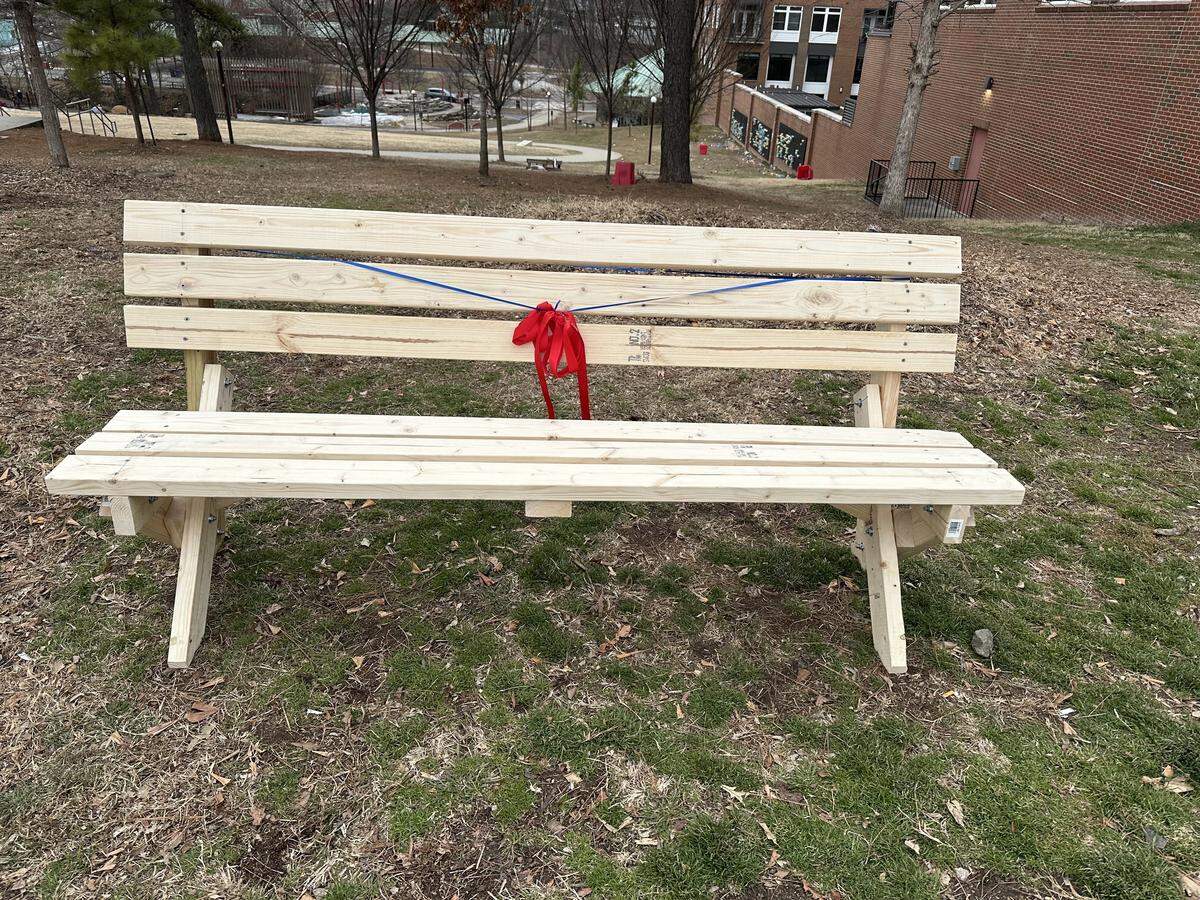
The benches that appeared at five GoDurham bus stops on Wednesday are nothing fancy. Just unvarnished wood screwed together to create a sturdy place for two or three people to sit.
But the volunteers who built them say the benches are important for both practical and symbolic reasons.
The benches were built and placed by Bike Durham, a community group that works to make life better for cyclists, pedestrians and transit riders. And having a place to sit will make things a little better for people waiting at those stops, said Gregory Williams, the group’s advocacy campaign organizer.
“It’s been me multiple times,” Williams said, just before dedicating the first bench on Rigsbee Avenue next to Durham Central Park. “I’m coming into my job, I’m standing at the bus stop, it’s 90 degrees outside, it’s sweltering, and there’s not even a place to sit.”
Bike Durham chose to deploy the benches on Feb. 4, the birthday of Rosa Parks. Her arrest in 1955 for refusing a driver’s order to give up her seat on a Montgomery, Alabama, bus so a white man could sit down became a watershed moment in the civil rights movement.
Rosa Parks Day is also known as “Transit Equity Day,” to highlight the need to improve bus systems that disproportionately serve low-income riders. The Durham benches were inspired by the National Campaign for Transit Justice, which lobbies to improve access to good transit.
Bringing volunteers together to do hands-on work building benches helps create support for transit in a way that simply sending emails to city council members does not, said John Tallmadge, Bike Durham’s executive director.
“It’s important for the government to be investing in these improvements, the long-term fixes,” Tallmadge said. “But in the meantime, there are a lot of community members that want to do what they can to make things a little bit better here in Durham for everybody.”
Local sales taxes for transit projects are enabling local governments to install new benches and shelters at hundreds of bus stops across the Triangle. But there are still hundreds more that are little more than places to stand next to a sign.
The work of volunteers to help governments and transit agencies catch up is welcome, said Durham City Council member Carl Rist.
“The city is obviously investing a lot in bus shelters around town with county transit funds,” Rist said. “But it can’t happen fast enough.”
More than 40 people were involved in the bench project, Williams said, from measuring and cutting wood and screwing the pieces together, to helping choose where to put the first five. They chose stops that had room for a bench off the sidewalk and that seemed to have enough riders, he said.
All were located on busy bus corridors.
The materials for each bench cost about $50, Tallmadge said, and Bike Durham hopes to make more. The benches are simple and aren’t bolted to the ground, so it’s possible the first five could be moved when the city installs something more permanent, Williams said.
“There’s always another bus stop that can use one,” he said.
This story was originally published February 5, 2026 at 7:51 AM.