
State probes alleged 24-hour confinement, educational lockdown at Durham Youth Home
AI-generated summary reviewed by our newsroom.
- The North Carolina Department of Public Instruction opened an investigation into DPS.
- An allegation says DPS failed to provide required education to students with disabilities.
- Evidence suggests students were held in their rooms for up to 24 hours a day.
The ACLU of North Carolina and the Duke Children’s Law Clinic have filed a state complaint against Durham Public Schools for what they say is a failure to properly educate students with disabilities.
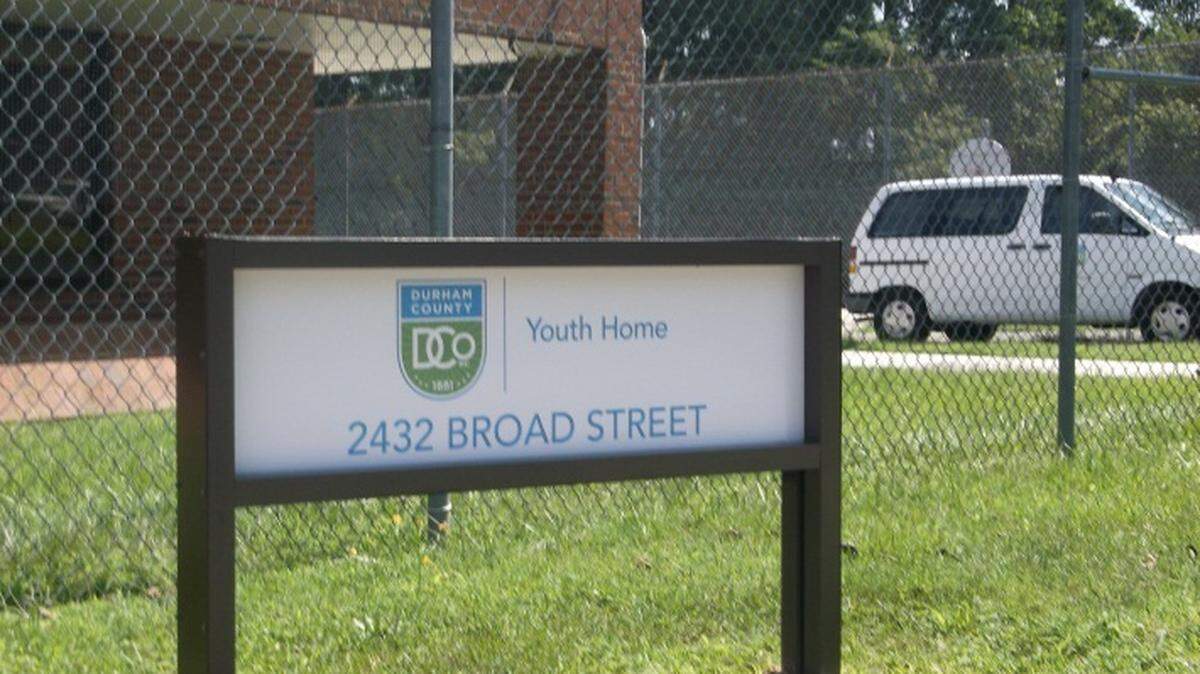
The groups allege the school system has failed its responsibility to provide legally mandated education to students with disabilities detained at the Durham County Youth Home on Broad Street.
The filing is the second one in four months after the N.C. Department of Public Instruction (DPI) initially declined to investigate a December complaint, citing “insufficient facts.” The advocacy groups have now returned with evidence, including a report from Disability Rights North Carolina (DRNC) that describes education in the Youth Home being largely replaced by isolation.
“The reported practices at the Youth Home are deeply concerning,” said Michele Delgado, a staff attorney with the ALCU of North Carolina, in a statement. “Prolonged social isolation poses serious mental health risks for all students, and students with disabilities are particularly harmed when they are denied the specialized education and support they need.”
The Durham County Youth Home is a juvenile detention center for young people between 10 and 17 who face social, emotional or behavioral challenges. The new facility was opened with 36 beds in 2024. It differs from the Durham County Juvenile Detention facility where young people between 11 and 20 are awaiting court.
Under federal law, students with disabilities do not lose their right to education when they are incarcerated. However, the complaint alleges that DPS failed to provide Individualized Education Programs, or IEPs, provide positive behavioral support, or educate students in the Least Restrictive Environment (educated with nondisabled peers).
The Youth Home has an average of about 17 residents. In the state, about 98% of youth in youth development centers have at least one mental health diagnosis, and nationally, about 70% of young people in the juvenile justice system have a disability.
Allegations of limited education and confinement
The core of the complaint centers on a “lockdown” that began in February. While facility officials cited safety threats as the reason for the measure, advocates argue the educational pause was illegal and “Draconian.”
During a February visit by DRNC, representatives reported that youth at the Home were “confined to their cells for 22.5 to 24 hours every day,” the report read.
“Young people had largely stopped attending school, and when they did, they were one-on-one or in small groups and for no more than 30 minutes at a time.”
Even after the lockdown was lifted, students still did not get the state-mandated minimum 5.5 hours educational time per day. That time plummeted to as little as 30 minutes of isolated study at the Youth Home.
“Multiple youth repeatedly and desperately relayed that their solitary confinement was deteriorating their mental health, causing them to be severely depressed and anxious; the confinement also exacerbated existing mental health needs, and ultimately the youth felt dehumanized,” the report read.
Internal emails from April 2025 showed that while DPS officials claimed students were receiving 6.5 hours of services, those assertions were “directly at odds” with the reality observed, the complaint read.
How did the Youth Home and DPS respond?
In a response to the findings, a January letter from Sheila Bowens-Bratts, assistant director of the Youth Home, said the facility has a 45% counselor position vacancy rate and that reports that youth were kept in their rooms for over 22 hours “do not accurately reflect how the DCYH actually operates.”
“Most residents rotate in and out of their rooms for varied periods of time between 8:30 a.m. until 10:00 p.m. each day with more time out of their rooms on non-school days because a DCYH staff member must be present in the classroom at all times,” she wrote.
Residents get two 30 minute periods of recreation time in the gym or outside during the day and in the evening. They also get two visitation days, two phone calls a week, and can attend church services, volunteer group activities, school and other professional visits for an hour each event, Bowens-Bratts said.
She confirmed that DRNC visited the Youth Home in September 2024, February 2025 and July 2025 and made recommendations each time. Bowens-Bratts also confirmed that residents at the Youth Home must often be separated.
“Most of DCYH population are Durham residents, which means they may be co-defendants, victims of other DCYH residents or resident’s family members, or have other community conflicts which result in youth having to be separated from each other while in the facility,” she wrote.
In an emailed statement from DPS, spokesperson Crystal Roberts said while district teachers provide up to six hours of instruction every day, the amount of time that students are available for instruction is “determined by security decisions made by DCYH administrators.”
“During lockdowns, DCYH administration has significantly limited our teachers’ access to students at the facility for safety reasons. During these times, our teacher may provide End-of-Course and End-of-Grade testing, assessments, and other state-mandated surveys; however, direct educational services are prohibited for safety reasons.,” Roberts said in a statement.
She added that even outside of lockdowns at the Youth Home, “staffing shortages at the facility have occasionally affected the access granted to DPS teachers.”
What happens next?
The complaint asks DPI to conduct an audit of all students detained at the facility since early 2025 and to order compensatory education for those whose rights were violated. The advocacy groups are also calling for a permanent ban on solitary confinement.
While DPS argues that it is the Youth Home’s responsibility to manage the facility, the advocates say, as the Local Education Agency, the district is legally responsible for the students’ minds.
DPI is expected to release a final report on the investigation by April 25. The report will determine if the school system complied with the Individuals with Disabilities Education Act and state-level protections.