
Durham sheriff tells US Senate: Local police shouldn’t be immigration enforcement
AI-generated summary reviewed by our newsroom.
- Durham sheriff told Senate local police must not become federal immigration agents.
- Sheriff warned cooperation with ICE can erode trust and reduce community policing.
- Senators debated sanctuary policies’ public-safety impact and federal role.
Durham County Sheriff Clarence Birkhead told U.S. senators Wednesday that local public safety starts with trust and that local law enforcement officers shouldn’t be turned into immigration agents.
Birkhead was one of five witnesses who testified before the Senate Judiciary Subcommittee on the Constitution during a hearing about American citizenship and sanctuary cities.
Durham is not officially a sanctuary city, which is considered to be a place that refuses to use local resources to report or detain unauthorized immigrant . However, the city has been listed by the Department of Homeland Security as one it considers noncompliant with federal detention requests.
Birkhead’s testimony comes a few months after U.S. Customs and Border Patrol agents launched a string of arrests in Durham, Raleigh and in Charlotte in November.
The sheriff has spoken out about how the arrests have made immigrants “both documented and undocumented, ... more likely to fear engagement with local law enforcement and retreat into the shadows.”
“I believe that true public safety is built on a foundation of trust between local law enforcement and the communities they serve,” Birkhead said, adding that if local law enforcement is seen as “an extension of federal immigration authorities” that trust “is eroded.”
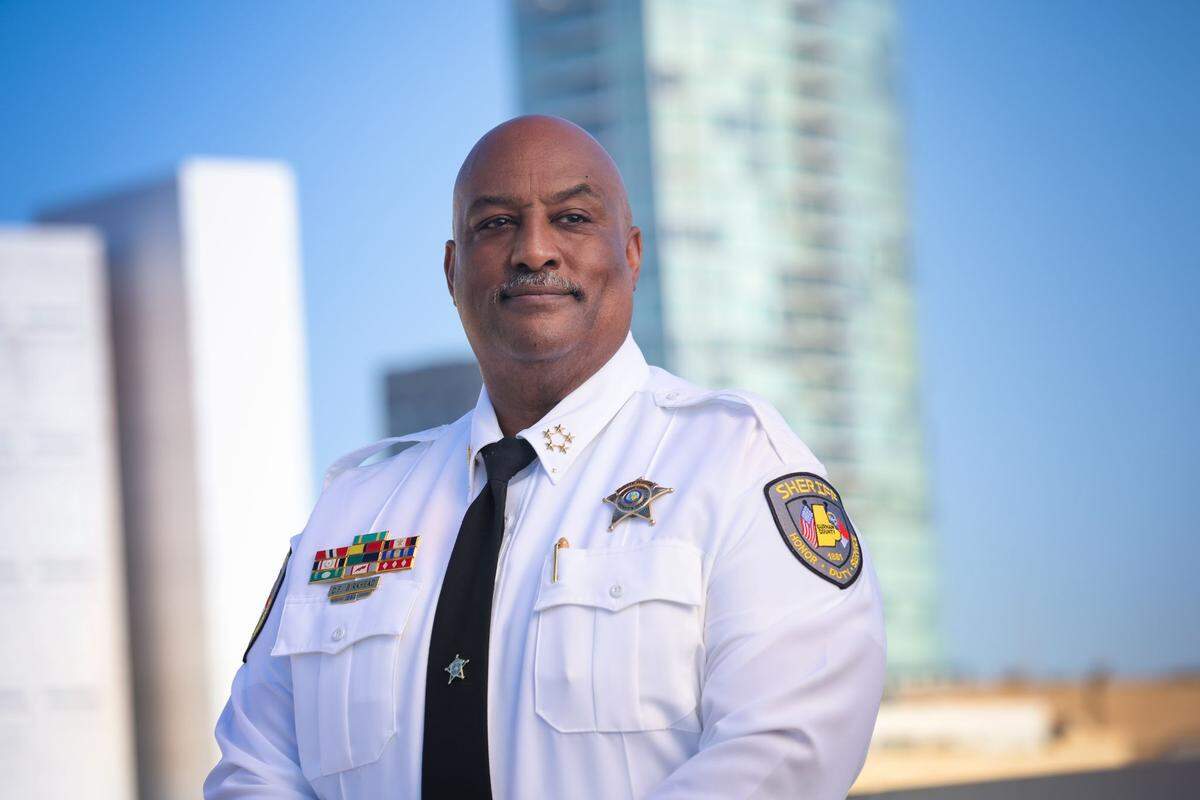
Birkhead defends Durham law enforcement
Republicans on the subcommittee argued that “sanctuary” communities endanger Americans by refusing to work with Immigration and Customs Enforcement (ICE), particularly around jail releases.
Republican Sen. Eric Schmitt of Missouri said sanctuary policies are a choice that “gets people hurt” and “gets people killed” when local agencies decline to share information or honor detainer requests, which give federal agents time to pick up unauthorized immigrants in local jails.
“The defenders of these policies always want to keep this debate at a level of theory,” Schmitt said. “They want to talk about values and discretion and trust and constitutional structure. They never want to talk about the consequences.”
Democrats, like Birkhead, argued that immigration enforcement is a federal responsibility, and that the Constitution limits the ability to force state and local agencies to do federal work. They also argued that aggressive enforcement can backfire, making residents less likely to call police, cooperate as witnesses or report domestic violence.
Sen. Peter Welch, a Democrat from Vermont, said local law enforcement agencies “are not there to be an adjunct to implement a policy of the president, particularly as to mass deportation.”
Birkhead stressed the Durham County Sheriff’s Office follows state law on immigration issues. While he agreed with arresting violent offenders, Birkhead said he did not agree with “targeting people without criminal records who pose no threat to public safety.”
According to a WUNC report, ICE made about 3,400 arrests in North Carolina from last January to October. Of that number 615 people had no criminal record.
“If local law enforcement collaborates with the federal government on immigration issues, we must strike the right balance to target threats to public safety in a way that doesn’t undermine trust between immigrant communities and local law enforcement,” Birkhead said.
Senator tells sheriff ‘Your pants are on fire’
Birkhead had a combative exchange with Sen. John Kennedy, a Republican from Louisiana., who read from comments Birkhead made before his 2018 election criticizing cooperation with ICE. He also criticized Birkhead for his handling on the arrest of Carlos Herabberto Mendoza Martinez, who was arrested last year on a domestic-violence charge, to argue Durham wasn’t working with ICE.
Birkhead pushed back , saying North Carolina law has changed since some of the statements Kennedy cited, and he repeatedly said his office follows state law and court orders.
“If ordered by magistrates or judges to hold an individual for 48 hours, we do so,” Birkhead said. “And we also notify ICE and give them the opportunity to seize that individual.”
However, Birkhead said communication with ICE and CBP is “unfortunately, is next to none.”
When Mendoza was arrested, Birkhead said, he notified ICE agents to pick him up, but they did not, emphasizing that cooperation must work both ways.
Mendoza is now in ICE custody, according to DHS.
Kennedy ended his line of questioning, accusing Birkhead of lying.
“Do you need some water? ’Cause I think your pants are on fire,” Kennedy said. He later told Birkhead, “you ought to be ashamed.”
The hearing included other witnesses who urged Congress to push harder against sanctuary policies, including Jessica M. Vaughan, policy director of the Center for Immigration Studies, and former Virginia Attorney General Jason Miyares, who described failures to honor detainers as a preventable public-safety risk.
But Birkhead urged senators to avoid policies that, in his view, would make residents more fearful of local law enforcement.
“Protecting American citizenship and the rule of law does not require us to turn our local police officers or deputy sheriffs into immigration agents,” he said. “I urge this subcommittee to support policies that empower local law enforcement to build bridges, not barriers.”
This story was originally published March 27, 2026 at 8:48 AM.