
‘Housing is the solution’: Durham mayor lays out vision in State of the City
AI-generated summary reviewed by our newsroom.
- Mayor Leo Williams sets a timeline for homelessness to be “rare and brief” by 2031
- The State of the City address highlighted the success of HEART and crime reduction.
- Williams emphasized Durham’s investments in youth programs and housing initiatives.
As Durham grapples with gun violence, homelessness and a housing shortage, Mayor Leo Williams used his State of the City address to argue the city’s next test isn’t growth, it’s whether residents can feel safe and afford to stay.
Speaking to several rows of city employees, residents, elected officials and special guests at DPAC, Williams said public safety and housing stability are intertwined, and he shared an ambitious plan: making homelessness “rare and brief” by 2031.
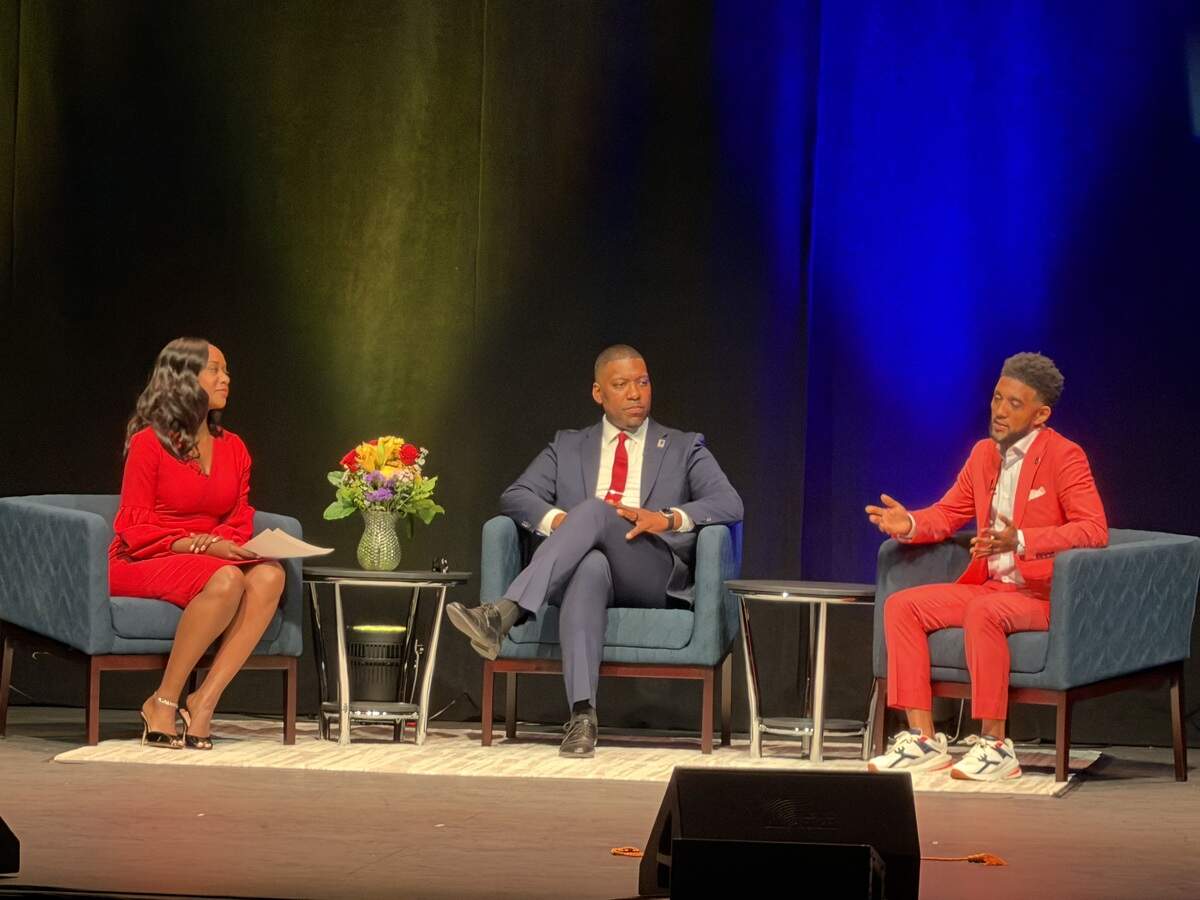
He also invited Baltimore Mayor Brandon Scott for a fireside chat about leadership and community trust. Baltimore has reduced homicides and shootings by about 60% over the last five years, Scott said, urging cities to tackle safety, housing and opportunity as part of the same work.
“Every life in this city matters, and every act of prevention matters,” Williams said.
Big bets on local hiring
Williams opened by saying the city’s progress depends on institutions and community partners “genuinely, deeply invested” in Durham. He highlighted Duke University’s “Homegrown” initiative, a $203 million investment he said is aimed at local hiring, second-chance employment and contracting opportunities.
The university is also directing $120 million in construction work to the Durham area, ensuring two-thirds of those contracts go to minority- and women-owned businesses.
However, the mayor said Durham still has progress to make, pointing to disparities in wealth and access to resources.
“The government cannot do this alone,” Williams said. “The best things happening in Durham right now are because of the partnerships that we have.”
‘I refuse to give up’
Williams praised city employees across departments from 911 call-takers and firefighters to transit and sanitation workers, while sharing performance benchmarks from the past year.
He lingered longest on public safety, acknowledging that residents are demanding action as gun violences continues to ripple across neighborhoods. Violent crime fell about 17% last year, while aggravated asssults were down 21% and robberies down 9%, Williams praised retiring Police Chief Patrice Andrews and the success of the Holistic Empathetic Assistance Response Team, HEART, which has responded to over 40,000 crisis calls.
As of April 18, a total of 61 people had been shot in Durham this year. Of that number, 10 shootings were fatal. Young Black men remain the largest group involved in the shootings.
“The people doing the shooting and the people mostly getting shot — they look like me,” Williams said. “It’s not just policies that I refuse to become numb to. That is why I refuse to give up.”
Williams pushed back on what he described as online outrage and “tearing those of us down who are in position to allocate resources.” The city, county and schools have begun focusing on reducing community violence with listening sessions involving residents and local and national experts. This summer will culminate in a summit to “develop a concrete set of strategies” to curb gun violence.
‘Rare and brief’ homelessness by 2031
Two weeks ago, the city attempted to clear out a homeless encampment at Oakwood Park on Holloway Street. The encampment has frustrated nearby residents who say the area is unsafe and unsanitary, while people living there say they have no place to go.
Williams didn’t directly address Oakwood Park, but said housing stability is both a moral imperative and a practical strategy for addressing deeper social challenges.
“In Durham, we don’t want to treat this as a nuisance to be managed,” he said. “We want to treat it as a human issue, because that’s exactly what it is.”
He added that housing was a solution, “not a shelter ... a permanent state, not managed homelessness.”
The city’s “North star” is that by June 2031, homelessness in Durham will be “rare and brief for everyone experiencing it,” Williams said.
The city’s Community Safety Department has requested a community-wide investment of $13 million to house unsheltered residents. The Durham Strategic Framework to Prevent and End Homelessness partners with the county government, community groups and local philanthropies.
A fireside chat: Insights from Baltimore
Toward the end, Williams invited Scott to the stage for a fireside-style chat.
At 42, Scott has overseen a nearly 60% reduction in homicides and shootings in Baltimore over the last five years. He said leadership is defined by handling inherited problems.
“Tough times are the easiest time, because that’s when leadership really shows,” Scott told the audience. He spoke candidly about growing up in a neighborhood where he was often viewed through a lens of policing rather than potential.
Baltimore adopted a comprehensive, public-health-based approach targeting the main groups involved in city violence. There was a focus on violence interrupters, gun trafficking, and investing in community resources. The city also focused on those at highest risk for gun violence and reoffending, offering them jobs and services. In 2025, Baltimore had 133 homicides, the lowest number in 50 years and the third year homicides decreased by double digits.
Scott echoed the connection between housing and safety, describing how Baltimore has approached both issues together by reducing its vacant buildings.
“We cannot continue to talk about these things as disconnected,” he said. “There is so much interconnectedness.”
‘Who is this city for?’
Williams presented checks to local organizations working to feed the community and with the city’s youth, including the Black Farmers Market, World Relief Durham and Meals on Wheels.
He also announced an additional investment in the Bull City Future Fund, a private partnership between Williams and the United Way of the Greater Triangle to invest in youth organizations.
“Who is the city for?” Williams asked. “It is for the family that has put down roots here and deserves to stay rooted. It’s for the young person who loves the city enough to come back and pour everything they have into it. ...The way that we show up for one another matters most.”
This story was originally published April 22, 2026 at 2:26 PM.