
Five new pups at Durham museum are a lifeline for world’s rarest wolf in the wild
AI-generated summary reviewed by our newsroom.
- Five new Red Wolves were born at the Museum of Life and Science in Durham.
- The Red Wolf is listed as a critically endangered species by the federal government.
- A total of fewer than 300 Red Wolves live in human care and in the wild combined.
The birth of any rare species can mark a positive sign for its future, especially for the critically endangered Red Wolf population.
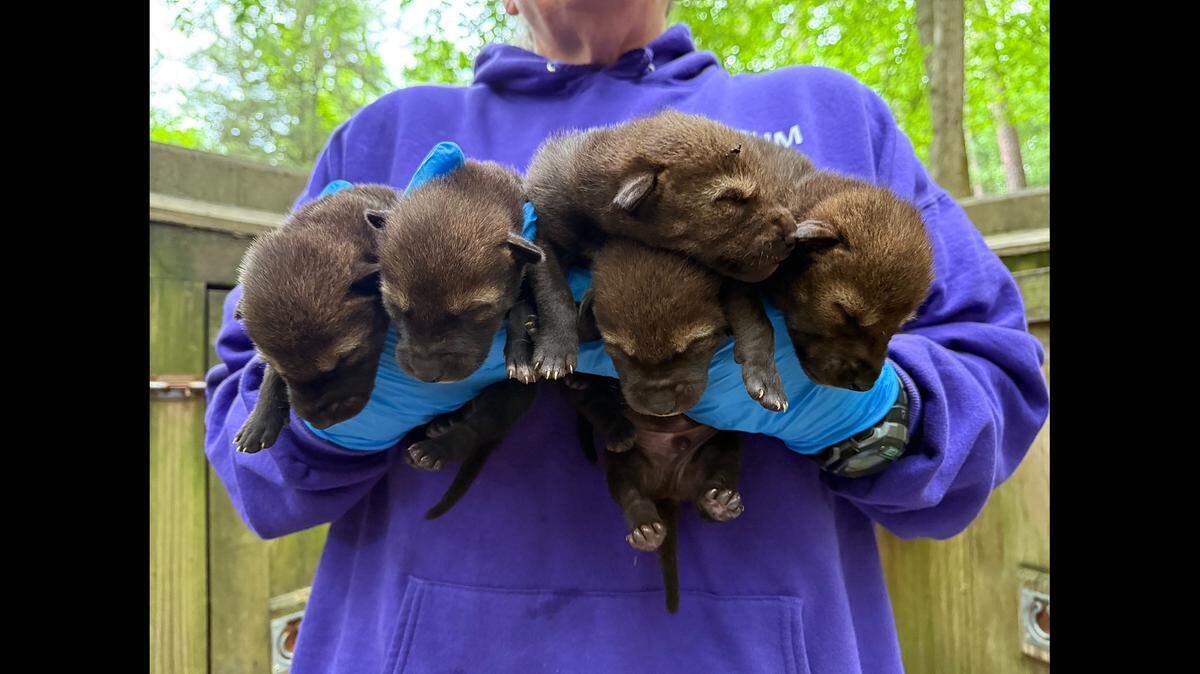
Last week, five Red Wolf pups — three males and two females — were born at Durham’s Museum of Life and Science, marking the third consecutive year of successful breeding at the museum.
For decades, the museum has worked to save the dwindling wolf population. Today, fewer than 300 Red Wolves are alive in human care and the wild combined. The five new pups are the first offspring of breeding pair Carolina, born at the museum in 2019, and Jacques, born in Washington in 2016. The pair were matched in 2024 as part of a national effort to diversity the Red Wolf gene pool.
“Each pup born is crucial for the species’ survival and offers hope for the broader Red Wolf population,” said Sherry Samuels, the museum’s senior director of Animal Care, in a statement. “Institutions like ours hold a significant responsibility, especially as we face limited numbers of wolves in the wild.”
A disappearing species
From a distance, some might mistake Red Wolves for coyotes or gray wolves, but their genetics make them distinct. The Red Wolf has a blend of red hues in its fur, a broad head and muzzle, rounded ears, and makes long, deep howls.
They’re bigger than coyotes, standing about 27 inches tall, and can grow up to 80 pounds. Also, since the wolves are federally protected, many wear bright orange tracking collars in the wild in North Carolina. The wolves live in packs consisting of a breeding adult pair and their pups, and prey on raccoon, rabbit, deer and rodents.
Years ago, the social creatures once roamed the southeastern United States. By the 1960s, the population began to disappear due to predator-control programs, loss of habitat, wolf-vehicle collisions, and shootings. In human care, Red Wolves can live up to 15 years but in the wild, they rarely live past seven years.
In 1973, they were declared an endangered species, and efforts to locate and capture wild Red Wolves increased, according to the Wolf Conservation Center. However, there is still more work to be done to prevent extinction.
The Museum’s role in wild integration
The Museum of Life and Science is a critical hub in the U.S. Fish and Wildlife Service’s Red Wolf Recovery Program and the Saving Animals From Extinction (SAFE) initiative, standing out for its success and genetic management. There are about 50 partner facilities in the country.
The museum is in the only state where Red Wolves still live in the wild. The wild population is in five-counties in northeastern North Carolina known as the Alligator River National Wildlife Refuge. Integration into the wild is a multi-step process for the Museum that includes:
- Genetic Management: The museum ensures that the captive population remains genetically diverse, which is crucial for the health of wolves released into the wild.
- Strategic Planning: This summer, a SAFE meeting will determine the future of the pups and their parents, including whether the pups or their offspring will be released into the refuge.
- The museum gets community support necessary to limit human-driven threats to Red Wolves.
The first Red Wolf arrived at the museum in 1992 and the first litter was born a year later. Nearly 40 pups have been born there.
Nest steps and seeing the pups
The Red Wolf habitat at the museum is closed to give the new family privacy, but the public will be able to see the pups mid-June, according to Ro Rode, a spokesperson for the museum.
In addition to Red Wolves, the museum is home to more than 60 species of animals including lemurs, tortoises and black bears on its 84-acre property.
This story was originally published May 13, 2026 at 4:56 PM.