
Quilt honoring Durham homicide victims finds a home. Why the creator is 'retiring' it.
AI-generated summary reviewed by our newsroom.
- Brodie created and added names to the quilt for over 30 years.
- The 90-foot-7-inch quilt is now housed and displayed at The River Church in north Durham.
- Brodie partnering with Durham to raise money for families denied by state victims’ fund.
DURHAM
Up and down each column of the 90-foot-7-inch Durham Homicide Memorial Quilt, Esther Glenn scanned for names she recognized.
She knew the quilt would bear the names of several students she taught in her 17 years at R.N. Harris Elementary School. As Glenn walked in, she saw a square for Gregory Little, the father of one of her former students. She went to his funeral.
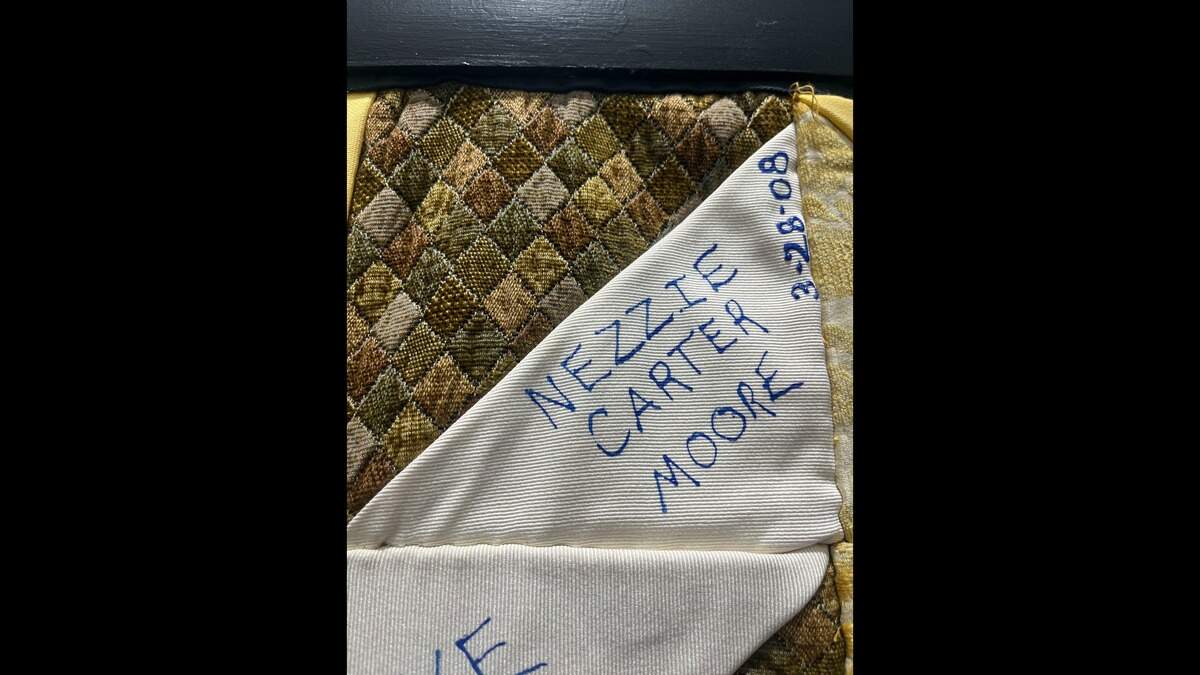
Then, her eyes landed upon a half-patterned, half-white square with a name in blue sharpie: Nezzie Carter-Moore. Glenn and Carter-Moore worked as counselors at Jordan High School back in 1992. Carter-Moore had just retired when her husband killed her in 2008, WRAL reported.
“Nezzie Carter-Moore was the sweetest woman,” Glenn recalled, choking up as she reached to take a picture of Carter-Moore’s square.
Making the Homicide Memorial Quilt more available for community members to mourn loved ones is part of why its creator, Sidney Brodie, said he has decided to “retire” the quilt. Brodie held a ceremony and walkthrough for the quilt at The River Church in north Durham on Wednesday and will hold another Thursday at 11 a.m.
The quilt will now be available to view from Monday through Thursday at The River Church, where Brodie, 69, said it will still offer the same comfort to families coping with tragedy — the same purpose he had in mind when he first stitched it over 30 years ago.
Art as outrage
As a 911 dispatcher for the city, Brodie had seen and heard a fair share in violence in Durham. Then in 1994, caught in crossfire or by a stray bullet, Shaquana Atwater was shot and killed at the Few Gardens housing complex. Shaquana was just 2 years old.
Brodie said he didn’t feel there was enough outrage about Shaquana’s death. He supposes he was more sensitive to a shooting like that, being a single father to a 7-year-old at the time. Or that he felt the world was getting colder and his community was accepting it.
In any case, Brodie was a firm believer that one person could make a difference. So he made art to commemorate lives lost to violence.
“Of all the pieces I created, this memorial quilt — I guess it became a comforter for the community,” Brodie said. “And it stuck around a lot longer.”
The first name Brodie stitched onto the quilt was that of Eric Brown in 1996. He didn’t think he’d still be adding patches as recently as May 2026 — he thought the quilt was a couple of years from retirement in 2017. Then another young child was killed in Durham.
Kamari Munerlyn was riding back from a pool party with his family. He argued with a family member to sit in the seat where he’d be killed in a drive-by shooting, Brodie said. Kamari was 7.
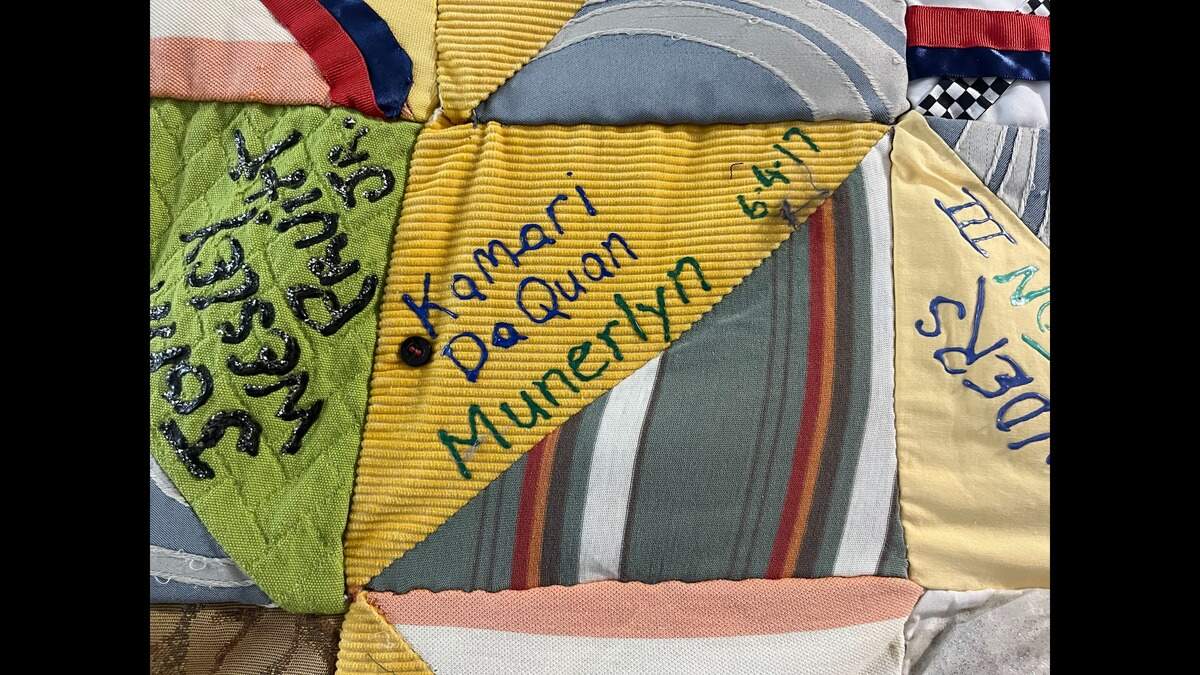
Brodie decided it was not time to retire the quilt. Kamari’s vigil was the first time Brodie added a patch in public. He continued adding patches for almost another decade, even taking it as far as Minneapolis to commemorate the one-year anniversary of George Floyd’s murder.
Retiring the quilt
Brodie asked members of The River Church’s congregation to meet with Bishop Ronald Godbee about retiring the quilt. Godbee didn’t know at first how a partnership would work.
But during the meeting, tears streamed down the faces of everyone in the room, Godbee said, moved by the image of the quilt hanging from the wall of the church.
“A lot of these lives are representative of Black men taking Black men’s lives,” Godbee said. “But now you have two Black men coming together to heal lives. And it’s almost a prophetic announcement that, whereas our differences have placed people on this wall, now our unity can help heal the families that result from this wall.”
So after thirty years, the quilt will now rest at The River Church. Some community members told Brodie they didn’t want the quilt to retire. But the project had become too heavy for him.
“I want to make sure that I’m OK, because there’s still so much work to be done and so many other things that I can do to help this community,” Brodie said.
But Brodie isn’t done advocating for victims in Durham. Families of homicide victims are eligible for financial assistance through the state’s victims compensation fund — unless the victim is deemed responsible for their death. So Brodie’s nonprofit is partnering with the city’s Office of Survivor Care to raise money for families who are denied assistance.
Impact of the quilt
Through three decades, Brodie said he has seen the quilt inspire conflicting emotions from onlookers.
Hope. Outrage. Wonder at the quilt’s beauty. Wonder at how they could find beauty in a homicide memorial.
“A lot of times they’ll say it’s beautiful, and then they feel like they have to justify why they called it beautiful,” Brodie said. “Because it’s so tragic. How can it be? How can those two things be true at the same time?”
Grief was Glenn’s overarching emotion. Every few columns, she pointed to the name of someone she knew. Not far from Carter-Moore was the patch of real estate entrepreneur Ronnie Sturdivant, who was found shot to death in one of his buildings in 2008.
Glenn met him at a meeting for the Black business networking group Movers and Shakers, she said. If someone has lived in Durham long enough, they likely knew someone whose name is on the quilt.
For her, the quilt brings the ink on each patch to life — each name a life that meant something, and each life lost trailing a cloud of grief that never leaves a family or community. Grief that, Glenn found, never left her.
“My mom used to always say ‘any man’s death diminishes me,’” Glenn said.
The News & Observer’s Inside Look takes readers behind the scenes to illuminate the people and places in our community.
This story was originally published June 11, 2026 at 8:26 AM.
.jpg)