Chapel Hill council calls out developer’s eviction warning, but may OK project anyway
Town Council members were distressed to hear Wednesday night that a developer had told residents of a mobile home park they could be evicted if the town does not approve its redevelopment project.
The council is expected to vote Feb. 24 on the Stackhouse Properties plan for the 13.9-acre Tar Heel Mobile Court site at 1200 Martin Luther King Jr. Blvd.
It will be a tough decision, council members said.
“This plan, I think we can all agree, is not what the town thinks is best on this property,” council member Tai Huynh said. “The only reason that we are considering this are those 70 families on those lots, and I fully intend to do everything in my power to keep that community intact and those families there.”
Tar Heel is one of the last mobile home parks in Chapel Hill, most of which are on or near the northern MLK Boulevard corridor and face development pressure. Most Tar Heel families own their mobile homes and lease the land, paying $450 to $500 a month.
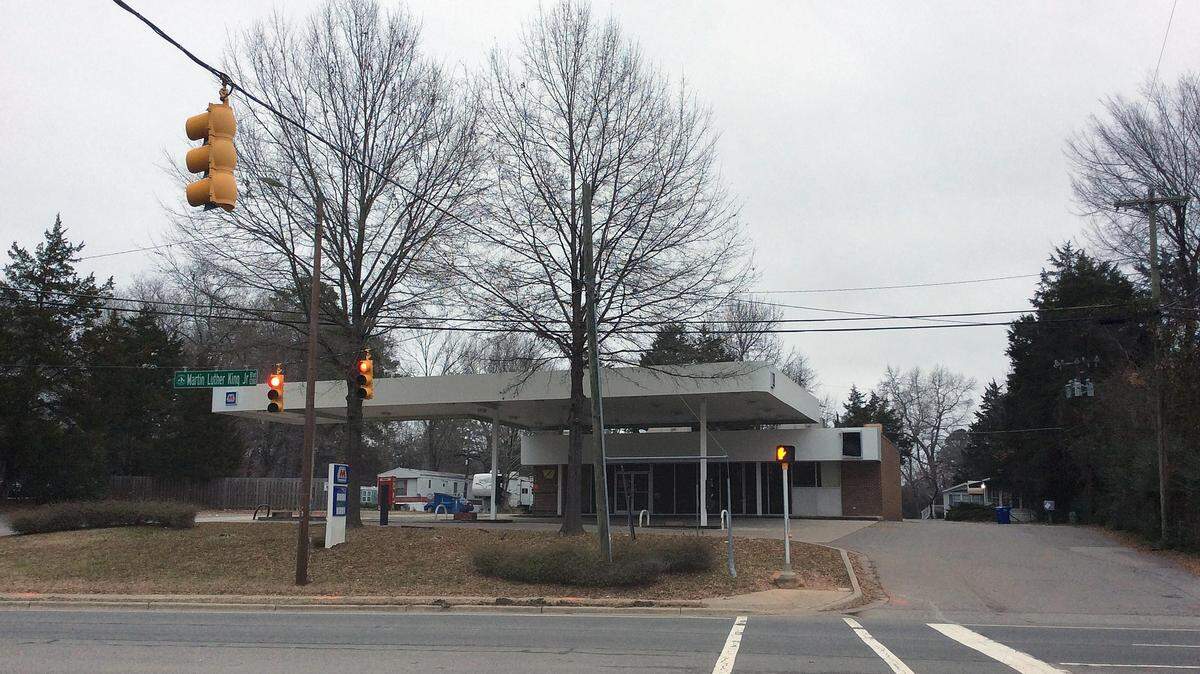
The Stackhouse plan would preserve 83 existing and new homes in the park for at least 15 years. The developer also would replace a long-vacant Marathon gas station in front of the park with a new 5,000-square-foot gas station and convenience store. A three-story, conditioned self-storage building with a basement would be built between the store and the mobile home park.
One driveway would be right-in, right-out only onto MLK Boulevard, while another would create an intersection with a traffic light at the Northwood Drive-MLK Boulevard intersection.
Profits, preservation, town goals
The plan generates a profit and preserves the park, which is the desire they stressed to residents, Stackhouse attorney Bill Brian said.
“However, we also made it clear that if this public hearing was not closed tonight and the proposal was not passed on Feb. 24, that it will not be simply business as usual for the residents,” Brian said. “The park will be closed and everyone will have to move.”
The owner’s other option under the current zoning is to build apartments, he said.
The town must weigh its desire to preserve the low-density mobile home park and its competing desire to build high-density residential units on a transit corridor, he added.
The developer and the town share responsibility for the situation, council member Allen Buansi responded. He urged the council to act more quickly and put more money and resources into crafting a strategy that provides lower-income families with housing choices.
The stories from multiple people about residents feeling intimated “bothers me,” Buansi said.
“There should be and there is no room for intimidation of our residents, no matter where they live in Chapel Hill, particularly some of our most vulnerable residents,” Buansi said. “We really need to follow up on this, because residents here deserve to be treated with dignity and respect and (for us) to live up to our promise.”
Council member Hongbin Gu spoke directly to the developer, calling the strategy of using “vulnerable residents to exert pressure” on the council “unconscionable.” The council’s hearts are with the residents, she said.
“I know that it is a very challenging situation. This is your home, your community, you have been living here for 10 years, 15 years, 20 years, and you have kids going to schools, you have friends and other supports over there,” Gu said.
“I understand how hard it is, but I want to make sure you understand that whatever decision the Town Council is going to make, we do have your best interests in our heart and we do want to offer you a community, a housing situation, that is safe and that is stable in the long run.”
Plan conditions, park concerns
The town, Orange County and nonprofit housing provider Empowerment Inc. have negotiated with Stackhouse for several affordable housing conditions, including a requirement that the developer tell the town if a mobile home lot becomes available for new tenants.
The developer also will notify qualified buyers and tenants in other mobile home parks when there are vacancies, project official Dan Jewell said, and provide all tenants with the option of an annual lease instead of the current month-to-month lease.
The developer has agreed to lease its lots at no more than 15% higher than mobile home park rents in the Raleigh and Charlotte areas.
Some council members questioned that 15% threshold Wednesday. Council member Michael Parker noted that a 15% increase over the current $500 lot rent adds $75 to a family’s monthly bills. That is a real burden for those who don’t earn a lot of money, he said.
Tar Heel residents also have shared previously their concerns about the park’s conditions, including about poor outdoor lighting, unsafe road conditions, changing rules and dangerous trees. A 47-year-old man was found dead in June after a tree fell on his home during a storm.
Jewell recounted changes Wednesday that the developer has made: removing dangerous trees, installing more lighting, filling potholes, repairing driveways and ordering stop signs. The playground will be installed once the developer has permits, he said, and the council will get a draft set of proposed declarations and covenants with the park’s residents next month.
But park resident Natalie Grijalva disputed the improvements and questioned whether anything would be fixed once the project is approved. Other residents have spoken in support of the project, she said, because that’s what the developer told them to do.
“I honestly don’t know what to think any more,” Grijalva said. “I try to help all the people around here, but people are scared, like I’ve said from day one. They’re scared, and they’re not going to say anything because they’re going to get kicked out.”
The project is not the best, said Delores Bailey, executive director of Empowerment Inc., but it will provide a stable community for the park’s families. Meanwhile, the town should help residents by preparing them for when the 15-year term ends by sending them to homebuyer classes, she said.
Council member Karen Stegman recommended also making the agreements with the developer “as strong and legally binding as possible.” Town staff also should regularly inspect the park to make sure those agreements are being kept, she said.
This story was originally published January 28, 2021 at 10:30 AM.