Is proposed Buc-ee’s mega gas station too big for Orange County? Leaders skeptical.
Some Orange County commissioners remained opposed to one of the world’s largest Buc-ee’s gas stations opening in Efland, after nearly three hours of discussion with development officials Tuesday.
The board voted 5-2 to give Buc-ee’s Ltd. officials a list of conditions to consider before Feb. 16, when the commissioners could vote on Efland Station, a 425,000-square-foot commercial development proposed for Interstates 85/40 near the Orange-Alamance line.
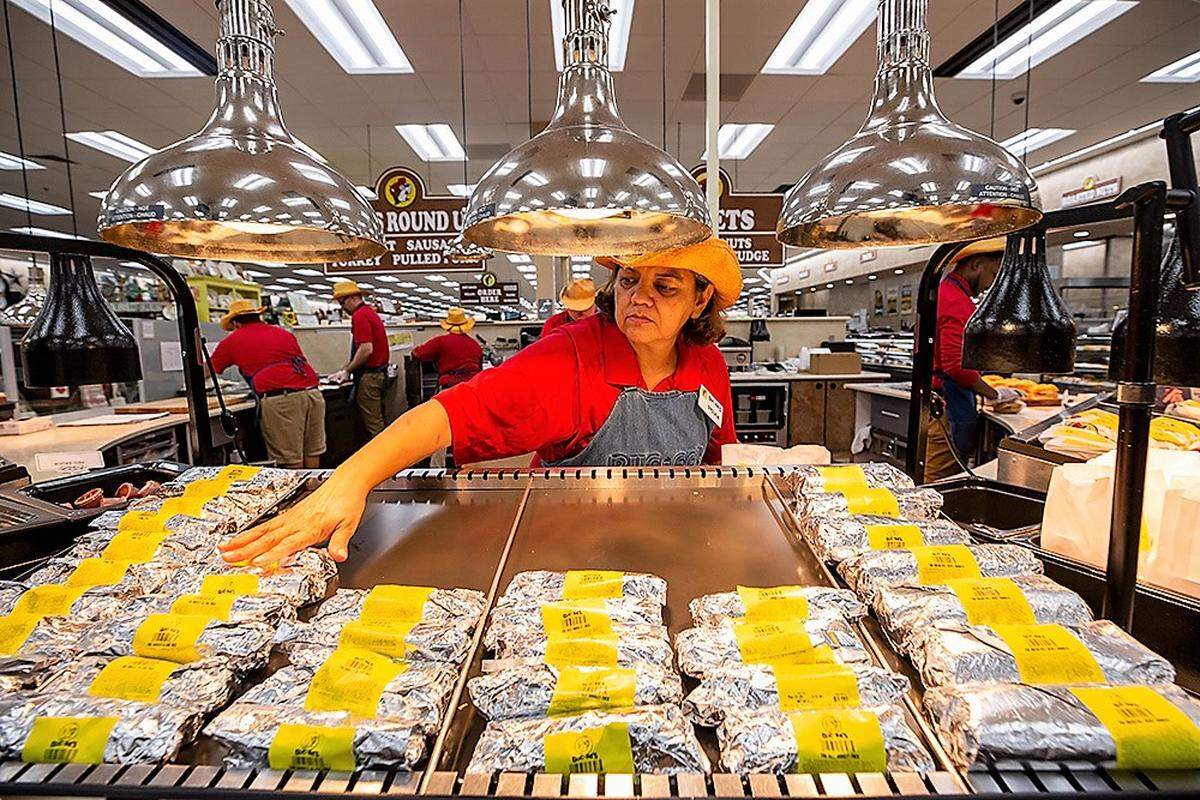
A 64,000-square-foot Buc-ee’s Travel Center with 60 dual-sided gas pumps could anchor that development, becoming the first North Carolina gas station for the Texas-based company with a fan following and awards for the cleanest bathrooms in America.
The commissioners asked the company to consider a smaller travel center with fewer gas pumps, to guarantee the station will open with 10 electric vehicle charging stations, and to provide more details about water usage, solar potential and what else could be built.
Commissioner Amy Fowler, who said she would reject the project without “a significant reduction in scale,” also asked the developer to consider a 24-foot sign that meets county rules, instead of the 80-foot sign proposed.
“I would really like to see a development, here is a perfect place for development, however, even with those pressures (to attract tax revenues and jobs), I have many concerns that this proposal is not aligned with our county comprehensive plan’s overarching goal of sustainability, nor the first five of six specific land-use goals, multiple parts of the (Unified Development Ordinance), and our 2017 resolution to decrease greenhouse gas emissions,” Fowler said.
Buc-ee’s size makes the company successful, attracts visitors and ensures there is an open gas pump when drivers leave their car at one to linger in the store, project officials said. However, they agreed to consider the board’s conditions.
Project changes, skepticism
Efland’s proposed station would be about twice the size of Carrboro’s Harris Teeter store but not quite as big as the Buc-ee’s store in New Braunfels, Texas, which holds the world record for the largest gas station at 68,000 square feet.
Efland Station also could have a 120-room hotel and over 148,000 square feet of manufacturing, office, retail and restaurant space, with buildings up to 60 feet tall. The Buc-ee’s Ltd. development team presented a revised plan Tuesday that eliminated a 185-foot-long car wash and cut the space allotted to manufacturing uses in half to 75,000 square feet.
The county has estimated that the $40 million project could generate up to $1 million in local property and sales tax revenues in the first phase and more later. County staff would review site plans as the project is built if the board approves the master plan and conditional zoning district.
Only the travel center is prohibited under the current zoning, which allows for up to 2 million square feet of office and manufacturing land uses. The county already spent $4 million in sales tax revenues to bring water and sewer to the site.
The project’s scale and how it would affect Efland’s rural character, as well as traffic, are important issues, Commissioner Sally Greene said. The county also has no guarantee the restaurants, hotel and other uses will be built or when, she said.
“I’m very skeptical of just a promise that we’ll have these other things that we desire,” Greene said.
Buc-ee’s development director Stan Beard tried to reassure the board, saying his team is “very confident” other tenants will follow.
“We absolutely think that this is a perfect, prime location for not a regional but a community-based development that is what you were thinking of when you were thinking of a gateway to Efland,” Beard said. “I would say we’re a better gateway than a distribution center. Unfortunately, I can’t make guarantees, and no one’s going to come unless we’re there.”

Jobs, business and concerns
The 104-acre site, between interstate exits 160 and 161, backs up to the North Carolina Railroad line, roughly two dozen homes and several small, local businesses.
Roughly 40% of the land would remain open space, Buc-ee’s attorney Elizabeth Trahos said in a Jan. 7 letter. The changes also respond to stormwater concerns, she said, by adding debris screens to all drains and meeting roughly the same nitrogen and phosphorus levels in its runoff as the undeveloped site currently meets.
Buc-ee’s is a family-oriented business, similar to a general store, with freshly prepared food, snacks, arts and crafts, clothing, toys and more, Trahos told the commissioners.
”Buc-ee’s is to a Sheetz what Wegman’s is to a Piggly Wiggly,” she said. “These things are not the same.”
The project has divided residents over whether it’s the right fit for land long designated by the county for commercial development and within sight of the Buckhorn Economic Development District.
Most of the roughly 100 public speakers in December and January were opposed to what the project could mean for their way of life and the environment. Many supported the current zoning, which allows office and manufacturing uses.
Proponents, who included Buc-ee’s fans and longtime Efland residents, said they were excited to see good-paying jobs, tax dollars and business investment proposed for the rural community, where roughly 1 in 5 residents earn less than $15,000 a year.
The divide also has fallen along racial lines, with mostly Black residents backing the project. Commissioner Earl McKee noted that split Tuesday after warning the community that its “anti-business and anti-commercial attitude” is pushing out those who cannot afford it.
Buc-ee’s offers a minimum wage and benefits that a lot of local companies do not provide, and Black and Hispanic residents have reached out to say “we need these jobs,” McKee said. His support grew after hearing from those opposed to the project, he added.
“It was especially insulting for me to hear that a $15 an hour job was a dead-end job, was a job that only allowed you to clean toilets,” he said. “I do not understand that kind of thinking. I do not agree with that kind of thinking, and I do not agree with denigration of individuals looking to improve their life situation.”
The county expects Buc-ee’s to hire up to 200 full-time employees, who would also receive benefits, such as health, dental and life insurance, paid vacations and a 401(k) program.
Fossil fuels vs. environment, water quality
The biggest concern for the board, many residents and environmental advocates, such as the Eno River Association and the Center for Biological Diversity, is the potential effect on water quality and runoff from a large amount of fuel that Buc-ee’s would store and the thousands of cars idling and visiting the site.
Two streams on the site are in a protected watershed between two critical areas for wildlife habitat and water quality. The streams also drain into Sevenmile Creek, part of a critical watershed for the Eno River.
That raised a lot of questions from public speakers about the risk of storing 240,000 gallons of fuels underground, as well as reminders to the county commissioners that Orange County has pledged to act on climate change.
The Orange County Commission for the Environment recommended denying the project earlier this month because of its potentially negative effects on water and air quality, focus on fossil fuels, and concerns about sustainability and greenhouse gas goals.
Orange County has signed onto the Paris Climate Accord and is committed to reducing carbon emissions by 80 percent and moving to 100 percent renewable energy by 2050.
Buc-ee’s has alarms, email alerts and other safeguards against a fuel leak from one of their six double-walled, concrete-encased, fiberglass/resin fuel storage tanks, Trahos and others said. The fuel storage and pipe systems also have leak sensors, they said.
Only a quarter of the 41-acre open space will be used for stormwater ponds and controls, they said, and a rainwater collection system will be used for irrigation.
Traffic, street changes
The remaining big concern is traffic and changes to how people get around Efland and surrounding communities. Most Buc-ee’s customers would get off the interstate, shop and get back on the interstate, representatives said.
Up to 125,000 vehicles travel Interstates 40/85 daily, they said and Buc-ee’s could attract about 11,500 of those vehicles every day. A traffic study estimated up to 800 vehicles an hour during the evening commute and over 1,200 during peak Saturday hours. Another 4,700 more vehicles could arrive each day as the site is built out, the study found.
The N.C. Department of Transportation is working with the county and the developer on several changes, including new traffic lights on Mt. Willing Road and the I-85 Connector. The westbound off-ramp at Exit 160, which is the main exit for drivers heading north on Mt. Willing Road, could be closed, forcing them to get off at Exit 161 and pass through two traffic lights to reach Mt. Willing.
The Federal Highway Administration still has to review the plan to close the exit.
Plans also show two right-in, right-out driveways on the service road that parallels I-85/40 West and other driveways off the I-85 Connector and Mt. Willing Road. Drivers turning from Ben Johnston Road left onto the connector would have to turn right and make a U-turn at the new Efland Station driveway.
There have been conversations about potentially realigning Ben Johnston Road to a new intersection with the Buc-ee’s driveway and the connector road. More information about that possibility could be shared at the February meeting.
This story was originally published January 20, 2021 at 8:06 AM.