Chapel Hill council didn’t want this project but approved it to save affordable homes
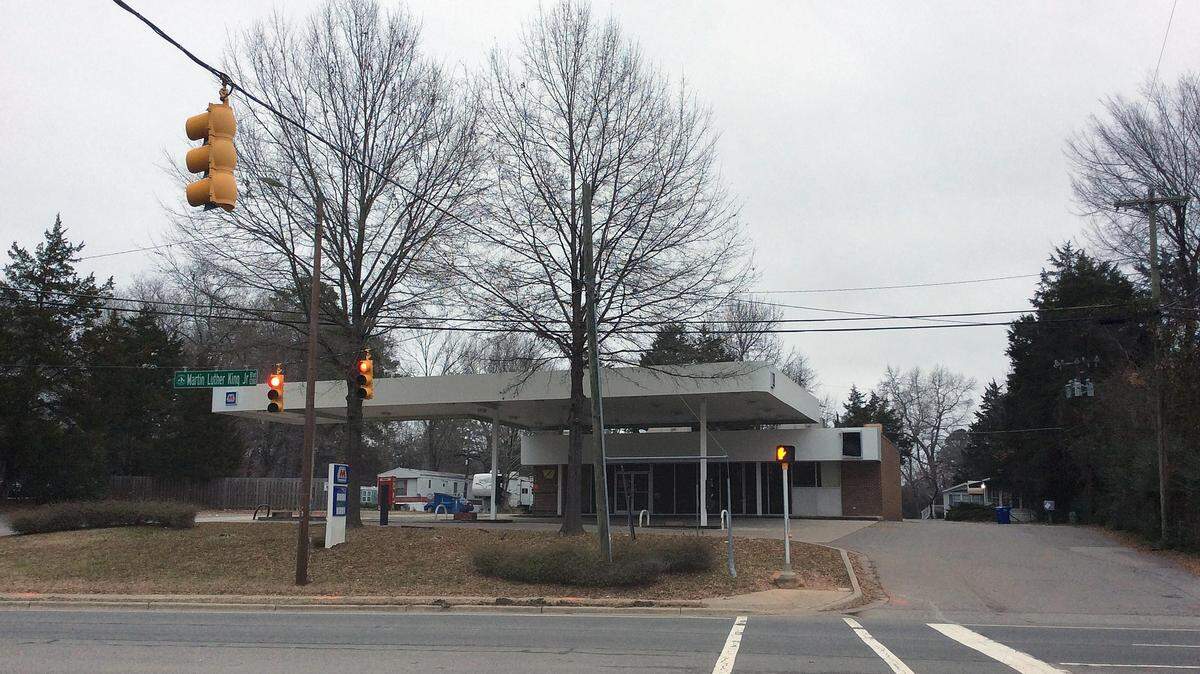
The Chapel Hill Town Council approved a self-storage and gas station project Wednesday, despite little support for it, in an effort to preserve several dozen mobile homes for at least 15 years.
The project at 1200 Martin Luther King Jr. Blvd. was approved 5-3 in what the mayor and other council members called a difficult decision. Council members Jessica Anderson, Hongbin Gu and Amy Ryan voted against it.
It was the council’s second vote on the project, following a 5-3 vote in February. The project did not get the two-thirds majority required for approval in that first vote, requiring the second vote on Wednesday. The second vote only required a majority to pass.
“Contrary to what many people in the community have heard, local governments in North Carolina have no authority to stay evictions — only the governor has that right — and no power to force a landowner to keep a mobile home park open,” Mayor Pam Hemminger said.
Stackhouse Properties bought the 13.9-acre Tar Heel Mobile Court in 2019 and submitted a plan last year that would move 16 mobile homes around for a four-story self-storage building bigger than the Lowe’s store on U.S. 15-501. The existing gas station facing the street would be demolished and replaced with a new gas station and convenience store.
The commercial projects will ensure a profit so the developer can keep the mobile home park open, project officials have said. They warned the council and residents that families could be evicted if the project is denied and apartments on built on the site instead.
The project has generated community concern about the potential loss of affordable housing, but also about the addition of a gas station and self-storage facility to a corridor that the town has designated for dense, transit-oriented development.
Wednesday, Hemminger also asked the developer and town staff to work together to see if the self-storage building could be rotated to be perpendicular to MLK Jr. Boulevard.
The protections are better for residents, but still not enough, Anderson said. She repeated pleas from other council members in urging the town and its partners to act quickly to create a mobile home park and displacement plan.
“Generally giving away all our leverage at the beginning of the process is unwise and terrible negotiating,” Anderson said. “In this case, it means that the residents, who are very important members of our community, are put in a horrible position no matter the outcome of this vote.”
Revised plans, zoning district proposed
Project official Dan Jewell, with Jewell Coulter Thames, said Stackhouse agreed to revised conditions after hearing community concerns, starting with a four-year rental rate freeze for the mobile home residents.
When that expires, Stackhouse could adjust the rates to within 5% of area rents every two years, instead of the 15% adjustment every four years included in the previous proposal. Most Tar Heel families own their mobile homes and pay $450 to $500 a month to lease the lot.
Stackhouse also agreed to reduce the size of the self-storage building by 10,000 square feet, Jewell said.
Those conditions and an agreement to maintain up to 83 mobile home lots offering 12-month leases would be included in a covenant that applies to the land, even if it’s eventually sold.
While the site would remain a mobile home park for at least 15 years, Stackhouse could only reduce the number of lots — and then only to 73 — once the town has a plan to help displaced residents. No mobile homes could become permanent short-term rentals.
Gu tried to stir up council interest in creating a restricted residential manufactured home zoning district to “stabilize the market from excessive speculation by real estate developers” and protect local families,” she said.
“The families in manufactured homes provide essential services to the town working as hospital janitors, construction workers, housekeepers and landscape workers. … It’s a way to pursue the American dream that would otherwise be out of their reach,” Gu said.
Her petition did not get any support. Ryan explained why, saying everyone wants to find a solution, but she doesn’t want “to raise false hopes.”
“While I applaud (Gu’s) tenacity and her desire to find good solutions for this problem, nothing that I have heard from any of those discussions indicate this is offering real protections for our mobile home park communities,” Ryan said.
Charlotte and Raleigh are among the towns that use residential mobile home districts and overlay zoning districts in North Carolina. Those rules, authorized under state law, set the standards for park development, including where mobile home parks can be located and the basic layout of streets, lot sizes and other park details.
The rules do not prevent mobile home park owners from selling their land or redeveloping it for another use that is allowed under local zoning or with a rezoning, said David Owens, a UNC School of Government professor.
“Zoning is pretty much designed to decide which uses you allow and which you don’t allow for new development. It’s not really designed to preserve existing development,” Owens said in an interview Wednesday with The News & Observer. “That was sort of never the intent when these things were first started 80 or 90 years ago.”
Concerns, grassroots coalition
A group of residents announced Tuesday they are forming a grassroots coalition to “hold the town council accountable” for not protecting mobile home park residents, as well as for widespread land clearing for development and the luxury apartments being built across town.
They expect town officials to monitor and hold Stackhouse to its agreement, help the residents relocate before the 15-year term expires, and look at how the town can protect all mobile home park residents from “predatory tactics,” according to a news release from the group.
“There has been a breach of the trust that our neighbors have placed in the council that must be addressed,” said Christopher Bowers, with the MLK North Neighbors Association. “We need to be convinced that this situation will never happen again. We expect council to work with landowners to ensure that they sell to ethical developers, and to protect us from others like Stackhouse.”
Council members also have shouldered the blame for the situation facing the mobile home park residents, noting that they have been talking for years as a town and with county government officials about what to do, but have not taken action that would have avoided a housing crisis.
Ryan said it’s sad the town is in this position, calling the decision “a lose-lose” that affects the lives of many residents.
“Unfortunately, the owner chose to force the town to choose a mega self-storage facility in the heart of our residential neighborhoods and on one of our busiest transit corridors, where all of our town goals say we need to maximize our housing and commercial capacity,” Ryan said. “He decided it was OK to use the lives of the Tar Heel residents as a bargaining chip in this commercial transaction. … It has the potential to set a dangerous precedent in negotiations on future development projects.”
This story was originally published March 10, 2021 at 9:14 PM.