‘I was in shock.’ Chapel Hill neighbors cite systemic racism as property tax bills rise
Correction: An earlier version of this story used incorrect tax rates to calculate total tax bills for Clementine Self and her father, Joseph Fearrington. The story was updated at 5:09 p.m. May 10.
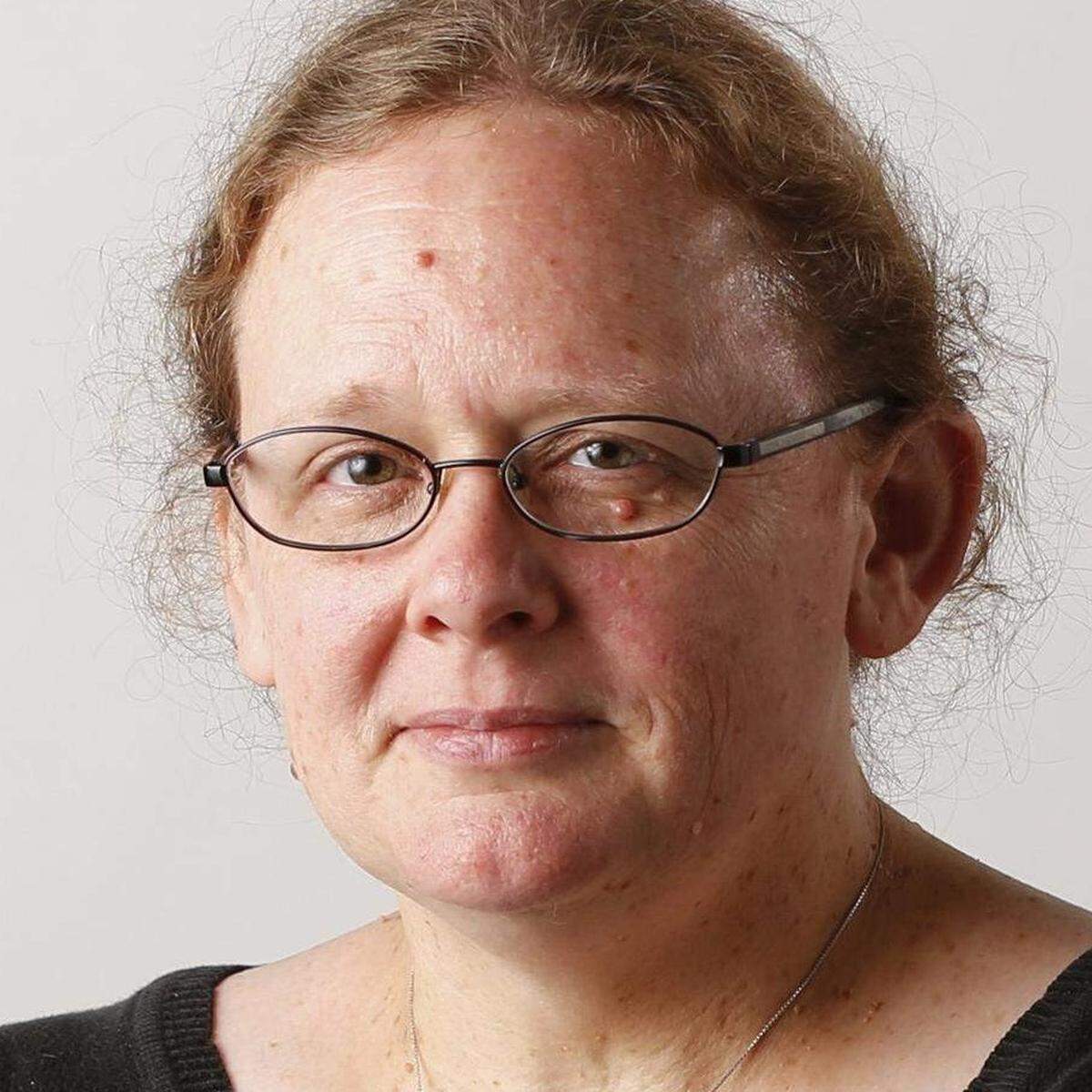
Clementine Self has owned her home on Broad Street for about 40 years, but steep increases in property values this year have her concerned about how long she and her neighbors can afford to stay.
“It was a shock,” Self said about seeing the 35% increase in the assessed value of her cinderblock home. “I just laid it down, and I said I need to have a mental break and then I’ll deal with it.”
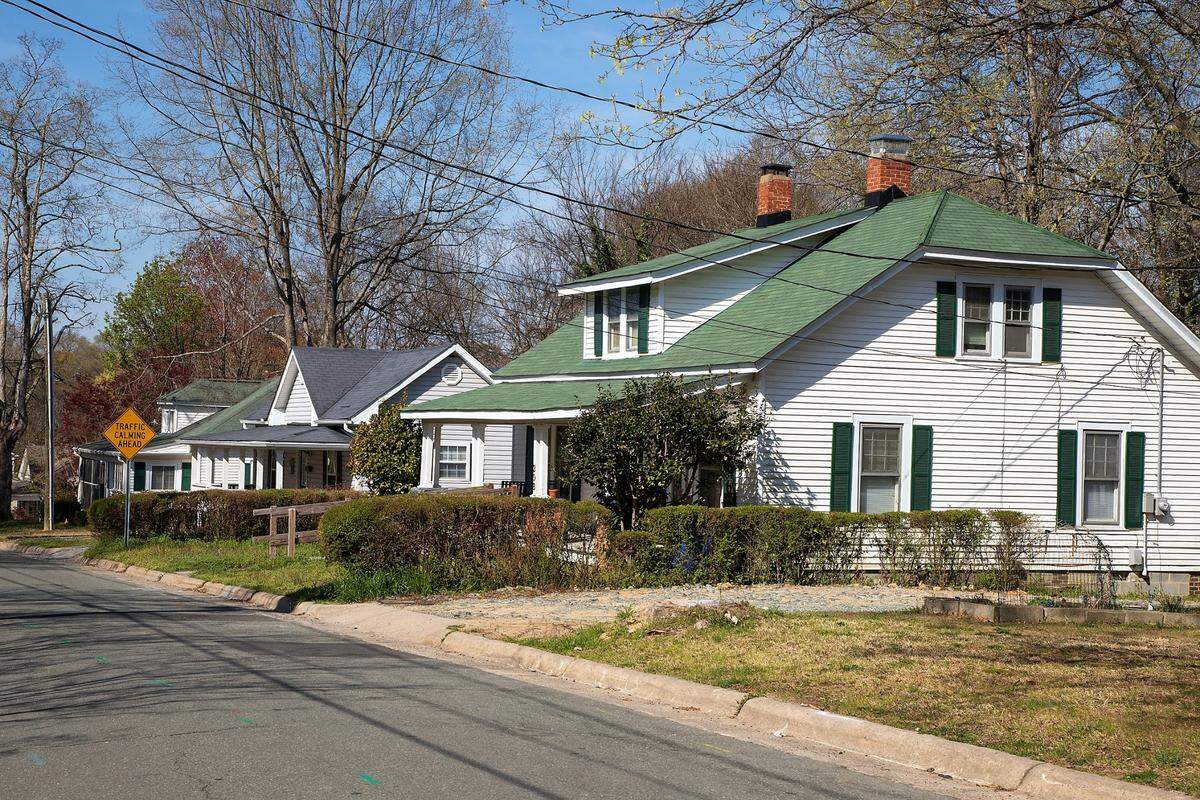
The single-story house, clad in white siding with red shutters, is 1,368 square feet, county records show. Built in 1962, it has three bedrooms and one bathroom, and sits on 0.19 acres. It has no insulation, Self said.
Last year, Self’s property was valued at $200,500, county records show, including $150,000 for the land.
This year, the value is going up to $271,900 — for a total Carrboro, county and school district tax bill of $4,064.63, a potential one-year increase of $718.08 using the revenue-neutral tax rates for the newly assessed value.
The town and county have not set the final tax rates for next year. The revenue neutral tax rate is set after a revaluation to ensure the county collects the same amount of revenue as it would using the previous tax rate.
Self’s 100-year-old father, Joseph Fearrington, who lives a half-mile away on North Graham Street, saw his property value rise nearly 46% to $287,300 this year. His combined county, Chapel Hill and school district tax bill could be $4,226.47, an increase of $857.06 using revenue neutral tax rates for the newly assessed value.
For Self, a 73-year-old retired teacher who lives on a fixed income, and her father, that is a significant burden.
“It means I have to go into my emergency funds or something like that. I take care of my dad, so it’s not like I can get up and go back to work,” Self said. “I just talked to somebody in my age group this morning. All the pipes burst in her house. What would I do if that happened to me with these high tax bills? That would have an extensive impact.”
Preserving homes, neighborhood character
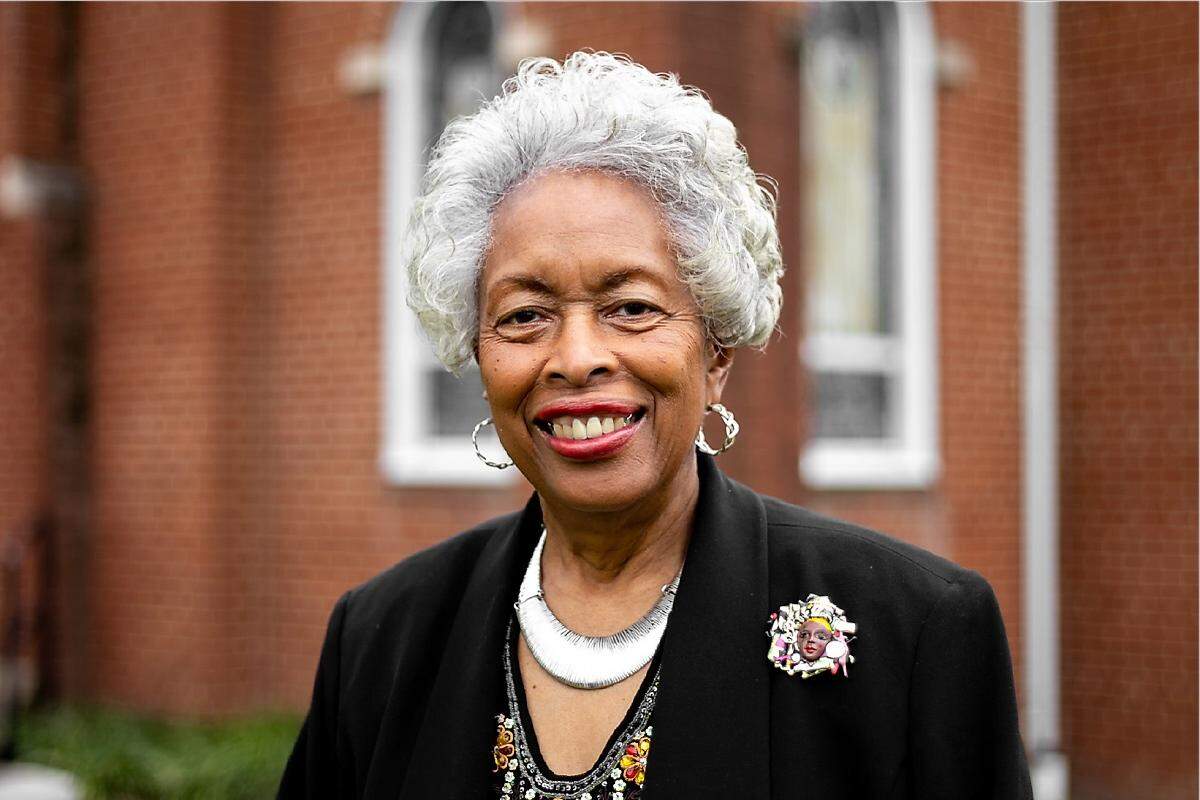
Northside — along with the Tin Top neighborhood toward Carrboro and Pine Knolls to the south — is one of Chapel Hill’s historically African-American communities, founded by former slaves and blue-collar workers who helped build the university and the town.
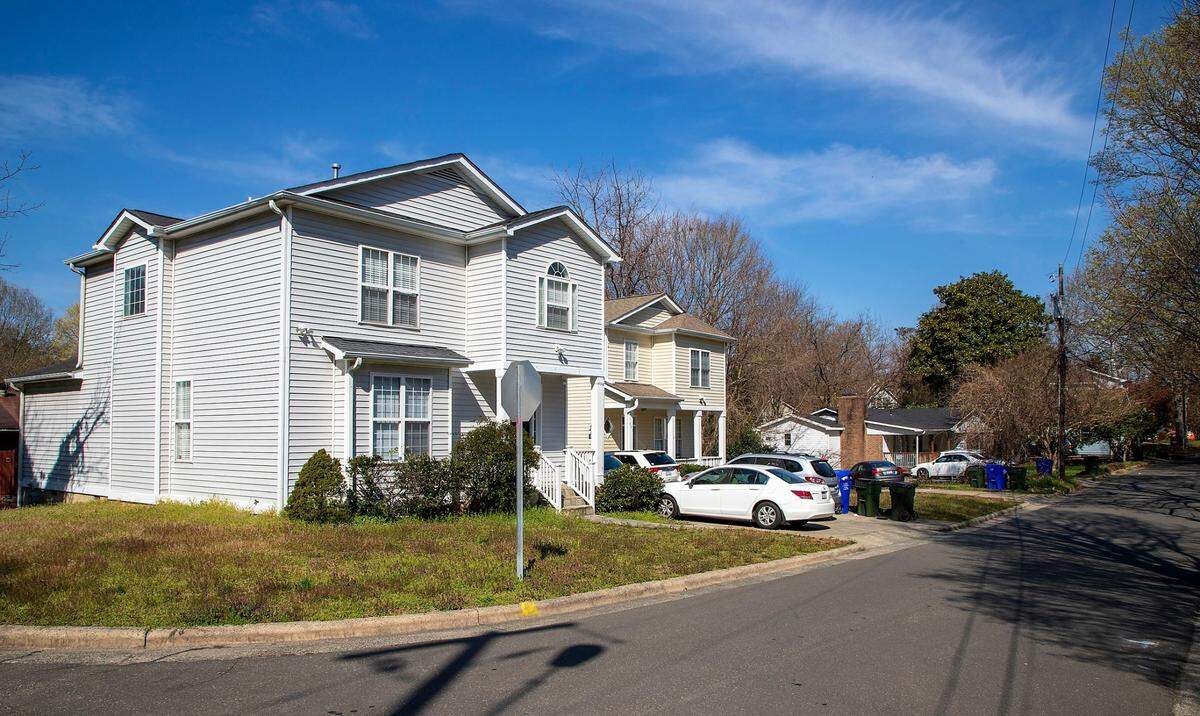
In the last 40 years, the neighborhood has grown whiter and younger as investors bought and expanded modest homes or built larger student rentals. By 2010, Census data shows only 38% of residents were Black, compared to 57% white. Over 42% were ages 18 to 24.
By 2015, only 16.7% of residents were Black, and over 56% were ages 18 to 24.
UNC-Chapel Hill set up a $3 million no-interest loan fund, and the community and its partners launched the Northside Neighborhood Initiative. The goal was to attract families, preserve and build new affordable homes, and repair older homes so residents could age in place.
Since 2015, the land bank has purchased roughly 50 homes at their appraised or market value, and helped homeowners realize equity from their investments. Over 100 residents have gotten help with repairs and property taxes. New families have moved in, and student rentals have stabilized at roughly 45% of the available housing, said George Barrett, executive director at the Jackson Center.
The number of Black residents has risen — to 21% in 2019 — although college-age residents still dominate the neighborhood.
The recent revaluation threatens to undo that work, Barrett and others said.
Setting property values
North Carolina counties must update all property at least every eight years to reflect current market values. Orange County revalues property every four years.
Properties are grouped for assessment by similar geographic and economic factors, which is why a subdivision with newly built homes in one section and older homes in another, for instance, would be split into separate groups before being assessed.
Market value is the price that a willing buyer would pay a willing sellerfor the “best and highest use” of the property, determined by how the land is zoned. “Qualified” sales are those in which the buyer and seller try to get the best deal they can, and typically does not include sales involving nonprofits, people who share a relationship and foreclosures, county tax assessor Nancy Freeman said.
Advocates have challenged the fairness of that revaluation process in Northside, where large student rentals sit beside small, older homes. The county’s revaluation doesn’t account for the size, age and condition of the homes, the zoning, and whether the homes were compared to similar single-family homes or more expensive investor properties, advocates said.
Self and her father are the “lucky” ones, according to data from the Jackson Center, a neighborhood advocacy group. Other longtime residents, including one 95-year-old homeowner, saw their property values rise by as much as 85%. They could pay as much as half their annual income this year in property taxes, said Hudson Vaughan, a Northside resident and advocate.
In contrast, property values in wealthier and whiter neighborhoods around downtown are rising much more slowly, Hudson said.
Jackson Center sales data
Vaughan and Kathy Atwater, the Jackson Center’s community advocacy specialist, compared dozens of home values in neighborhoods near UNC’s campus and shared that information with the county and the towns.
They looked at lot size, home age and condition, and nearby, similar sales for Northside; the area of Boundary Street and Tenney Circle near East Rosemary Street; Davie Circle; and the 10-story Greenbridge condo building on the edge of Northside.
They found that roughly 800- to 1,100-square-foot homes built in Northside over 60 years ago were being valued at significantly more than their recent sales prices, Vaughan said. Meanwhile, newer, larger student rentals and some properties in wealthier neighborhoods were being undervalued, in some cases, by over $100,000.
The largest average increase in property values was 53% for Northside, the data showed, and Northside also had the widest range of increases, from 20% to over 86%.
Davie Circle, where more homes sell for $400,000 and up, rose an average 13%, followed by the nearly million-dollar homes on East Rosemary Street, Boundary Street and Tenney Circle, which rose under 5%.
Greenbridge condo owners saw their property values fall by an average of 1%, the data showed.
Chapel Hill’s overall growth in residential home values averaged 9% last year, Freeman said.
Vaughan provided The News & Observer with data that shows 16 of the 31 “qualified” Northside home sales used in the revaluation couldn’t be built today because a Neighborhood Conservation District enacted in 2012 limited the size of houses to 1,750 square feet and only allows nonprofit providers to build new duplexes. Another 10 are duplexes and multi-family units built before the 2012 rules.
Over a dozen home sales were excluded because nonprofit groups bought them last year as part of the Northside Neighborhood Initiative. But all were bought using a comparative market analysis, appraisals or on the open market to the sellers could get a fair market price for their homes, Vaughan said.
By eliminating those homes, tax assessors were left comparing fewer, less-expensive homes with more, high-value investment homes, raising the average sales price — and property values — for those least able to afford it, he said.
He noted the revaluation of land also may be a factor. An acre in Northside is now worth nearly $1 million, he said, while the average value for an acre of land in the other neighborhoods analyzed was just over half of that amount.
Not only does put an undue burden on lower-income residents, Barrett said, but it also subverts the town’s decade-long, multimillion-dollar effort to preserve neighborhood affordability and character. The county and towns also are missing out on substantial revenue by undervaluing homes in wealthier neighborhoods, Vaughan said.
It’s a problem that’s playing out in lower-income communities across the nation, according to a recent New York Times editorial.
“Why is it, if something is pointed out that this was done wrong, and it’s clearly 50 properties that we can already see that have these incredibly high burdens, and here’s the information why — clearly, you didn’t take into account the conservation district, you didn’t take into account the age and stock of the homes and how that doesn’t compare to the student rentals,” Barrett said.
“These are very clear things that show you that the process that you did was not done right,” he added.
New evaluation, systemic issues
A group of Northside leaders met recently with Freeman to seek a class-action revaluation for Northside. They have since filed 46 informal tax value appeals, and Vaughan filed a blanket appeal for over 100 properties.
Property owners also can seek a formal appeal through June 30 from the Board of Equalization and Review, and if needed, appeal to the N.C. Property Tax Commission and the courts.
The tax office has asked for market analyses of the nonprofit sales in Northside to determine if they can be qualified, Freeman said. The information could be used to re-evaluate the revaluation process and look at potential issues of systemic racism, said Renee Price, the chair of the Orange County Board of Commissioners.
The Jackson Center has a three-year, $40,000 Oak Foundation grant to help residents pay their property taxes, but it doesn’t account for the increased values or other people who might need help, which Barrett estimated at potentially another $20,000 in need.
“It’s the county’s responsibility to create funding and funding opportunities … to be able to support neighbors with being able to pay their property taxes, so that the Black and low-income community that’s crucial to Orange County does not get displaced,” Barrett said, noting the pending housing pressures of Apple’s decision to open a hub in Research Triangle Park.
Commissioner Sally Greene asked the commissioners this week to create a fund for low-income families affected by the revaluation. Similar programs in Durham and Charlotte serve residents earning up to 80% of the area median income, Commissioner Amy Fowler noted. In Chapel Hill, that’s an individual earning up to $50,900 a year, and a family of four earning up to $72,700.
“It is the county and the town of Chapel Hill, particularly in Northside, that over the course of 100 years or longer has refused to invest in the community such that … the people who live there gained virtually no equity in their homes,” Greene said.
“The value of their homes has stagnated, so that when investors saw what was going on, they were able to snap up properties at bargain prices and rebuild on them expensive properties that are very lucrative income-producing properties,” she said, “and that’s why we have the dramatic inequities.”
This story was originally published May 10, 2021 at 10:23 AM.