Chapel Hill employee retires early, files bankruptcy. Investors say he owes $1.9M.
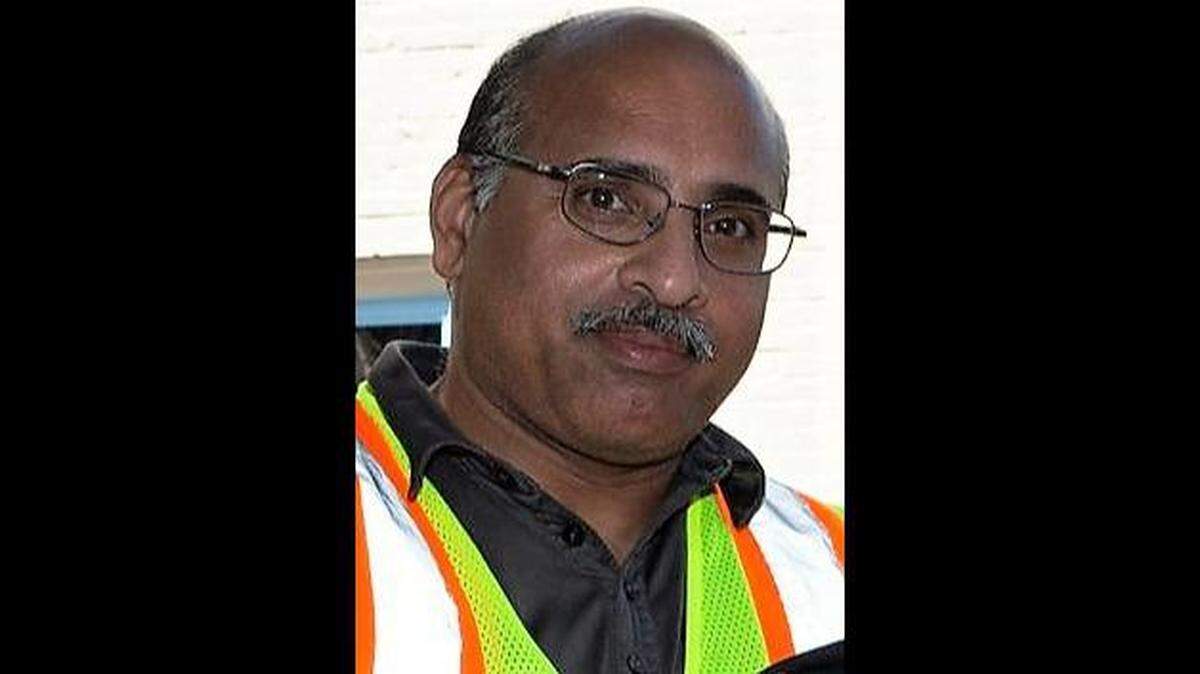
A top Chapel Hill town employee who filed for bankruptcy and abruptly resigned this month is facing claims that he avoided repaying $1.9 million in business loans.
In some cases, the money represented the life savings of his 15 investors, most of whom met Kumar Neppalli, a native of India, through state and national Indian cultural groups, according to four investors who spoke with The News & Observer.
The investors said Neppalli touted his connections to developers through his work with the town when he talked with them about investing in his pending real estate deal with a local builder on an apartment or townhouse project.
In an Oct. 27 email, Chapel Hill Town Manager Maurice Jones told the Town Council and mayor that Neppalli, 54, was retiring from his job as traffic engineering manager effective Nov. 1. Court documents showed he filed for Chapter 7 bankruptcy on Oct. 13.
“We will be moving quickly to hire for this position. In the interim, our staff will be working together and with a consultant to address traffic related issues,” Jones said.
Neppalli worked as a city traffic engineer in Fayetteville before he was hired in 2000 as Chapel Hill’s traffic engineer, earning $58,500. His job was reclassified over the years, eventually increasing his annual salary to $106,756, town records show.
As traffic engineering manager, he was responsible for studying how traffic flows around town and for working with developers to project how proposed projects could affect traffic.
The town is taking the allegations against Neppalli seriously, Jones said.
“At this point in our review, we do not have any evidence that Mr. Neppalli used his position to unduly influence projects here in Chapel Hill, and we do not have an active criminal investigation underway at this time,” Jones said. “Our review will continue in an orderly and thorough manner.”
Court filings show Neppalli owes nearly $2.5 million, including over $600,000 in debts with financial lenders, credit card providers and the Internal Revenue Service. He also claimed $2 million in assets, including homes in Cary and Apex that are still under a mortgage.
Neppalli had his bankruptcy attorney respond to questions when The N&O called him.
Attorney Joshua Bennett, with the Bennett Guthrie law firm in Winston-Salem, said Neppalli has made “little, if any money” from his investments.
“In general, I think what’s going to come out is that this is a system that everyone was aware of and everyone was aware of the risks, and like anything, sometimes the risks didn’t work out,” Bennett said. “The narrative that you appear to be hearing, which is that he just — it sounds like they’re saying he just went and lied to people — I don’t think that’s the narrative that is going to come out in court.”
Indian community business loans
The town was alerted to Neppalli’s money troubles in an Oct. 20 email from Srinivasa Yenduri, a Connecticut resident listed as a creditor in court documents.
Yenduri claimed in the email that he had invested in Neppalli’s “real estate Ponzi scheme” in which investors said they were told about a pending development deal involving builders Neppalli had met through his work with the town.
Yenduri gave him $150,000 for a “business loan,” documents showed.
Several investors, who included professionals in information technology, banking and business, told The N&O they met Neppalli through cultural associations or mutual friends. Their investments ranged from $15,000 to $400,000 and were made over the last three years or longer, according to documents and interviews.
Most spoke with The N&O on background only, citing a need to consult with their attorneys before going public so as to not endanger their cases. The N&O could not reach Yenduri by email and phone for additional information.
Neppalli was “like a father” to him, Cary resident Ravindar Nalla told The N&O. They met through the Triangle Area Telugu Association a number of years ago, and he considered Neppalli a family friend, Nalla said.
Neppalli previously served as vice president and president of the association, and as a former board member with the Hindu Society of North Carolina. He also served for the last 11 years as president of his Twin Oaks homeowners association in Cary.
In January, Nalla loaned Neppalli $90,000 for a real estate project, he said. In June, Neppalli promised to repay him but hasn’t returned any money yet. The looming loss of a decade of savings makes it difficult for him to sleep at night, Nalla said.
Other creditors shared similar stories of being asked to invest in a real estate deal. Another man said Neppalli told him that he would use the money to buy land in Chapel Hill and work with a developer he knew to build townhouses.
One man said he expected to get a townhome for his $150,000 investment. He used his credit card to invest half of the money in 2018 — and has been paying interest on it since. The other half was paid in cash, he said, and there is no written proof.
Now, he hopes to just get some of the money back, the man said. They had no reason not to believe Neppalli, who is a well-known person in North Carolina’s Indian community, he said.
Wake County lawsuit filed
At least one creditor has filed a lawsuit in an attempt to recoup his money, court records showed.
Ravi Dukkipati, who lives in Morrisville, filed a lawsuit in May in Wake County Superior Court, in which he claimed that Neppalli gave him a promissory note for his $400,000 investment for “commercial purposes” on Oct. 30, 2020. The note, which is included in the court file, showed Neppalli agreed to repay the money, plus $169,000 interest, within six weeks, the lawsuit stated.
Neppalli also gave Dukkipati a check for the total amount, backdated to Dec. 7, 2020, but subsequently asked him not to cash or deposit the check, the lawsuit said. On Dec. 22, 2020, Neppalli promised to pay another $63,000 in interest, it said.
In January, Neppalli repaid the $400,000, but not the $232,000 in interest, which also is accruing interest, the lawsuit said.
Two attorneys filed a response for Neppalli. The first, in July, said Neppalli could not recall when he received the money and denied that the loan was for commercial purposes. He also denied defaulting on the loan and agreeing to pay additional interest or late fees. He asked the court to void the initial $169,000 in interest.
The second lawyer filed another response in August, claiming that Dukkipati gave the money to third parties, who then gave it to Neppalli. Those third parties — an individual living in Wisconsin and a Florida medical device company — have been repaid, he said.
Dukkipati’s promissory note, he noted, “was procured through coercion and duress.”
The N&O was unsuccessful in its attempts to reach Dukkipati by phone for comment.
Attorney addresses business loans
Bennett, the bankruptcy attorney, said Neppalli is not confirming or denying the claims until the case goes to court.
Bennett described the loans as part of an accepted practice in the Indian community of helping small-business owners, and expressed concern that some creditors went to the town with their claims and talked with an N&O reporter, calling it a push “to try to exert pressure on him in what we believe are illegitimate ways and in ways that we believe violate the bankruptcy stay.”
A Chapter 7 bankruptcy is typically a last resort for someone who owes significant amounts of money. The court puts the individual’s debts on hold, takes possession of their property, and assigns a trustee to review financial information, sell off assets and decide which creditors will get paid.
Institutional debts, such as mortgages and car loans, are usually paid first, with whatever remains being shared by credit card companies and other creditors, such as business investors.
Neppalli’s earnings before retirement equaled roughly $14,000 a month, including rental income, court documents showed. His monthly bills were over $9,400, and he had less than $1,000 in various financial accounts. Neppalli told the courts that he expects to earn $4,831 a month in retirement.
He also is eligible for health insurance as a retiree based on his years of service, town officials said.
Records show that Neppalli also filed for bankruptcy in 1995 and in 2002. Information about those cases was not immediately available.
This story was originally published November 9, 2021 at 9:58 AM.