Should Proud Boys, public be able to protest at school? NC county weighs the question.
An Orange County board discussed several concerns this week about where, how and when to restrict picketing and demonstrations, while also preserving the public’s constitutional right to assemble and protest.
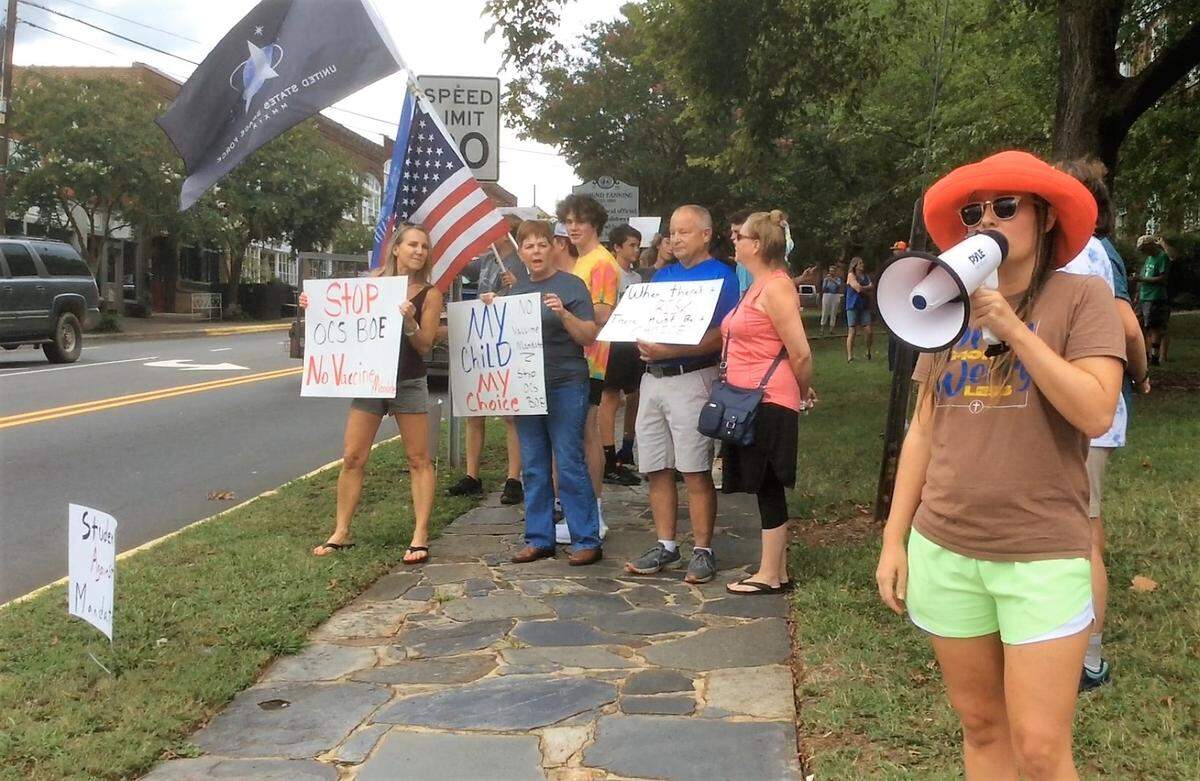
The Orange County commissioners are only starting the conversation, which was prompted by protests last year outside Orange High School and at Orange County School Board meetings that involved members of the Proud Boys.
The group identifies as a brotherhood promoting Western chauvinism and opposing political correctness and anti-racial guilt. Organizations that track hate groups note the Proud Boys have marched with alt-right and white supremacist groups and engaged in violence and intimidation.
After the Orange County protests, parents, students and district staff reported being worried about intimidating behavior and “bigoted, misogynistic, racist, homophobic and transphobic language” at those gatherings, according to an Oct. 11 school board resolution.
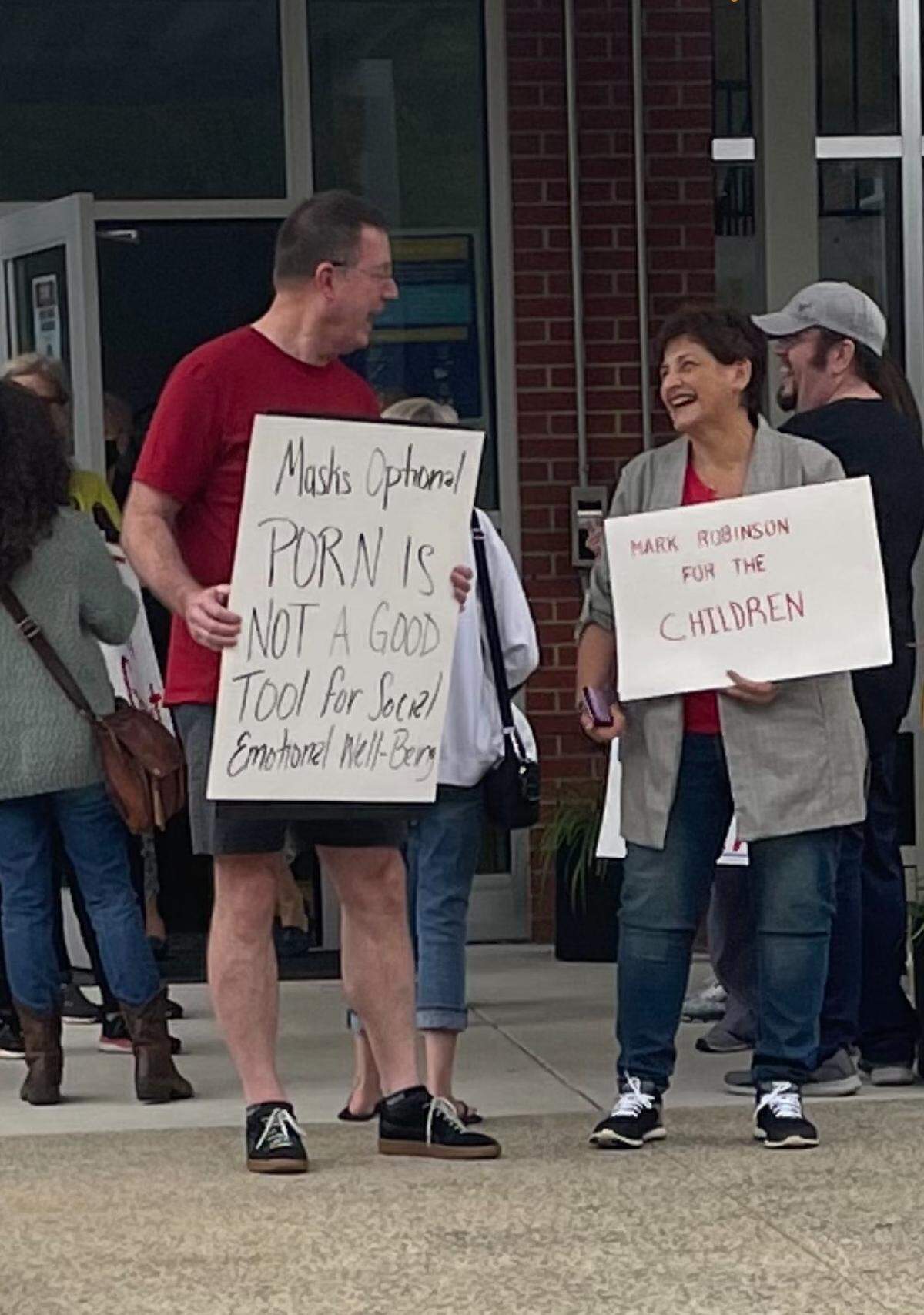
Members of the public also reached out to the county commissioners for help, and in November, Commissioner Jean Hamilton asked the board to take a look at rules that could promote civility in the community.
The commissioners also joined the Orange school board in passing resolutions opposed to hostile and racist behavior.
School board protests nationwide
Protests at school board meetings nationwide have grown more heated in the past year amid tensions about COVID masking policies and what some people think schools are teaching about LGBTQ identity, race and history.
Their main concern, the commissioners said Tuesday, is protecting students and providing a safe learning environment.
“Rather than trying to figure out what we do on steps of the courthouse, the concern for me and where this originated is around our schools and figuring out what is the best distance ... so kids can come to school without being intimidated in some way,” Chair Renee Price said. “If people have something to say ... I’m all for that, but do it somewhere else rather than intimidating children.”
The commissioners agreed to continue the discussion at a future work session, when they also could hear from school leadership in the Chapel Hill-Carrboro and Orange County districts, as well as Sheriff Charles Blackwood.
The sample ordinance that county attorney John Roberts shared Tuesday included rules that exist in other counties, including Wake. State law already addresses some security concerns, such as riots and weapons carried openly, which is prohibited at large gatherings. Concealed-carry permit holders can bring weapons to events, Roberts said.
Any county protest and picket rules “must be reasonable, viewpoint neutral, and narrowly tailored to serve a legitimate government interest with minimal imposition on constitutional rights,” he said.
The changes being considered for Orange County could:
▪ Establish rules for when groups must seek a permit or give notice about a gathering. The Clerk to the Board of Commissioners could oversee the process in consultation with the sheriff, and appeals would go to the county manager when permits are denied.
▪ Establish rules for conduct and permitted picket locations, including traditional “public squares,” such as the courthouse grounds, sidewalks, parks, public streets and private land. Demonstrations, depending on the location, might still need permission from the N.C. Department of Transportation, a property owner or other local governments.
▪ Prohibit parades and picketing within 500 feet of school property and playgrounds, even if an event is held on private property.
▪ Establish a $500 fine and other penalties for violations. A fine could be levied on anyone attending an event that doesn’t comply with the rules, Roberts said.
He noted the proposed penalties do not specifically include criminal misdemeanors, because the state legislature “made it very difficult” last year to convict someone of violating a local ordinance if that person stays out of trouble ahead of their court hearing or if they were unemployed or had mental health issues at the time of the violation, he said.
Free speech, intimidation and student safety
Several commissioners expressed support for limiting how close protesters can be to schools. However, a countywide 500-foot rule would only be enforceable at 11 school properties that the county still owns, including Carrboro, Cedar Ridge and Orange high schools.
The school districts own the remaining properties and would have to adopt a policy covering those schools. County rules also would not apply to property within the towns, unless their boards adopted the same ordinance.
The sample policy included exemptions for students and staff demonstrations at a school.
“If such a limitation were to be adopted in the future it may not apply to picketing outside of school board meetings and certainly would not apply to people attending school board meetings to express their opinions,” Roberts said.
Commissioner Anna Richards suggested a less-restrictive rule that would prohibit protests only when students are in school or on campus for school-related activities. She joined Commissioner Jean Hamilton in supporting steps to protect children.
“I believe in free speech, but we also have to understand, at the development level of children, the kind of harm that could be done with speech,” Hamilton said. “If they feel unsafe in school, then they’re not going to learn. As we heard today, we need to think about how we invest in our children, and certainly in the times we’re in, they’re dealing with enough.”
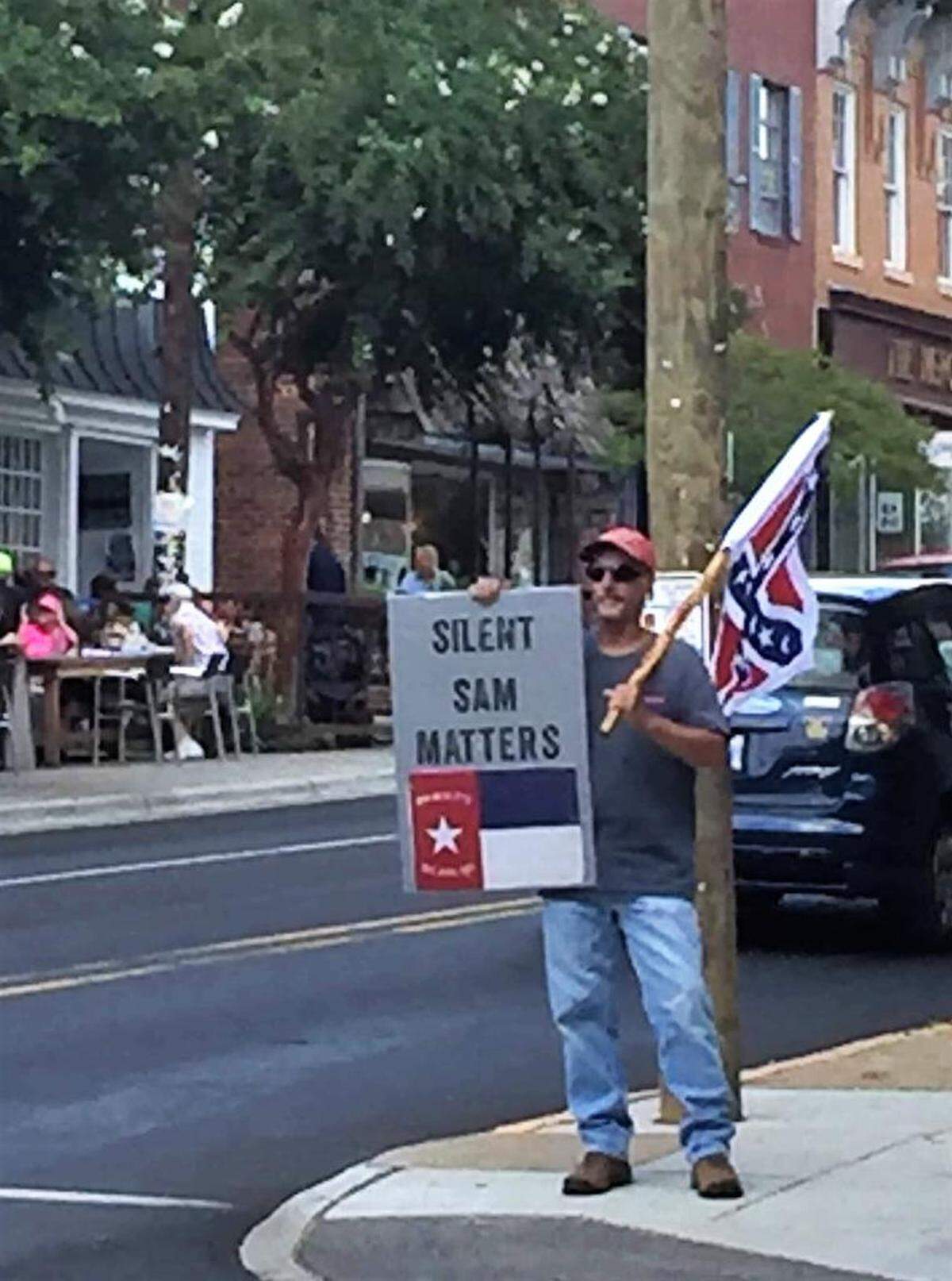
Commissioner Earl McKee remained wary of the proposed 500-foot limit, comparing last year’s protesters on the roadside at Orange High School to protesters that have stood along the street in downtown Hillsborough.
“I understand that you would not allow that on school property or if you didn’t want to allow it on county property, but when you move into the public right of way or you move into private property, that’s where I start getting really sketchy about how this affects free speech — whether you agree with the free speech or not,” McKee said.
An alternate view is that rule could benefit everyone, Hamilton said.
With an ordinance, “it’s going to be clear about when this is going to happen so we can get the appropriate law enforcement (involved), but also, because of the rules, we could enforce both sides being apart from each other and decrease the chance that there could be some unhelpful interactions, and make sure both sides can be giving their points of view,” Hamilton said.
Otherwise, “there may be some folks that end up feeling intimidated and don’t want to speak because the other side has those 50 people lined up,” she said.
This story was originally published May 12, 2022 at 4:09 PM.