Chapel Hill flood victims ask government, landlords to do more as deadline looms
AI-generated summary reviewed by our newsroom.
- Flooding from Tropical Storm Chantal displaced over 70 Chapel Hill residents.
- Residents and advocates demand landlord accountability and government aid.
- FEMA buyout talks resume as officials weigh long-term solutions for flood zones.
Heather Gibbs called 911 when floodwater from Bolin Creek started filling her Camelot Village apartment during a July 6 tropical storm, but she didn’t get an answer.
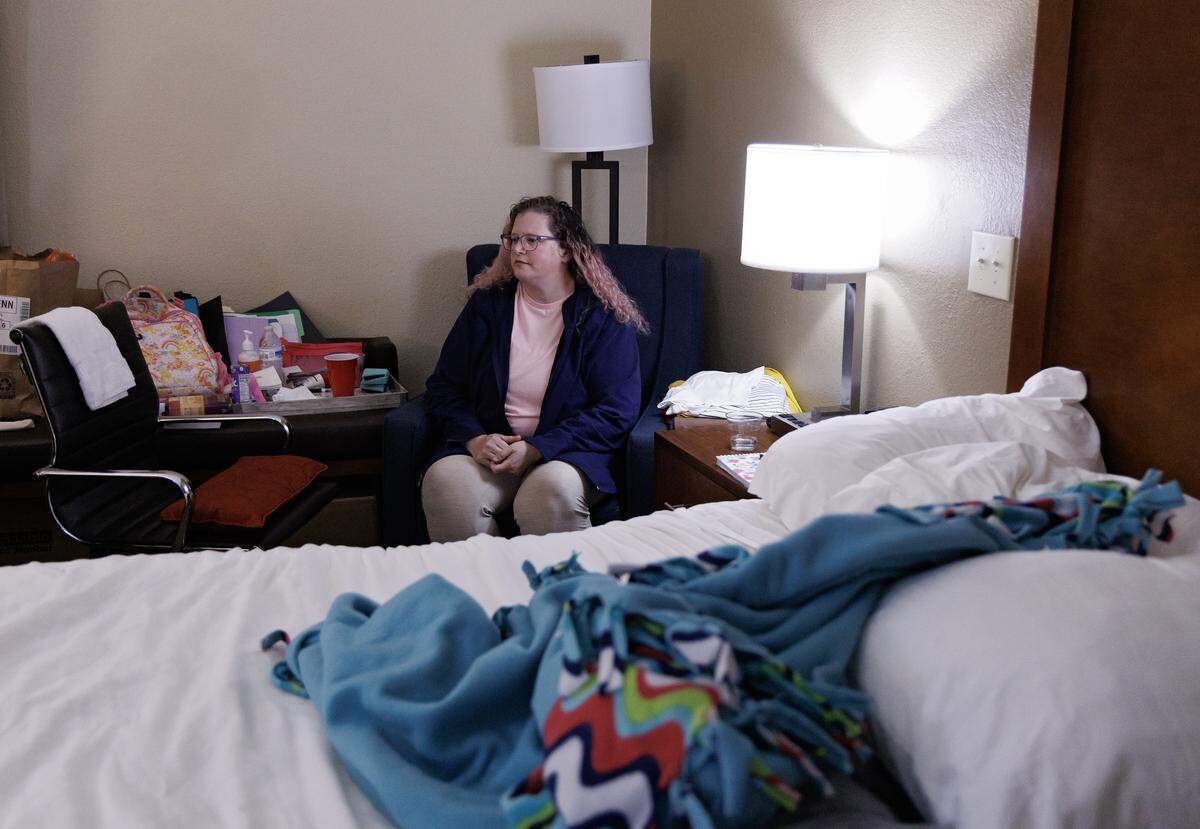
The water reached her knees inside the apartment and was waist deep outside, the 48-year-old Chapel Hill resident said. Neighbors pulled Gibbs and her walker to safety, and an upstairs neighbor let her spend the night.
For six weeks, she’s been living in the Comfort Inn just across Interstate 40 in Durham, paid for with emergency funds from Chapel Hill and Orange County. Volunteers from her church and local groups have delivered food, clothing and support. Some displaced residents were able to find housing and move out, but Gibbs and roughly two dozen other residents are still there.
That ends next week, leaving at least six people at risk of homelessness.
She’s been there before, said Gibbs, who moved into Camelot in April after two years living on the street and in shelters, when she wasn’t in the hospital for seizures and other medical issues. She doesn’t want to go back to that, but the $300 in fees she has spent so far applying for apartments hasn’t panned out.
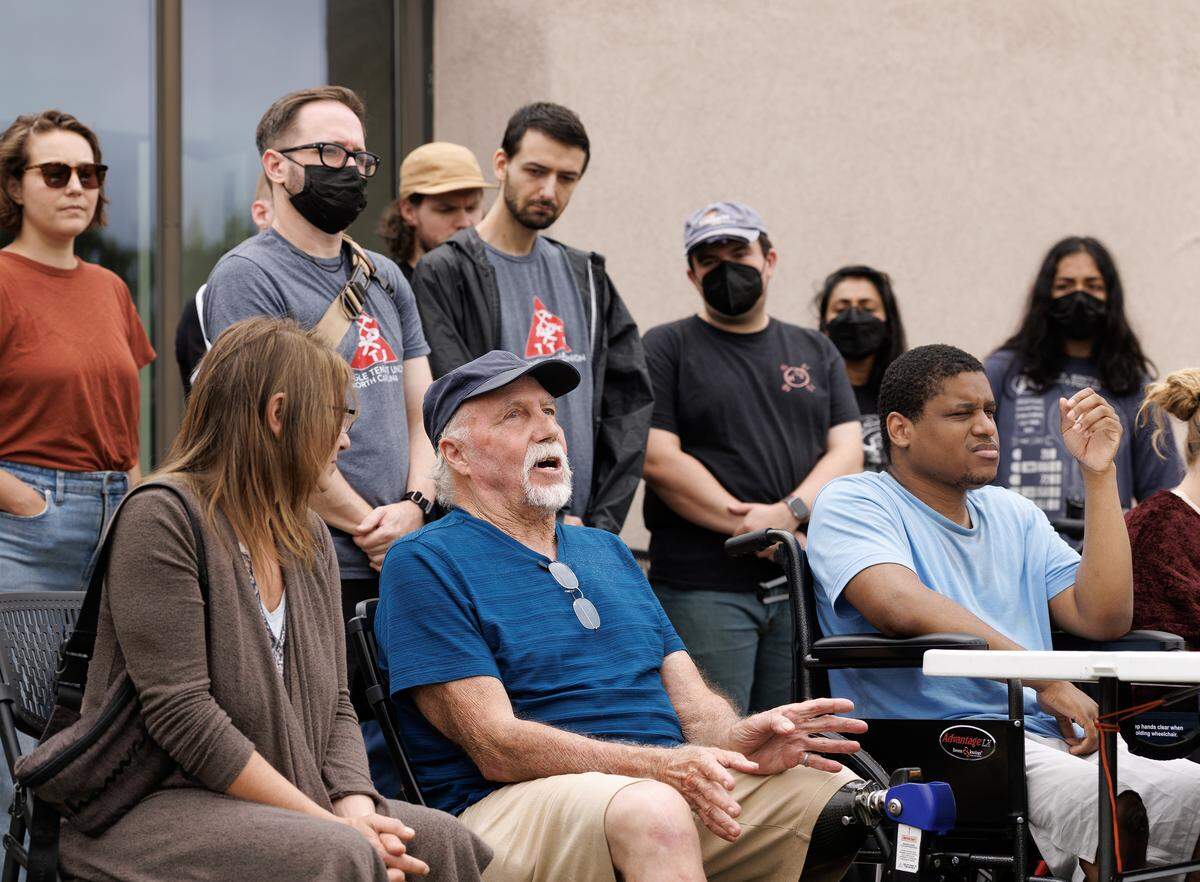
But they’re not going back to Camelot Village, she and others said Wednesday at a news conference organized by the grassroots groups, Triangle Mutual Aid and Triangle Tenants Union.
“They don’t need to just paint over it and pretend that nothing happened, and move more people in, especially since people that are moving into this complex are vulnerable, people that don’t have incomes to live other places,” Gibbs said.
That’s the fear, community advocates and residents said, adding eventually, someone is going to get killed. Chapel Hill and Orange County officials said they have started to talk with property managers again about a solution.
“That place is a death trap,” said Quinten Simmons, who uses a wheelchair and was pulled from his apartment by firefighters in a raft. “It’s flooded before, and it’s going to keep on flooding.”
Community steps up to help neighbors
One slip that night could have cost him his life, said Dale Weldele, who lost his prosthetic leg while trying to save himself and his dog from the rising water. Neighbors stepped in to help him get to safety, he said.
“I’m on one leg with crutches, trying to make it to the stairs,” he said. “By the grace of God, I made it there, lost everything. There was four feet of water in the apartment.”
In all, emergency responders rescued 70 people across Orange County during Tropical Depression Chantal. The storm dropped 5 to 10 inches of rain in just a few hours July 6, causing an estimated $56 million in damage to homes, businesses and civic buildings.
At Camelot Village, a low-rent, two-story brick condo complex sitting in a bowl between two floodplains, county officials reported damages of roughly $3.2 million.
On Wednesday, windows and doors to many of the flooded apartments were open. The walls were gone, stripped to studs, and a thin coating of mud still covered sidewalks, parking lots and some floors. Only a handful of units were actively being repaired.
Flooding and starting over from nothing has become the price of living in one of Chapel Hill’s most affordable apartment complexes, only a short walk from bus stops, shopping, jobs and school.
Volunteers with Grace Church and Triangle Mutual Aid were among the first on the scene July 7, mucking out apartments and salvaging what they could. Triangle Mutual Aid set up 24 residents in a hotel, supporting them until the Orange County Department of Social Services got involved, TMA volunteer Devin Gilgor said.
Volunteers with Hillside Church, TMA and the Triangle Tenants Union have continued to deliver dinner each night and offer other assistance.
The biggest challenge now is getting landlords and property management companies to refund security deposits, waive rent payments, and cancel leases. That money is critical for residents trying to relocate, Gilgor said.
They’ve also had to replace birth certificates and identification cards lost in the flood, to apply for housing and help, and struggled to access the recovery center in Carrboro or fill out online applications for grants, organizers said.
“They’ve gotten very little help from the county, from the town,” said C.R. Clark, a volunteer with the Triangle Tenants Union. “We’re trying to avoid these people slipping through the cracks, but as volunteers, there’s only so much we can do.”
Advocates also criticized property owners and managers who they said have ignored residents. State law allows a tenant to end a lease by notifying the landlord within 10 days of a rental unit being uninhabitable.
This week, only two residents still don’t have their security deposits, Gilgor said. One was told a property manager must do a walk-through first to look for damage, he said.
“Security deposits are supposed to be, if you mess up a building, then you forfeit that,” Clark said. “That’s not something you’re supposed to keep if a flood comes and ruins a unit that has nothing to do with the resident.”

What have Orange County, Chapel Hill done?
Orange County has paid $73,000 so far for hotel rooms, which initially served 32 people, county officials said.
The county is still paying for 18 rooms, using money from Chapel Hill’s $100,000 emergency fund, Deputy Manager Cait Fenhagen said Wednesday. Alliance Health has also provided funding to cover four residents who receive Medicaid, she said, and donors gave over $72,000 to the county’s Community Giving Fund, which will serve residents and families with long-term needs.
The county and town also have provided:
- Department of Social Services help to rehouse tenants with federal Section 8 housing vouchers.
- Referrals for other tenants to the county’s eviction diversion attorney, Legal Aid of NC or the UNC School of Law for help.
- Housing and Department of Social Services staff to help with furniture, clothing, and connections to community resources.
- About $20,000 in $50 gift cards given to residents to supplement nonprofit food aid.
Community advocates say that’s not enough. Chapel Hill at the least needs a better plan for safely sheltering displaced residents, Gilgor said. He also suggested:
- Requiring property managers to have an emergency plan
- Sharing the cost of rescue and recovery with property owners
- Looking at ways to mitigate floodwaters coming from upstream development
“This is a Chapel Hill town problem,” Gilgor said. “It’s going to flood again. We’re going to have more displaced residents, and this is going to be a vicious cycle that affects the most vulnerable people in our community.”
Jamezetta Bedford, chair of the Orange County Board of Commissioners and the only elected leader at Wednesday’s news conference, said she will give the board an update on the situation at Tuesday’s meeting.
That could include updates about a long-term solution that’s been tried before: buying the most floodprone Camelot Village apartments and tearing them down.
Previous efforts often failed because all the owners in each building have to agree to sell that building. Some Camelot Village owners have been reluctant because their units are not affected or they don’t live in Chapel Hill.
In 2005, the town got a $2.3 million FEMA grant to buy the most floodprone buildings, but the money was returned when some owners refused to sell. A few owners resisted again in 2013, and in 2019, FEMA denied the town’s application.
But Chantal’s devastation has revived public calls for a FEMA buyout, and talks with Camelot Village property management are underway. Moving forward will require President Donald Trump’s administration to approve the state’s Aug. 5 disaster declaration, town spokesman Alex Carrasquillo said.
This story was originally published August 20, 2025 at 5:14 PM.