Judge dismisses claim Chapel Hill school neglected students in sexual assaults

AI-generated summary reviewed by our newsroom.
- Judge dismissed CHCCS lawsuit and the jury, ending the trial.
- Plaintiffs alleged failures in supervision, reporting and training around 2019 assaults.
- Missing records hindered forensics; law requires 5-year and 7-year retention.
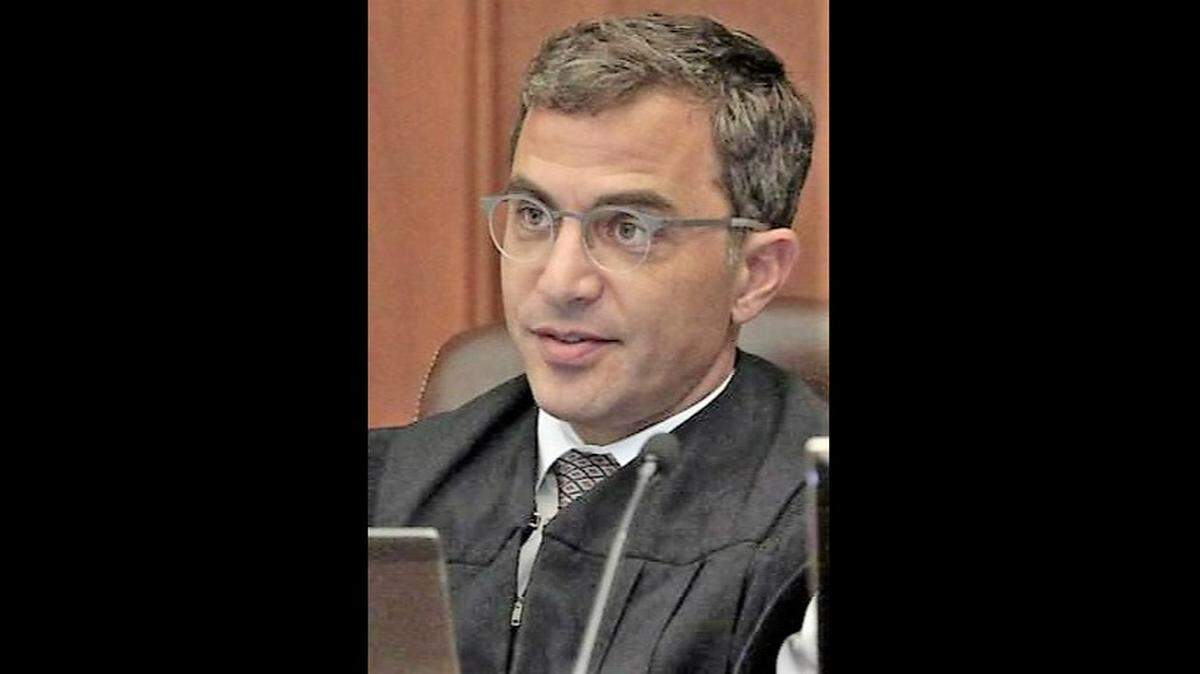
An Orange County judge dismissed a lawsuit Thursday alleging that Chapel Hill-Carrboro City Schools officials were negligent in how they supervised kindergarten students and handled alleged sexual assaults against three girls in 2019.
The lawsuit also accused the CHCCS school board, former Frank Porter Graham Bilingüe Elementary School Principal Emily Bivins and former FPG teacher Pablo Valencia of gross negligence and inflicting emotional distress. It also accused them of engaging in “a coordinated pattern of concealing sexual abuse, failing to report and creating a culture of silence that harmed all plaintiffs.”
Attorney Shayla Richberg rested her case Wednesday after seven days of testimony, including from the female students, their parents and experts.
She also clashed several times with Superior Court Judge Allen Baddour after failing to help him and the defense attorneys follow along with her evidence or giving a different copy to the court than what she had at her table. Tuesday’s exchanges twice resulted in Baddour slamming his documents on the bench while the jury was out of the room. “This is absurd,” he declared the final time.
On Wednesday evening, CHCCS attorneys asked Baddour for a directed verdict on claims against Bivins and Valencia. A directed verdict is a judge’s ruling that the jury is not likely to agree with the lawsuit’s claims.
Baddour considered the arguments overnight and asked the attorneys Thursday morning whether dismissing the individual claims meant the CHCCS school board would still be liable. After short arguments from both sides, he dismissed the entire lawsuit and the jury.
No witnesses for the defense took the stand, although current and former CHCCS officials were present for the trial.
Richberg and Rebecca Fox, a former CHCCS employee and the parent of one girl, declined to comment about Baddour’s decision.
CHCCS denies witness, lawsuit allegations
Richberg’s last witness — Billie-Jo Grant, an expert in education best practices with McGrath Training Solutions — testified for hours Wednesday that Frank Porter Graham staff and the district mishandled the harassment and assault claims and failed to file reports.
Grant also concluded the district did not properly train staff to identify, intercede or investigate assaults or make any changes after Fox appealed to the school and district to do more about a male kindergarten student who was accused of repeatedly harassing and sexually assaulting her daughter at recess and in class.
The district denied wrongdoing and liability in that case, which was previously heard by U.S. District Court Judge William Osteen Jr. Osteen dismissed the lawsuit’s Title IX and constitutional claims in March 2025, but left Fox with the option of seeking relief on other claims in state court.
Fox filed the Orange County lawsuit in April 2025 on behalf of her daughter and two other female students, who reported that a male substitute teacher sexually abused one of them in a closet or bathroom at school and abused other female students in front of male students. The lawsuit claims that may be where the male student got the idea to assault Fox’s daughter.
It alleges the third girl alerted Valencia to the abuse, and he unsuccessfully tried to catch the substitute before taking both girls to the principal’s office to report what happened. Principal Bivins did not investigate or address the situation, the lawsuit claims.
The district denies the incident involving a substitute happened. The person has not been identified.

Lost student records, supervision concerns
Richberg said assaults on all three girls happened in the fall of 2019, but it’s hard to pin down exactly when and what was reported because district records no longer exist. On Tuesday, Luis Castrillion, a digital forensics analyst, testified while the jury was out of the room that the district deleted student records in 2021 when its contract ended with the PowerSchool software company.
Baddour dismissed Castrillion after hearing the attorneys debate whether his testimony, without records to review, was needed.
On Wednesday, Grant also mentioned the lost records while testifying about her review of available reports, on-camera interviews between FPG staff and the girls, and sworn testimony from their parents and CHCCS officials.
FPG students were being improperly supervised at recess and in the classroom, and no changes were made after district staff heard the allegations to ensure it didn’t happen again, Grant said. She also questioned the amount of training that staff received in observing and intervening in “concerning” student behavior, as well as how assault claims and required reports were handled.
In particular, she noted Bivins framed her questions about the alleged assault involving the boy and Fox’s daughter as “tickling,” instead of pressing the girl for more details about what happened.
“It was handled more like a student conduct issue, not as a harassment issue,” Grant said.
She also did not find evidence that Bivins and staff were trained in how to address, investigate and report allegations, she said.
“The deposition testimony shows that employees didn’t know what to do,” Grant said. “They didn’t know how to recognize, and they didn’t know how to report, because we have multiple instances where they should have reported and did not, which suggests that if they did have any training, it was ineffective because they did not follow their policy.”
CHCCS attorney Rodney Pettey challenged that assertion, referring Grant to a staff training document about student harassment and bullying, complaint procedures and other steps for responding to allegations.
Police reports filed, but none to NC database
Pettey also challenged Grant’s testimony that Bivins, Valencia and the school board failed to report the allegations to police, Child Protective Services and the N.C. Department of Public Instruction.
State law requires school districts to keep student records for five years and records of harassment and other behavior issues for seven years, which wasn’t done, Grant said. Those records help districts track student behavior and school performance, she said.
NCDPI also doesn’t have assault or sexual offense reports for Frank Porter Graham from that time period, she said. Those reports help the state allocate resources by creating “an accurate reflection of how often assaults are occurring, how often students are being disciplined for issues on campus,” she said.
Child Protective Services only gets involved when a parent or other caretaker abuses a child, but all potentially criminal offenses must be reported to local law enforcement, even though state law does not attribute criminal intent, including for sexual assault, to 5- and 6-year-old children.
The Chapel Hill Police Department provided The N&O with two Frank Porter Graham incident reports from 2019: one immediately after Fox reported her daughter’s assault — it doesn’t identify who made the report — and another from Bivins two weeks later.
Richberg filed a third report in 2024 alleging that someone had witnessed a sexual assault on a child, the records show.
Police reports help protect the victims, but also young perpetrators, Grant said during cross-examination.
“Those are two kindergarten students, and we’re worried about where they learned that behavior, so absolutely that applies,” she said.
This story was originally published April 9, 2026 at 1:56 PM.