
Life Stories: Sam Townsend loved history and made it live for Capitol visitors
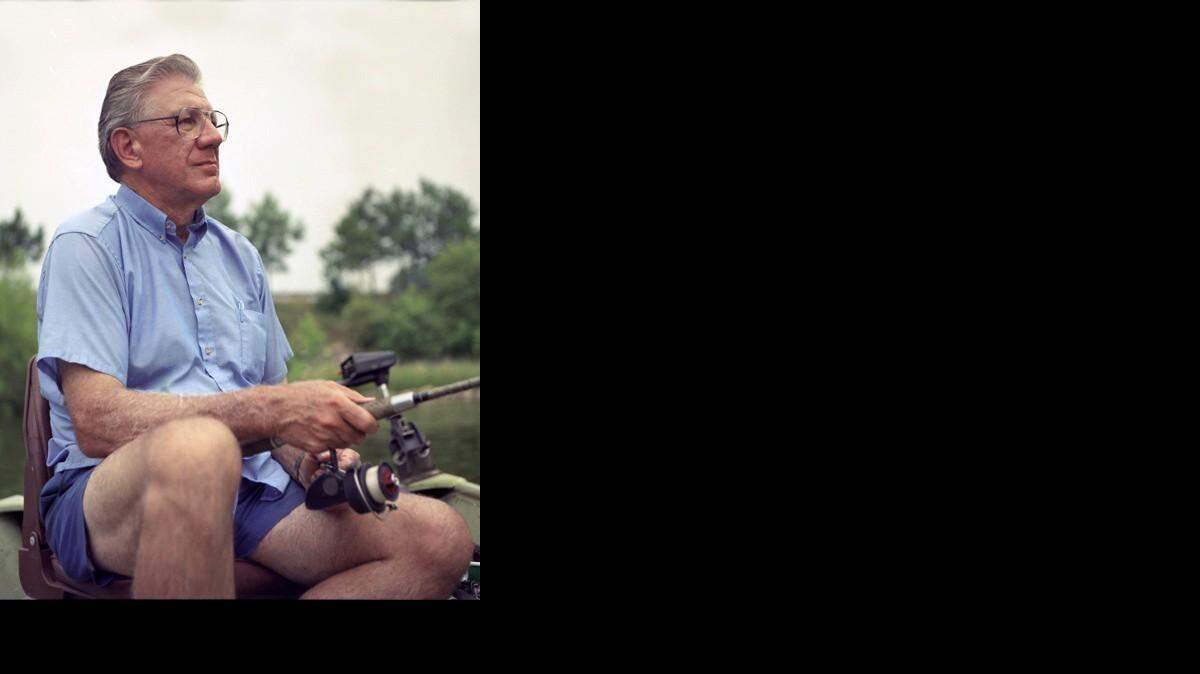
Though he had never much cared for history class, Sam Townsend accepted a position with the N.C. Hall of History as a beginning curator in 1959.
He admitted to having had to look up the word “curator” in the dictionary to understand what he was getting into, but was soon delighted to learn he had stumbled into his life’s passion.
For the next 40 years Townsend worked his way up from cleaning artifacts to managing the State Capitol, where he was the first administrator of the State Capitol/Visitor Services Section. He weathered the transition of the Hall of History to the Museum of History as an employee of the N.C. Department of Cultural Resources.
In reflection of his career, Townsend told the News & Observer in 1998 that at the end of the day, it was his work leading tours of schoolchildren that was the most meaningful.
“That was the most important thing in the world,” Townsend said, his voice breaking. “It still is.”
Countless children from all around the state, most of them in the sixth grade, made an annual trip to hear Townsend’s stories. Among other tales came accounts of the decisions that took place in those chambers during the Civil War – and the rum running that went on as well. Townsend attributed chipped steps to the weight of barrels of alcohol being rolled up and down the stone stairwells.
For someone who enjoyed delving beneath the surface, and who deeply appreciated all that North Carolina had afforded him, a state career in museums was a perfect fit.
Townsend, 78, died this month from complications with leukemia.
The sound of rattling keys
His son, Perry Townsend, was among those many sixth-graders who made that trek to the State Capitol. One of the highlights was hearing his dad talk about ghosts – or at least the possibility of them.
“He would tell about occasionally hearing the sound of rattling keys when he knew that he was the last one in the building,” Perry Townsend said. “I’ll never forget – he gave a very passionate tour. He wasn’t afraid to let it show that this really meant a lot to him.”
Though Townsend might have stumbled into a profession, he had deliberately used the state education system. And his pride and appreciation for that opportunity, along with a meaningful career with the state, never waned.
While in college at N.C. State, Townsend had to alternate years working with years studying to afford tuition, and was just a year short of graduation when he took the assistant curator position. As his family tells it, the position technically required a degree, but his boss was so impressed with his work that he was offered the job if he agreed to stay on at least two years, and also continue with his studies part time. He obliged, and the rest, they say, is history.
Underwater archaeology
Though he might not have enjoyed history in an academic sense, his family contends that he held an intrinsic value in the preservation of place all along. Born in Robeson County, he lived in a multigenerational home on the family farm until he moved to Raleigh at age 5.
“His love of history and his love of place was rooted, I think, in having lived in the [same] house with his mother ... grandparents and great grandparents,” said his sister Frances Dreps.
Even without a history degree, his work came naturally. When the Civil War blockade runner Modern Greece was found off the coast of Fort Fisher, a friend called him unsure of what to do with the artifacts – he was running out of room in his bathtub.
“There was very little that was written about how to preserve, especially, artifacts that had been in the salt water for 100 years,” recalled his wife, Mary Ellen Townsend.
Townsend contacted the Smithsonian Institution for help, and soon the underwater archaeology unit was established. He learned how to dive, spending many weekends at the water in addition to working the requisite 40 hours in Raleigh.
“The Capitol probably was his second wife, much as it was to me,” laughed Raymond Beck, a longtime employee of Townsend’s and successor in 2006. “He taught me to be very diligent with my research. In fact, any time I came to him with some amazing find ... his words were, ‘Prove it.’ ”
Townsend took care of everything in that building from raising the flag in the dome to chasing down leads on furniture dating from 1840, the year the Capitol was built.
“He was a visionary about where he wanted our section to go,” Beck said.
The joy of fishing
Townsend lived his sense that history mattered, by way of passing along family traditions.
“Sam loved to explore in the woods for grapevines, pulling just the right ones and shaping them into wreaths used to decorate all the family houses. He took great joy in teaching that skill to our grandchildren,” Dreps drecalled. “His love of the contemplative act of dipping a hook in the water was passed on to two generations, who like him, think that it’s always time to go fishing.”
He also passed a love of art onto his son, who is now a composer. Sketches he made during meetings sometimes became larger projects on his own time – a passion few knew about.
“The art thing was something he did for himself,” his son said. “It was the pursuit of the idea and the thought process behind it.”
Townsend never lost sight of how special his job was.
“This building has its own aura, and just because you’re in it 23 years doesn’t make it any less inspiring,” Townsend said.
Staff reporter David Raynor contributed to this article.
This story was originally published September 28, 2014 at 4:56 PM with the headline "Life Stories: Sam Townsend loved history and made it live for Capitol visitors."