
Wake Forest farm is conserving a rare Thanksgiving turkey
Visitors to Julie Gauthier’s Wake Forest home, tucked at the end of a snaking dirt road, might not find her inside.
Instead, they might follow the sound of gobbling turkeys and chirping chickens to discover her feeding flocks of rare breeds of poultry on the 10 acres of Chickcharney Farm.
Gauthier’s day job is a veterinarian with the U.S. Department of Agriculture. But during the early mornings, evenings and weekends she raises heritage poultry – rare birds that Gauthier hopes to preserve by reintroducing to homestead farming.
Her most recent project is the conservation of the Beltsville Small White Turkey.
“I’m out to prove that these breeds are valuable and we should hang on to them,” she said. “To save them, we have to eat them.”
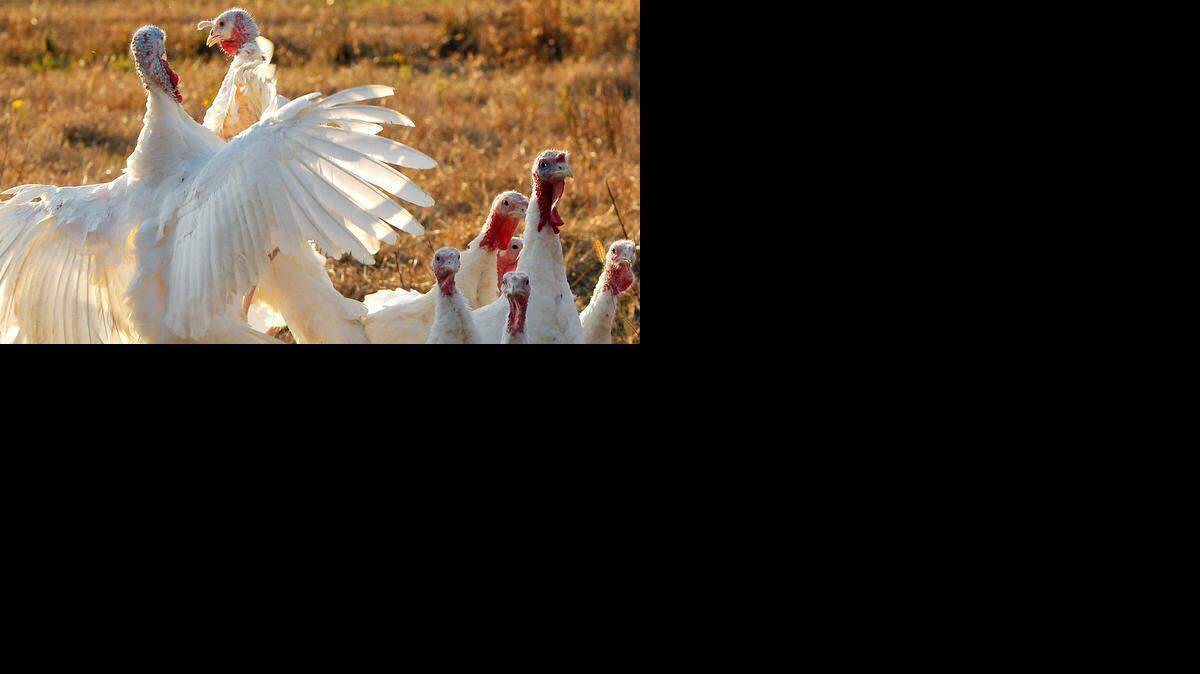
True to its name, the Beltsville is a slender, snow-white bird that made it ideal for a clean dressing at Thanksgiving dinner. Popular in the 1940s and 1950s, the Beltsville was the nation’s first turkey bred by the USDA specifically for Thanksgiving dinners because it was small enough to fit in small, apartment-sized ovens and refrigerators.
Soon, Americans craved more meat on their turkey to serve more people. The Broad Breasted White Turkey, a 50- to 60-pound turkey that most Americans eat today, was bred to process food more quickly than the 10- to 17-pound Beltsvilles. The commercial turkeys were too heavy to naturally reproduce or free range for food.
By the 1970s, the Beltsville had nearly vanished. Its existence was confined to research labs that liked its small size.
Gauthier has kept rare breeds of livestock for about six years. This year, she joined the board of The Livestock Conservancy, a national nonprofit based in Pittsboro dedicated to preserving rare breeds of livestock.
When she heard about the critical condition of the Beltsville, she began looking for them. One of the only places in the country that still bred the birds was the Southeast Poultry Research Laboratory in Athens, Ga.
In May, she requested 20-year-old breeder birds that were about to be euthanized after their reproductive prime. Since then, she has received two more flocks for a total of 50 birds.
While ranging Gauthier’s fields in search of grasshoppers and other food, the males’ heads turn blue and their red snoods stretch longer.
The birds are valuable because they live natural lives. They reproduce and can feed themselves on range during their eight- to 10-year lifespan – or before Thanksgiving dinner. And if people decide they want free-range turkeys or more genetic diversity, Gauthier says that current commercial turkeys won’t suffice.
“These guys do natural turkey things,” she said. “They’re really curious creatures, really charming.”
Along with the Beltsville, she keeps other endangered poultry, like the portly zebra-striped Narragansett Turkeys, a broiler poultry called Delaware chickens and two breeds of geese and ducks.
Gauthier thinks the Beltsville breed has a future.
“We’re in preservation mode, but next year, I hope to have hatching eggs and poults to share with a lot of people who might like to raise these,” she said.
This story was originally published November 16, 2014 at 5:15 PM.