
Development threatens Southeast Raleigh medical center for elderly
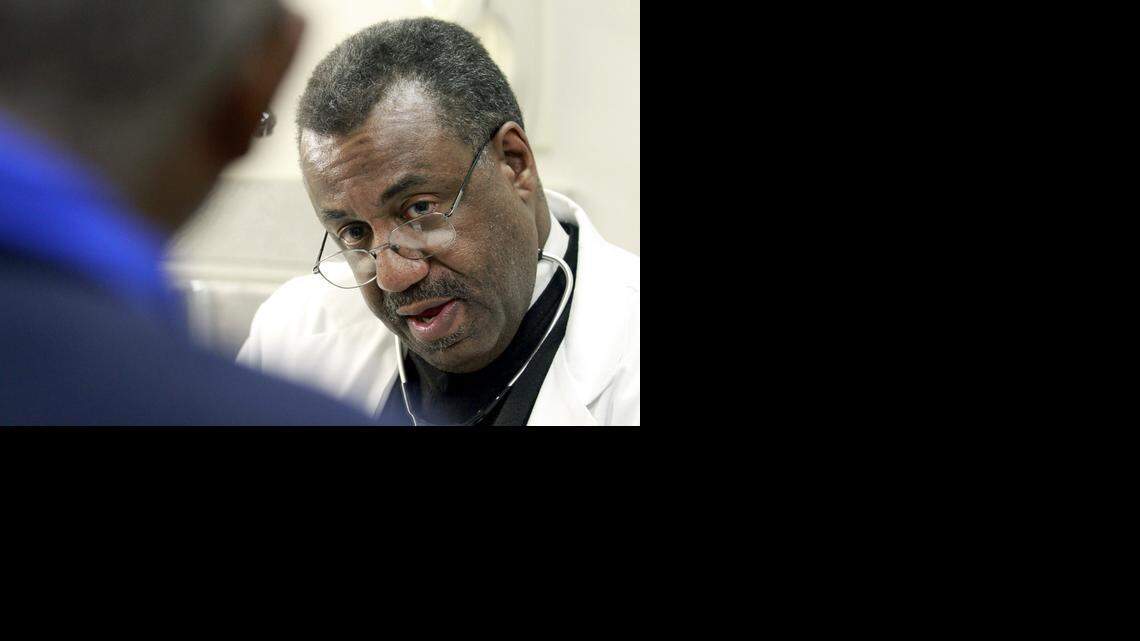
A doctor’s office next to a decaying warehouse has become a crucial resource for an aging neighborhood. Soon, it likely will be the first institution in Southeast Raleigh displaced by a new wave of development.
The Rex Senior Health Center, with nearly 1,700 patients on its rolls, will lose its home of 17 years if the city of Raleigh sells its Stone’s Warehouse land for private development by Transfer Co. The company hopes to turn the East Davie Street warehouse into a cluster of small, high-end food producers and a grocery store.
Now the race is on for a replacement.
Raleigh’s staff and council chose Transfer’s plans over two competitors’ proposals, both of which would have included space for the health center and affordable housing. As a final sale of the land approaches, the fate of the doctor’s office has boiled into a potent political question for the Raleigh City Council and its prospective developers alike.
“I think that it’s clear the fastest-growing demographic (in the community) is our senior population ...,” said LeRoy Darkes, the center’s physician and medical director since its creation in 1997.
“We can counter that against this wave of gentrification, these young folks coming in. But these people are here, they’re still coming here, and they need the care to be provided.”
City leaders and the developer have promised to help Rex Healthcare find a new home for the practice, but the limits of space and money have complicated the search.
“It is your responsibility to develop a plan for the Rex Senior Health Center, if it is to move,” Henry Pickett, a longtime community advocate and Davie Street resident, told the council this month. “Put it in black and white.”
From zero to 1,700
Darkes and Rex Healthcare’s practice debuted to a skeptical audience in 1997.
On its opening day, Darkes recalled, people from the historically black and low-income community watched his staff from a distance.
“They were looking, with their arms folded, like ‘Yeah, right,’ ” said Darkes, 58, a native of New Jersey.
They had reason to doubt, he said. Southeast Raleigh for decades had seen an exodus of local business. Though nonprofits like Urban Ministry’s Open Door Clinic offered medical services, many older people still had to criss-cross town from medical office to office.
People who make less money have health problems in higher frequencies. Nationally, people with below-average incomes tend to wait longer for appointments, and more than half said they delayed needed care because of cost, according to a report by The Commonwealth Fund, a private foundation focused on health care research.
In Southeast Raleigh, “there really wasn’t a focal point of health care. There really wasn’t a lot of attention being paid by the big players here – so folks here have traditionally been disenfranchised,” Darkes said.
Since then, he has built a patient list of more than 1,700 people. He sees up to 22 people a day, and his physician assistant perhaps 16 more.
They often arrive by taxi, paid for by Rex Healthcare, or they’re driven by neighbors. About two-thirds of them come from ZIP codes 27601, 27610 and 27529, which stretch from downtown Raleigh to the southeast.
Teaching prevention
Russell Yarbrough, 77, walked through the practice’s double doors at half past 2 p.m. on Thursday. He’d driven about 10 minutes from his home in Garner, on the edge of Southeast Raleigh.
He and Darkes sorted through medical statistics and prescriptions together, taking a few minutes before they got to what ailed the patient.
“I just don’t never feel like eating, Doc,” Yarbrough said.
It’s a familiar pain by now. But the first few times it came, Yarbrough waited to get medical help until he couldn’t bear it anymore.
“I’d wait, every time, until I couldn’t walk. They had to roll me in. I’d just let it get worse and worse,” the retired bus driver said. Over the years, his intestinal blockage has required a surgery and multiple smaller operations.
Yarbrough’s hesitation might have worsened the problem – and it ran contrary to the doctor’s philosophy.
“Even if it’s 2 o’clock in the morning, if it’s feeling worse, you need to let me know,” said Darkes, a champion of preventive care.
It’s an idea that goes beyond just patients. Darkes and his staff are in Southeast Raleigh churches nearly every weekend, talking about prostate cancer, diabetes, hypertension, heart disease, stroke and dementia. Those diseases often are more prevalent in poorer areas, or go untreated longer. Darkes and company also have screened thousands of people for cancer and encouraged vaccinations.
“The center is more than just a delivery system for health services,” Dudley Flood, a long-serving leader in education, told the Raleigh City Council early this month. “It is a symbol that reminds us that we ought to be vigilant about our health.”
Costly move
It likely would cost hundreds of thousands of dollars to move Rex Senior Health Center. The question is who would pay, and what land is available.
The center’s not a money-maker. Rex loses $500,000 to $800,000 a year on its senior health center, because Medicare covers less than 60 percent of the center’s cost per patient, according to the hospital system. Rex calls the spending an investment.
The city of Raleigh helps balance the budget by renting the building to the hospital on the cheap. The yearly bill is about $15,000.
“If we were to go out now, it’d be $150,000,” said Bob Ricker, vice president of physician services at Rex. “We do need help from the city, to make sure it economically makes sense, also.”
The City Council also has asked Transfer Co., the likely developer of Stone’s Warehouse, to help with the relocation. So far, the developers have met once with Rex, said Lisa Schiller, a hospital system spokeswoman.
“They’ve expressed interest in helping us, but we have no idea what that might be,” Ricker said.
Jason Queen, one of the developers, said that the city and Transfer Co. were ready to give assistance.
“I know they’re looking at city-owned sites,” he said. “We’ve identified numerous sites for them as well.”
Rex has considered about five sites so far, but has nothing firm.
“We just don’t know,” Schiller said.
The council will consider using some of the land sale’s proceeds – perhaps $200,000 – to help the senior health center, said Councilman Eugene Weeks, the representative for Southeast Raleigh. More broadly, the council has pledged to put the estimated $2 million sale price toward community development focused on Southeast Raleigh.
Weeks also wants the developer to pitch in if necessary. He said he would move to delay any consideration of the final sale until a site is found. He would vote against the sale if there wasn’t a guaranteed plan, he said.
Daniel Coleman, chair of the city’s South Central Citizens Advisory Council, wrote in an email that the matter was a “ticking time-bomb” that could threaten political repercussions for Weeks. He also has criticized the city for not gathering community input on the plan for the sale.
The public will have one more chance to weigh in on the contentious, long-planned sale of the property: The City Council will host a public hearing before it signs off on the sales contract. No date has been set, but it could happen in March, Weeks said.
This story was originally published February 15, 2015 at 6:55 PM with the headline "Development threatens Southeast Raleigh medical center for elderly."