After the boot, what’s next for Raleigh’s longtime citizen advisers?
Christina Jones sat alongside activists and police officers at a table to discuss police accountability and hear from Raleigh’s elected leaders.
In the middle of the meeting, a police officer beside her said she could always talk to officers during her Citizen Advisory Council (CAC) meeting.
There was one small hiccup.
She’d never heard of a CAC. And she definitely hadn’t attended a CAC meeting.
The vast majority of Raleigh residents have never attended a CAC meeting either, according to a 2018 city survey. But every resident is an automatic member, whether they know it or not. Or they were.
The city devotes eight full-time employees to working with the CACs and its leadership board, the Raleigh Citizen Advisory Council (RCAC). It provides a $1,000 to each CAC, $15,000 to the RCAC, and it provides space for meetings where paid staff give updates on zoning, water, police, park and other matters.
“It was a structure that, if you crunched the numbers, served not even 1% of the city’s population,” said City Council member Saige Martin. “It seemed serious and robust and had staff members and meeting spaces and then you see a rezoning case and the vote (of those in attendance) was 5-to-2. It was shocking.”
So he, with the backing of Council member Nicole Stewart and Mayor Mary-Ann Baldwin, worked-behind-the-scenes to replace the CACs with a new, yet-to-be-identified community engagement process.
On Tuesday the City Council voted 6-to-2 to dismantle the nearly 50-year institution and hire a consultant to create a city office of community engagement. Council members Corey Branch and David Cox voted against the decision.
Time of tension
Citizen Advisory Councils were founded by Raleigh Mayor Clarence Lightner at a time of tension between development interests and neighborhood groups.
“(Lightner) issued a challenge to the group to search out and attack the problems facing the city and extended a special challenge to work on three broad problems which are of great concern to the present and future of the city,” according to 1974 city council minutes. “One: housing. Two: mobility of people. Three: governmental levels and responsibility.”
Today, CAC meetings are normally held once a month with a mix of dedicated regulars and newcomers roused by whichever rezoning is on the agenda. The concerns are almost always the same: traffic, noise, storm water run-off, privacy.
Some meetings go late into the evening as residents argue with developers about how tall buildings should be and what types of tenants will live in them.
Jones thought her first CAC meeting was boring.
After the police accountability meeting she contacted the city to figure out which CAC she belonged to. She had the time and energy, she said, as a stay-at-home mom with two little ones.
“I hated the way they were run,” Jones said. “It didn’t make me want to be there, and I felt like I could change that or help to change that.”
So in mid-2017, she ran to be the next leader of the CAC against a 16-year incumbent.
Her CAC, Northwest, is Raleigh’s second largest. It spans from Crabtree Valley Mall to Brier Creek and represents 83,000 people.
The smallest CAC, Mordecai, represents just one neighborhood of about 3,200.
Ten people showed up on Jones’ election night. She won.
.JPG "IMG_QUARRY3-NE-011811-TE_2_ (1).JPG")
A surprise vote
The vote to disband CACs didn’t happen until the end of the meeting Tuesday, and wasn’t included on the meeting’s agenda. One council member, Cox, was intentionally kept out of the loop. Some media organizations (though not The News & Observer) were also informed ahead of time.
Critics decried the calculated tactic, but voting on something without warning isn’t unique to the current council. And it’s not illegal in North Carolina.
“The N.C. open meetings laws are basically silent on the subject of agendas,” said Brooks Fuller, director of the North Carolina Open Government Coalition. “This is a major shortcoming of our law.”
Agendas or outlines aren’t required for routine, regular meetings, he said, but that it is “best practice to inform the public of exactly what will happen at a public meeting.”
“If the Raleigh City Council took this action at a regular meeting, it probably did not violate the law,” Brooks said. “However, we encourage all public bodies to inform the public anytime a matter, small or large, comes up for a vote. It’s just good government.”
In an interview, Baldwin said they discussed the issue in one-on-one meetings between council members beforehand, which would comply with the state’s open meeting laws.
‘A moral obligation’
Despite the optics, council members who support disbanding the CACs insist the vote had to be made without prior notice.
“We have had two mayors and councils try to make change,” Martin said before the vote. “And they were not able to do so. I think it is a moral obligation for us to do what is right. And it is not easy and, as I said in the beginning, it is not simple.”
The council doesn’t have time to slog through another political quagmire, said Baldwin, who served on the council for 10 years before she became mayor. Previous city councils that tried to push for reforms, most recently in 2017, were met with staunch resistance.
A majority of CACs are made up of homeowners over 50 years old, Stewart said, though they are racially diverse depending on the CAC’s location.
Raleigh has to start looking at people who do not have a voice, she said. Instead of trying to cram seats around existing tables, the city tossed out the tables and can now add as many seats as people want, she said.
The urgency, Baldwin, Stewart and Martin said, is rooted in equity.
“We seek to revolutionize our civic engagement process to ensure an inclusionary, participatory, democracy, in which residents have multiple opportunities to engage as partners and co-creators of the future of our city,” Martin said in his motion.
A 2018 study from Boston University’s Initiative on Cities found people who “are older, male, longtime residents, voters in local elections and homeowners are significantly more likely” to participate in zoning and development meetings.
“These individuals overwhelmingly (and to a much greater degree than the general public) oppose new housing construction,” according to the study. “These participatory inequalities have important policy implications and may be contributing to rising housing costs.”
On the same day council voted to end the CACs, it also voted to make it easier to build town homes and duplexes to help address housing affordability. The new council has promised to promote affordability with loosened regulations for developers and a bond to help add to the housing stock.
‘Kind of heartbroken’
Ana Pardo, 38, had a hard time describing her emotions after Tuesday’s meeting.
“There isn’t a word for how I felt,” she said. “I woke up (Wednesday) morning exhausted and kind of heartbroken.”
As a student at N.C. State University, she campaigned to save acres of trees off of Centennial Drive and was looking for organizations she could work with. She found the Hillsborough CAC, representing neighborhoods near the college including Cameron Village and Cameron Park.
“I tend to be very civic minded and justice-orientated, and this was the only explicit structure that existed for civic engagement,” she said. “For planning, and public safety and citizen input. It felt like an important structure to support with my time and energy. It aligned with my values.”
She became chair of the Hillsborough CAC when she was 23, a renter and a recent college graduate. A Latina, she also recognized that most of her CAC attendees were older, white homeowners.
“Everything can be improved,” she said. “As someone who spent six years of my life organizing my CAC to bring it back from the dead without a ton of support from the city, I feel strongly that the work was necessary. It is messy, dysfunctional, but that is democracy.”
‘City councilors felt threatened’
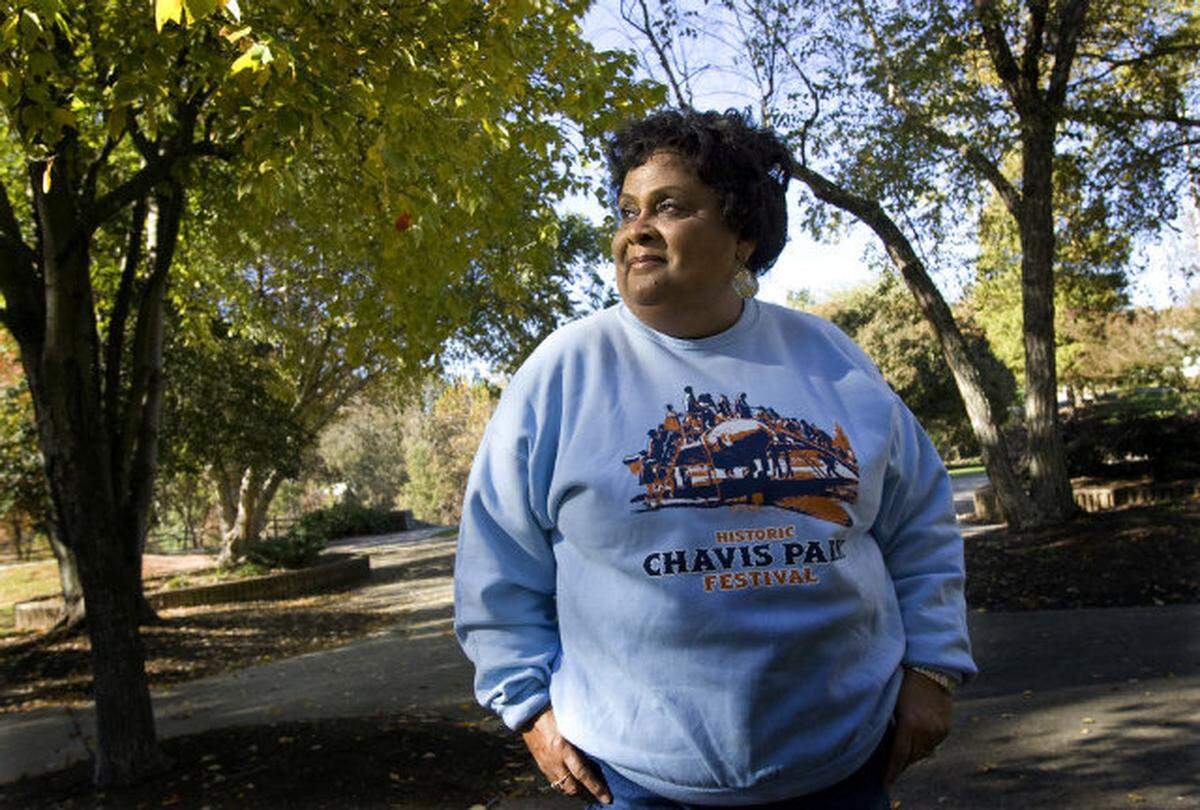
Lonnette Williams, 73, who led the Central CAC for years, was watching Tuesday’s City Council meeting when the vote to disband the CACs made her jump out of her chair.
She found out about CACs in 2004 after a meeting at Chavis Community Park where the city apologized for not being upfront about its plan for code enforcement in Southeast Raleigh.
After the recent election, Williams said she knew CACs would be on notice, but she didn’t expect the ax to fall so soon. Most people don’t know about CACs, but they also don’t know who their local elected leaders are and haven’t attending a City Council meeting, she said.
“It’s nothing new,” she said. “People get involved when they have a problem and that’s how it works. ... We are the only group not appointed by the City Council. We serve independently. We elect our own officers. And the city councilors felt threatened. We had too much power because we were elected by our own neighborhoods.”
In some of Raleigh’s predominantly black neighborhoods — which already mistrust government — the move to replace a program created by the city’s first and only black mayor with a new city office of engagement felt to some like a double slap in the face.
The city’s only black council member, Branch, was one of the two people to vote against the decision though he said he found out about their plan before Tuesday.
If the majority wanted to move in a different direction they shouldn’t leave a void while they figure it out, he said.
Room for improvement
Since her election, Jones has served as chair of her CAC and tried to get membership up, and it’s been difficult. She also serves as the chair of the RCAC, which is made up of all the chairs and vice chairs from the 18 groups.
She met with her district’s City Council member, David Knight, a week before the vote to disband the CACs. She wanted to work together to address the organization’s shortcomings. He told her he was in favor of the boards, but that not every council member was. There was not mention of their impending demise, she said.
On Saturday, Jones and other CAC leaders were supposed to gather for their annual planning retreat They still plan to meet, but now as a call to action to figure out their next steps.
“We are absolutely shocked, dismayed, and furious at the City Council’s vote to abolish the CACs and silence one of the most effective channels for citizens to have their voice heard, effect change at the neighborhood level and participate in the local community,” the RCAC leaders said in a formal statement.
RCAC leaders aren’t “oblivious to the flaws” in CACs, Jones said.
“What I think was a great intention in 1974, it hasn’t updated,” she said. “We haven’t updated to meet people where they are. There is a lot of area of opportunity to do that. And there were a lot of ideas. I’m sure at the council level, but definitely among the 18 chairs, some of them who have been there for decades. There were ideas that I wish had been listened to and been asked.”
The Raleigh City Council is also set to meet Saturday to discuss its goals for the next year. Cox plans to skip it to be with the RCAC leaders.
Retooling the process
Martin and others said they know there are good organizers and community members within CACs, and the move shouldn’t be taken personally.
“I think some of the most civically engaged people in our city participate in the CAC process,” said Council member Jonathan Melton before his vote Tuesday. “It’s our chairs and the folks at the meeting, so if we are looking at retooling this process and looking at the office of community engagement, I would like to make sure we are keeping individuals who want to be included. We can learn a lot from the folks who’ve been doing this work.”
In an interview, Baldwin stressed council members are not punishing those who have participated. This is the chance to include more people and there will be a seat for people from the CACs, she said.
Jones isn’t sure how many will take them up on the offer.
This story was originally published February 7, 2020 at 5:01 PM.