Wake sheriff defends using tear gas on protesters. ‘If I had to do it again, I would.’
Wake County Sheriff Gerald Baker on Monday defended his department’s use of tear gas against protesters in downtown Raleigh in late May and said he’d make the same call again.
Baker explained why deputies deployed the initial use of tear gas May 30, an action that some, including Raleigh’s police chief, have said led to a violent night between protesters, unrelated vandals and law enforcement agencies.
The topic came up during a meeting about public safety between the Wake County Board of Commissioners and the sheriff.
People can’t keep putting bandages on the problem and expect changes, Baker said. The issue of race in law enforcement has to be addressed, said Baker, a Black man who was elected as sheriff in 2018.
“It is time to deal with those things,” he said. “And I’ve begun to deal with those things right here in your sheriff’s office. I have made it very, very clear. Any person that is a member of this office and who has problems with people of color or people of other cultures or anything that would affect their job performance ... then this office is not for you. We have no place for you.”
‘Absolutely necessary’
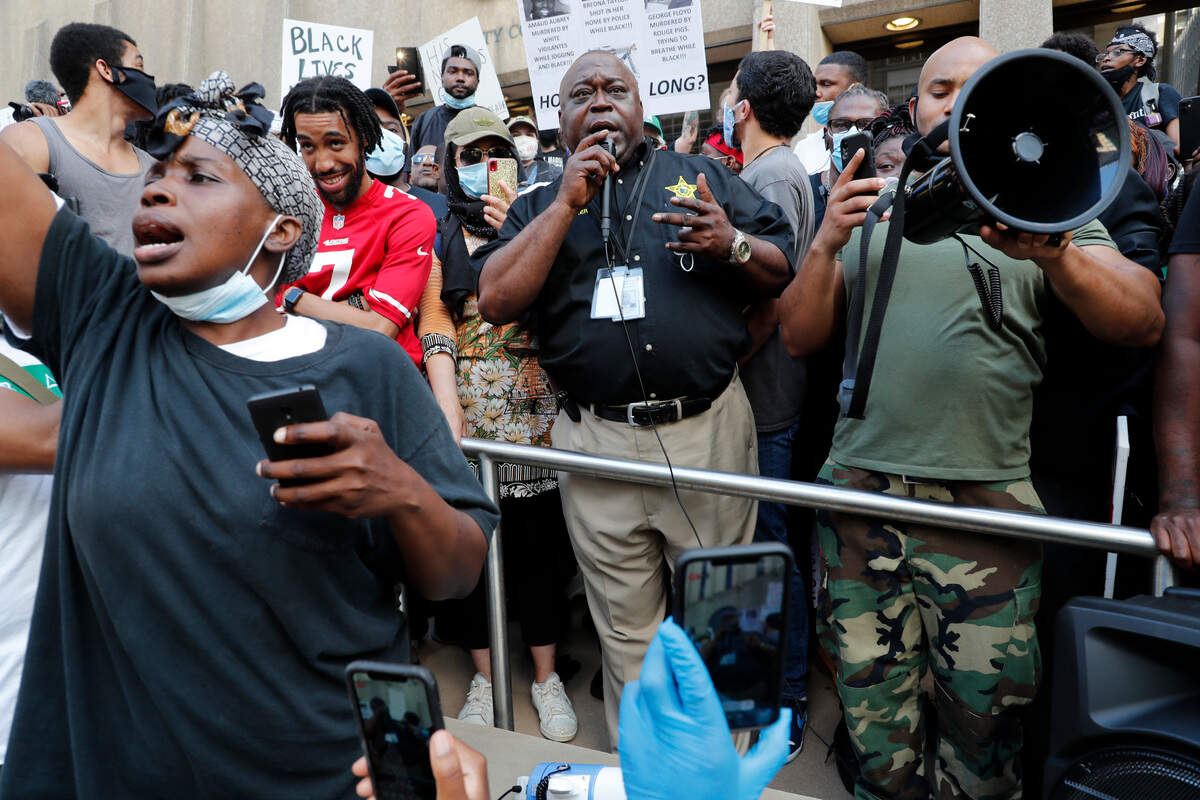
Local law enforcement in Raleigh and Wake County have been criticized for their response to protests May 30-31 after the death of George Floyd in Minneapolis.
Baker said the Sheriff’s Office had received information that night that people wanted to set the Wake County Justice Center, Public Safety Center and the courthouses on fire.
On May 30, a group of protesters split from the main protest march and charged toward the Public Safety Center’s sally port into the jail, Baker said.
There was a group “who wanted to come up here and cause problems,” he said, and they “failed to comply with instructions” to stop advancing on officers.
“They were throwing frozen water bottles, which basically equates to bricks, throwing bricks and rocks and everything else at our officers here and advancing at the same time,” Baker said.
It became necessary, he said, to use tear gas to get them to disperse.
“I am sure there were some who may have gotten tear gas and were not a part of that group,” Baker said. “We deal with what we have in front of us, and so if you were mixed in with that group, that is how you ended up getting tear-gassed. It was absolutely necessary.
“If I had to do it again, I would,” Baker said. “But again, our officers are out there being attacked, and (the protesters’) plan was to come and cause problems.”
The Raleigh Police Department also faced criticism for its response to protesters, including using foam bullets and tear gas, during the late May protests.
But Raleigh Police Chief Cassandra Deck-Brown has said the Sheriff’s Office’s initial use of tear gas “created volatile circumstances for hours to come.”
Raleigh “has experienced unprecedented times regarding what began as a peaceful rally and march (May 30) that suddenly shifted to individuals storming the Wake County Public Safety Center and the deployment of tear gas by another law enforcement agency,” she said in a June memo to the Raleigh City Council.
‘Peaceful protesters’
Wake County Commissioner Jessica Holmes said she doesn’t question Baker’s decision to use tear gas that night but wanted to express her concern about using tear gas to protect property.
“It is a fact. I know with an absolute certainty that there were peaceful protesters who ended up being exposed to tear gas,” she said at Monday’s meeting with the sheriff. “It is not as benign as many people think it is. In fact, there is an argument that tear gas should be considered as a nerve agent. People have the ability to be very severely injured by tear gas.”
The county has to “be very careful” about using tear gas and other tactics that have the potential to injure peaceful protesters who are exercising their First Amendment rights, Holmes said.
“These protests have largely been peaceful,” Holmes said. “There have absolutely been a few individuals who are not representative of the movement who have behaved otherwise. And those individuals should absolutely be brought to justice.”
During the meeting, Holmes asked Baker to submit a plan on how to better improve relationships between the community and the Sheriff’s Office, a plan for increased training, and if there was interest in creating a community relations task force. It would only work, she said, if there were people on it who could share “lived experiences.”
This story was originally published July 6, 2020 at 5:10 PM.