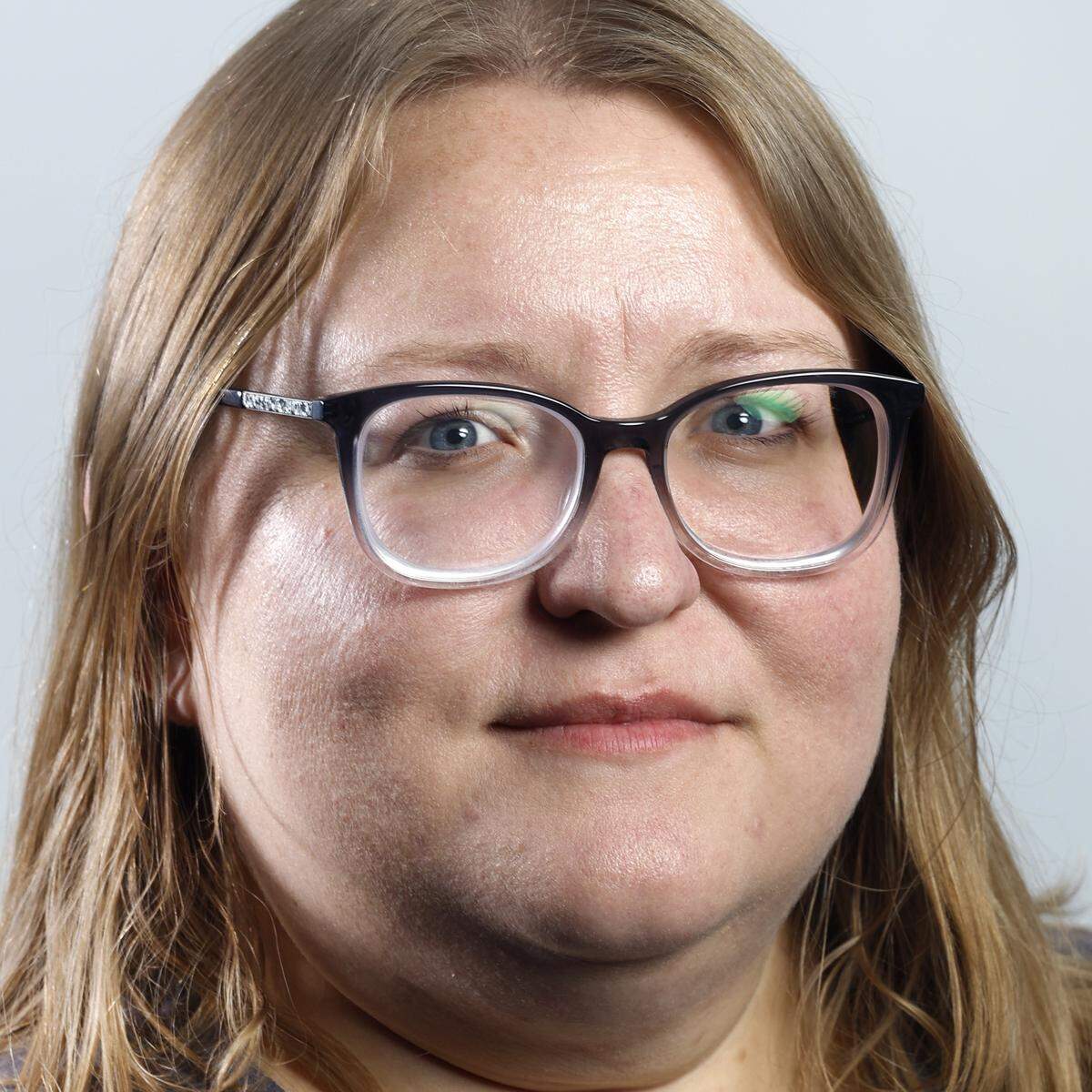
Raleigh Police Chief Cassandra Deck-Brown to retire after 33 years with department
Raleigh Police Chief Cassandra Deck-Brown will retire effective April 1, she announced Wednesday after a tumultuous year that brought threats, calls for her resignation and the creation of a citizens review board she opposed.
Deck-Brown, 57, is the city’s first and only Black woman chief, and she spoke about her own past experiences with racism as she faced pressure in 2020 following the shooting of a man by a Raleigh officer in March and again in late May when crowds marched in Raleigh to protest the killing of George Floyd in Minneapolis.
She’s contemplated retirement for some time, with recent events playing a small role in her decision, she said during an interview with The News & Observer.
“One year is not the pivotal decision in deciding this is that time,” said Deck-Brown, a 33-year veteran of the Raleigh Police Department.
“You look back at the overall experience in this role (and) the impact the career has had on me. But also where I hope I, too, have had an impact on others, a positive impact,” she explained. “That culminates in (thinking) what is your ultimate plan and when do you reach a point when you’re ready to pass a torch to someone else?”
Deck-Brown is paid $192,813 a year to run a department with a $111 million budget and 900 employees.
Her career has been defined by firsts.
She was the department’s first Black woman to be promoted as sergeant. The first woman to command a Raleigh police district. The first woman to be promoted as major.
Officers cheered the internal hire when she was picked for chief in 2013. She was the first chief tapped from within the department since 1994 — when her brother-in-law Mitchell Brown was appointed. He would go on to lead the department for seven years.
Soft-spoken but direct, and just over 5 feet tall, Deck-Brown was a stark contrast to the gregarious, 6-foot, 9-inch tall Patrick Dolan, whom she succeeded as chief.
Some questioned whether the quiet leader was the right fit during a time when officers seek vocal support and protesters seek full-throated change.
But Deck-Brown said she has to decide if making a comment in the heat of a moment is the wisest choice.
“Is it just for the sake of the sound bite? Or do you need to be impactful?” she said.
It was clear Deck-Brown thought four or five steps ahead before she spoke, said Michael Bruce, a retired Raleigh police captain. Methodical, but compassionate, he said.
“She’s not standoffish at all,” Bruce said. “What comes out of her mouth, she has thought about. She doesn’t come off half-cocked.”
The Raleigh Police Protective Association, a division of Teamsters Local 391, endorsed Deck-Brown during the public hiring process, said Rick Armstrong, a former Raleigh officer and vice president of the teamsters.
He remembers first meeting her as the strict, but fair ethics teacher at the policing academy in 1997, a course she still teaches.
Despite the association’s endorsement, there have been moments of conflict, especially after “shootings and incidents where an officer was alleged of doing some wrongdoing,” Armstrong said.
“We believe she should have been more outspoken and more vocal explaining to the public about why the officer did what they did,” he said.
People are too quick to make assumptions about an officer or situation based on a short video and before a full investigation, Armstrong said. “There is a rush to judgment,” he said.
Those same “rank and file” officers are impressed with how vocal Deck-Brown has become since the protests.
“What she’s done the past (summer) is what we have hoped and asked her to do the last few years,” Armstrong said. “She has been very clear on how she stands supporting the rank and file police officers. I think a lot of the rank are very grateful that she has been so outspoken. Standing up for when they are doing what is right.”
It’s a criticism she’s received before. Deck-Brown admits she “probably arrived somewhat serious,” growing up quickly after her mother died when she was 15 years old. She’s only ever worked at the Raleigh Police Department, arriving shortly after graduating college.
“It’s not so much about (speaking out) when everybody else thinks I need to say something,” she said.
“It’s about when I need to say something. It’s about when I need to do something,” she explained. “I don’t get to look at one little corner of the box. I got to look at all the parts, all the pieces in that box. And sometimes those pieces are broken. So I have got to be intentional about what I say and how I say it.”
‘It’s important we know the history’
In addition to the ethics course, Deck-Brown recently taught a course on race and trust in policing.
“That was important to me because I felt like in the position that I am in, as a Black female police chief, it’s important we know the history,” she said. “Do you understand why in a meeting in the 21st century why someone is comparing you to slave patrols, and do you understand how we got there? And the role your law enforcement ancestors had.”
Mistakes have been made, Deck-Brown said, and the department has “to own where we misstepped.” But the community has to own its mistakes too.
“We gassed on a day we shouldn’t have pushed tear gas out there,” Deck-Brown said of the May protests. “But we have also provided coverage for people who have just decided (they) are going to stand out there in the middle of the street and protest and cuss that officer and everything else that comes with it. That officer stands there in the face of it. I have to be that person who says ‘thank you for your calm demeanor. Thank you for patience, thank you for your professionalism. Stay grounded; stay focused. We will get through this.’”
During this summer’s protests she met activists on the street, saying she understands what they’ve experienced.
“We look at the names that have made national news and the impact it’s had in our city and community,” Deck-Brown said. “You don’t get to whitewash that away. We have to assess how we do things differently, how we build bridges, build community and build relationships, and there is no one way to do it.”
‘Dropped the ball,’ says mother of man shot
Local men shot and killed by Raleigh police, such as Akiel Denkins, Soheil Mojarrad and Keith Collins, have led to local protests, calls for police reforms and raucous City Council meetings.
Rolanda Byrd, with the backing of Raleigh Police Accountability Community Taskforce, has pushed for an independent police oversight board with subpoena power.
“I really think she dropped the ball again about how she’s been present in the community, and supported the community,” said Byrd, Denkins’ mother.
There are other police chiefs who are Black women, who are meeting protesters where they are and holding police officers accountable for the harm they are doing to communities of color, Byrd said. Deck-Brown isn’t one of them, she said.
“I think she is still trying to blame the people, blame the community, for what is going on in our country,” Byrd said. “For her to not understand the reasons behind the protests and the people after the protests who were angry enough to do what they did as far as the destruction of property, she still just blamed people. Not the reason behind it.”
Mayor expresses admiration
Raleigh Mayor Mary-Ann Baldwin, who publicly stood by the chief during the protests, pointed to a recent outside review of the police response to the protesters as impressive.
21CP Solutions made recommendations for improvement but also praised the department, with one consultant calling it “quite good.” At least one council member and some community members opposed hiring the firm because it consists of mostly former law enforcement officers.
“It has been really tough,” Baldwin said Wednesday. “I really admire her fortitude, the fact she will look at a situation and say ‘How can we do better?’ She was the one who asked for an outside group to come in. That is an action by someone who has confidence and wants to do better and not just sit on their laurels.”
At the height of the demonstrations, Baldwin said she couldn’t think of anyone with more sensitivity to racism and policing than the chief.
“Here is a woman who has been with the department for 33 years,” Baldwin said. “She is African American, and she has an African American son. She understands what racism is like. She has experienced it. She has the understanding of what that means.”
Having ’the talk’ with her son
Throughout her career, Deck-Brown said, her greatest competition has been with herself.
She’s not aware of ever being denied an opportunity at the police department because of her race, but she’s experienced racism in her daily life.
A woman clutching her purse when Deck-Brown walked onto an elevator. Being followed by sales clerks in boutiques regardless of whether she was wearing a hoodie or high heels.
She remembers “the talk” she had with her son when he was growing up about what to do when he’s pulled over by a police officer.
“As a Black parent who happens to be a police officer, yeah I’ve had the conversation,” Deck-Brown said. “I don’t know you’ll find many who haven’t. And we have it because we want our kids to come home safe too. We want our kids to be treated fairly. That is why you have the conversation.”
As a police officer, Deck-Brown said she looks at those “encounters” to see how the situation evolved and what led to either a peaceful resolution “or how the crisis ensued.”
“I’ve had people who look just like me say ‘You don’t know what it’s like being Black in America,’” she said, holding up her hands. “I do. I just happen to be Black in America in law enforcement. But I do. I don’t live in the uniform.”
New City Manager Marchell Adams-David officially starts Friday. Replacing Deck-Brown will be one of her first significant hires.
This story was originally published December 30, 2020 at 2:32 PM.