
Cary wants to keep teachers, nurses and others living in town. Now it has a plan.
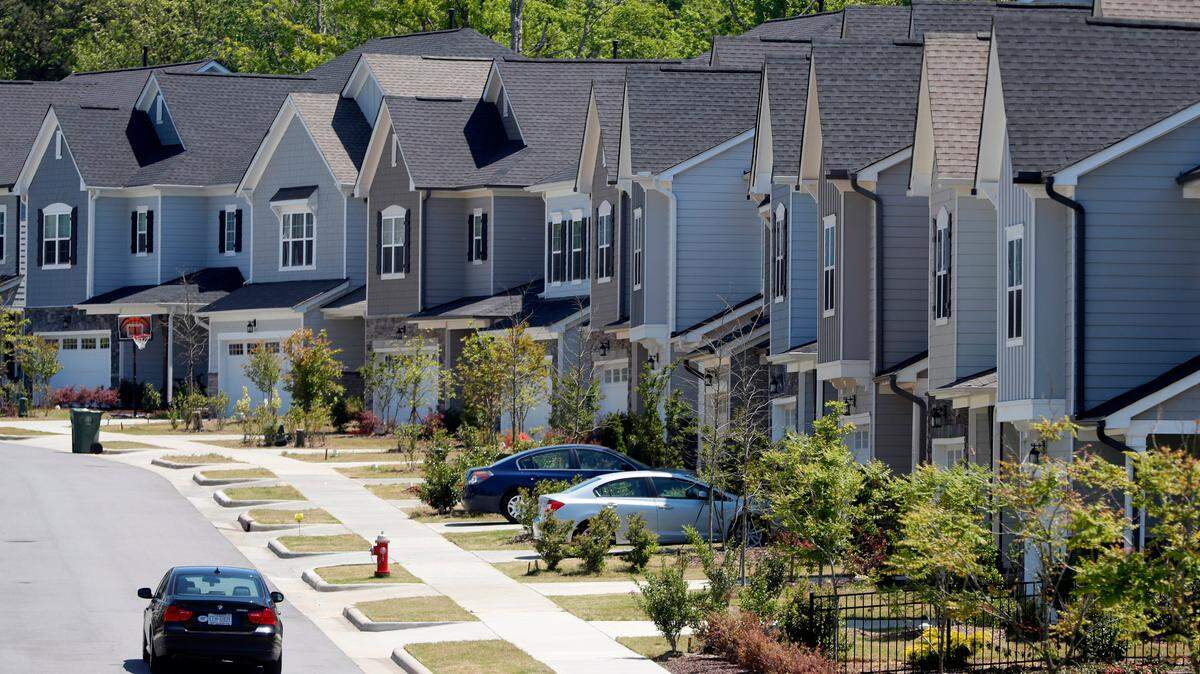
Five years ago, The Carying Place could buy a duplex in Cary for around $200,000 in order to provide four months of free housing to their clients.
Today, the nonprofit’s executive director Leslie Covington says, they have too many eligible families to fit into the 11 houses they own and no hope of buying another at market rates. Covington has five new families accepted into the program and dozens more who could be, but she has nowhere to put them.
At Tuesday’s Cary Town Council meeting, Covington told the story of a middle school teacher left homeless with a young son after a divorce. A successful graduate from the program, the teacher was able to get back on her feet but had to leave Cary to find a house she could afford. Covington herself would love to live in Cary but can’t afford a home in the area.
She, and many other representatives of local nonprofits and faith-based communities, spoke to the Town Council in favor of the new Cary Housing Plan.
“Our families are graduating, and then they don’t have anywhere to go, because they can’t afford to live anywhere,” Covington said in an interview after the meeting. “Of course it’s difficult for them to live in Cary, but it’s difficult for them to live in Wake County. They want to be here, but they can’t stay. And it’s heartbreaking.”
The housing plan
The Town Council unanimously passed the Cary Housing Plan to help families like these buy homes in the community.
The plan has three goals: to keep Cary a community of choice through high-quality, diverse housing development, to ensure all residents can enjoy the town’s high quality of life, and to pursue regional partnerships to meet housing needs.
The final documents include dozens of actual strategies, including:
expanding zoning for property owners looking to add backhouses or apartments
providing financial aid to owners and potentially landlords to update older housing
incentivizing developers to build more affordable housing
funding emergency housing programs to keep residents in their homes
developing a homeownership plan for lower and middle income residents looking for houses
creating a Cary Housing Fund
developing affordable housing on town-owned land
deepening relationships with nonprofits, private market and faith-based partners
Funding will come from a variety of sources, including existing Community Development Block Grants, other federal funding, philanthropic and private investment, and the Wake County Affordable Housing Development Plan.
The Cary Housing Fund “can be funded through a combination of funding sources including general fund allocations, special purpose taxes, and real estate transfer taxes,” the plan states.
The need for housing
Cary’s population and density have both more than tripled since the 1990s, “and the median home price outpaces most other communities in the region,” according to the plan.
In 2019, 73% (46,000 homes) of the homes in Cary were single-family detached houses, and prices have been rising for years.
Homes in Cary are larger and more expensive than the Wake County average, and the town has lost nearly 4,000 housing units that cost less than $1,000 to rent over the last decade.
Meanwhile, Cary has added 10,000 jobs since 2010 that pay under $35,000 per year, 4,000 jobs that pay $35,000 to $50,000, and 5,000 jobs that pay $50,000 to $75,000.
“Fewer home sales below $300,000 mean fewer options for households earning $80,000 or less, which may include young adults starting their careers, young families hoping to move to Cary, food and retail service workers who contribute to Cary’s high quality of life, and seniors wishing to age in place in the Town in which they have lived for decades,” the plan states.
“As property values continue to grow, this situation will grow more severe,” it states.
The council meeting
Representatives from One Wake, Habitat for Humanity, The League of Women Voters and The Carying Place, as well as several individuals, told stories Tuesday night about teachers, nurses, first responders, pastors and firefighters who couldn’t afford to buy homes in the communities they served.
Several Town Council members spoke of their own financially precarious childhoods, and all spoke in favor of the plan.
“I grew up with a single mother in sustainable housing, and we didn’t have generational wealth until we had a home,” said council member Lori Bush. “And we didn’t even have a safe place to stay without the subsidy that we received for the rent.”
Bush highlighted the specific, local nature of the plan.
“We are going to put our money where our mouth is on this one,” said Mayor Pro Tem Don Frantz. “Every single one of us is committed to dealing with this.”
He mentioned the tension between the plan and those against increased development, and he asked proponents of the plan to talk to their neighbors.
“Without the additional supply, prices are going to continue to skyrocket,” Frantz said. “Because Cary is one of the greatest places in America to live; everybody wants to come here.”
Council member Jennifer Robinson noted the need for better transit over just adding density.
“Our problem is that our bus frequencies are not frequent enough, and they are not as close to the homes as they need to be,” she said.
Council member Jack Smith, who said he grew up poor, focused on keeping people safe as the town grows.
“I was over at the area around Buck Jones, and their cry is for safety,” he said. “Safety is one of the things that separated Cary from a lot of our communities, and a lot of our neighboring communities. Safety. We don’t have to fear being at a bus stop. We don’t have to fear looking over our shoulder.
“Doesn’t mean we don’t have problems,” Smith continued, “but as we pursue these efforts on affordable housing and trying to improve that goal for these workers so they can live here, we also have to keep in mind that part of that dollar investment goes to helping their transportation needs and those safety needs.”
The teacher in Covington’s story couldn’t stay in Cary. She still teaches middle school in the town, but she bought a house in Raleigh.
“I know that she wanted to be here,” Covington said. “We talk about it all the time. It’s examples like her that say we have to do something. It’s not easy, we know that. There is no more land, land is not going to be popping up anywhere, but we’ve got to figure it out.”
This story was originally published November 10, 2021 at 8:25 AM.