Raleigh’s social district is expanding downtown. Here are new streets and hours.
This story was updated Aug. 11.
Visitors to downtown Raleigh will be able to sip alcohol from one business to another in more places and for longer hours starting Aug. 15.
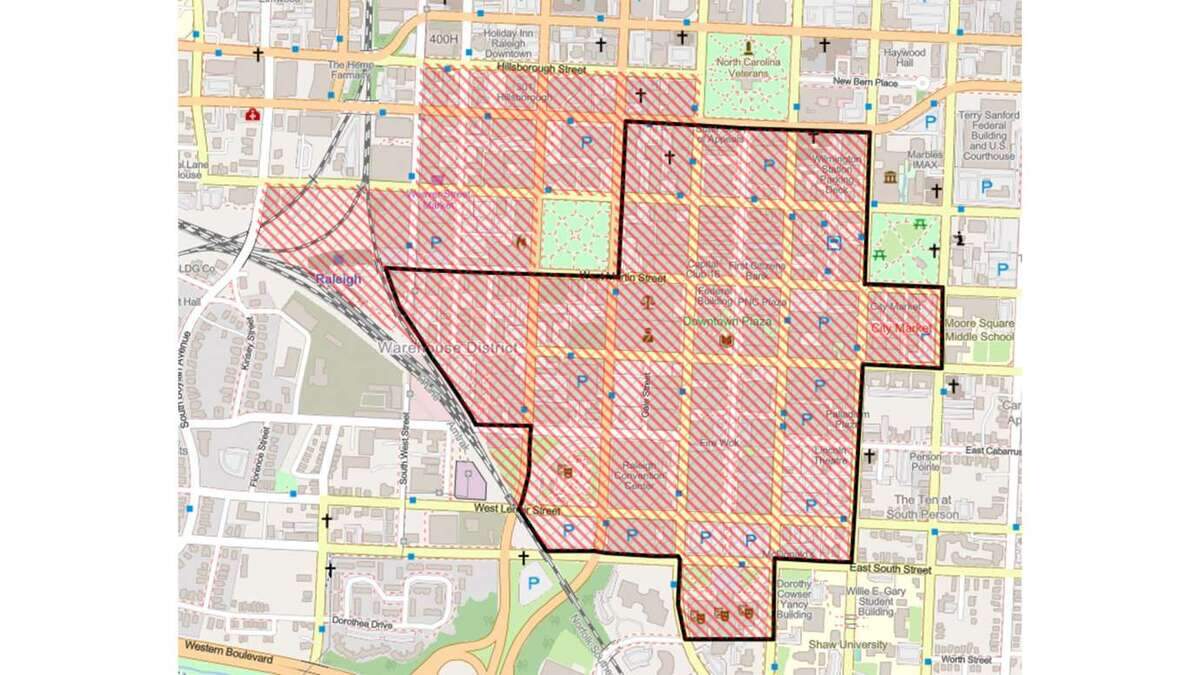
The new “Sip n’ Stroll” boundaries will extend farther into the Warehouse District, and people will be able to start drinking an hour earlier at 10 a.m. to coincide with when alcohol can be served during brunch. The ending time will remain 10 p.m.
The new rules take effect on the one year anniversary of the social district. The Raleigh City Council decided to change the boundaries and hours in May, and a formal vote took place June 20.
“I am glad that it has been so well received, and I am glad that we are going to expand it and make some of these changes that I think are needed,” said Council member Jonathan Melton, who pushed for the district last year.
What are the Raleigh social district hours?
Daily from 10 a.m. to 10 p.m.
How does Raleigh’s social district work?
Businesses in the district that serve alcohol and have joined the program will be able to sell alcoholic beverages that people can drink as they walk to their next location. The drinks can also be taken into participating businesses while they visit or shop, as long as the business doesn’t sell alcohol.
Businesses that have an ABC license, are located within the district and that have opted in will be able to sell social district drinks. Those drinks will be marked by a special cup and sticker.
Participating business will have signs showing where people can buy drinks or bring drinks inside.
About 50 businesses currently participate in the city’s social district. Here is a list of which places are and are not participating.
What are the boundaries for Raleigh’s social district
The social district is primarily along Fayetteville Street and its adjoining streets, roughly between Moore and Nash squares. The borders include the Raleigh Convention Center, Red Hat Amphitheater and Duke Energy Center for the Performing Arts.
The new boundaries extend to Hillsborough Street as the northern boundary and the railroad and Boylan Avenue as the western boundary.
In addition to the hour and boundary changes, the city will create permanent social district boundary signs and add permanent trash and recycling cans.
Why did Raleigh start a social district?
The city of Raleigh enacted the Triangle’s first social district last fall as a pilot program. Other parts of the city have expressed interest in a social district.
A Downtown Raleigh Alliance survey found 77% of respondents agreed the social district had a positive impact and 90% supported it.
“Y’all, our Christmas tree lighting doesn’t get this level of support,” said Bill King, president and CEO of Downtown Raleigh Alliance. “This is a very strong public policy to have this level of support.”
What is not included in the social district?
Mayor Mary-Ann Baldwin confirmed the city wouldn’t expand the district in Glenwood South.
The city also is not including Moore and Nash squares, even though the Downtown Raleigh Alliance recommended the boundaries expand there.
The properties are managed by the city but are state-owned. Liquor is not allowed in city parks, and Moore Square presents challenges.
“There’s so many challenges in terms of behavior issues there,” said Council member Stormie Forte. “I don’t know how much time or resources you are putting into trying to figure that piece out. But for me personally, it’s almost second to Glenwood South in terms of, like, a not-expansion-type area, in my opinion in the foreseeable future, just because it’s so hard to control the number of issues that are going on over there.”
This story was originally published May 17, 2023 at 8:05 AM.