NCDOT wants to clean up a Raleigh interchange, but a homeless camp complicates things
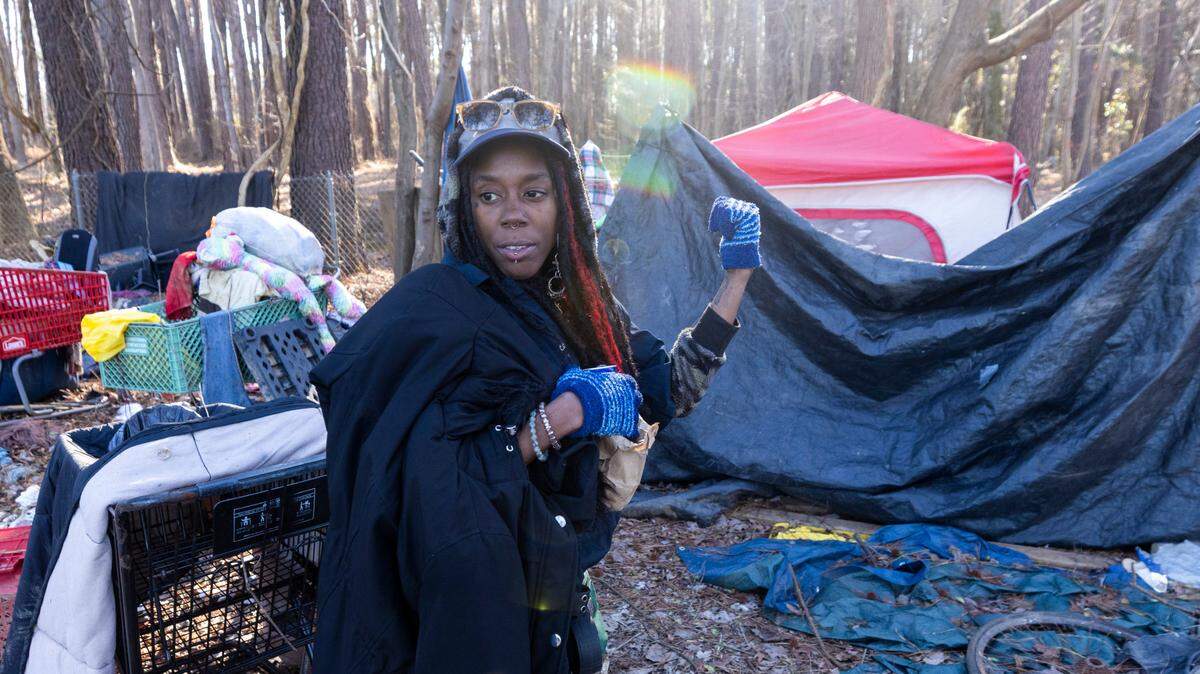
Cleaning up trash along roads and highways is a never-ending task. But when that trash is part of an encampment where people are living in tents and under tarps, the cleanup is much more complicated.
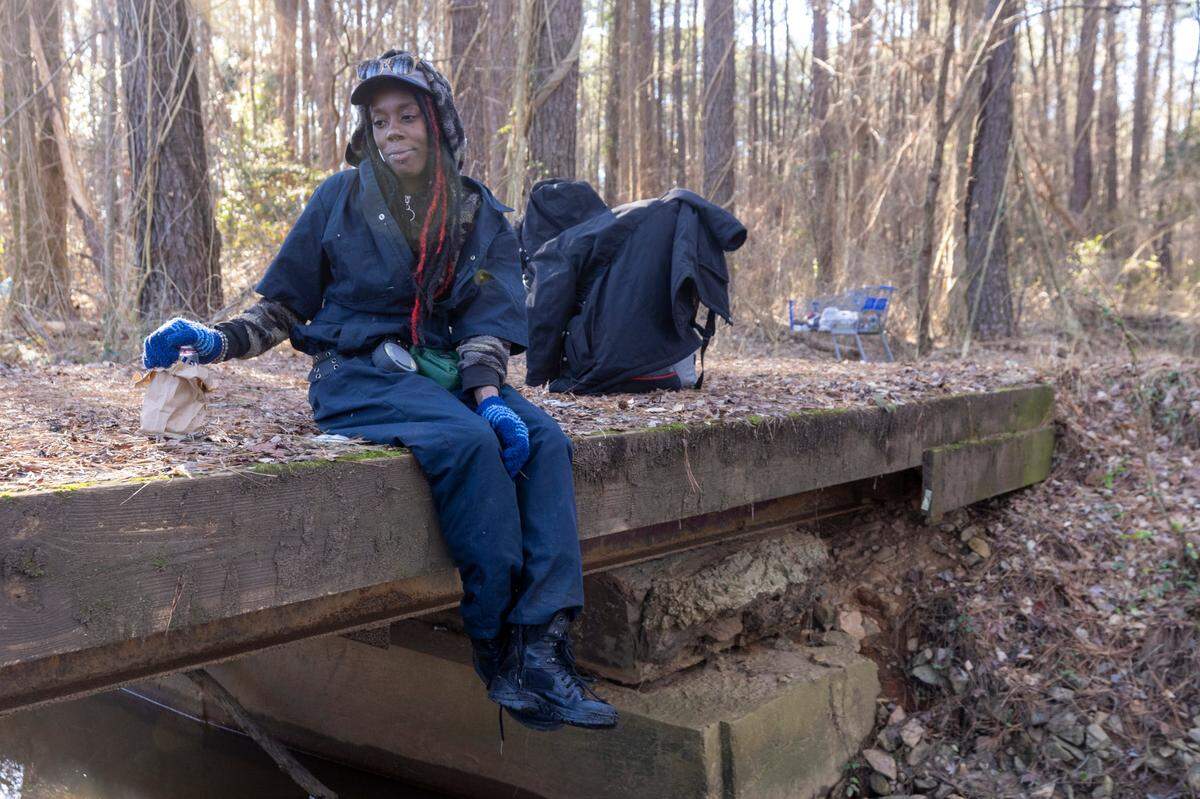
That’s the situation where South Saunders Street meets Interstate 40 on Raleigh’s south side. As many as 20 people were living in the woods next to an exit ramp from eastbound I-40, according to police, accumulating shopping carts, broken furniture, plastic drums, scraps of clothing and empty bottles and food containers.
Gabe Gangi of Garner first saw tents in the woods two winters ago. Gangi owns a porch and deck contracting business down the road and uses the exit ramp daily.
“Last year, I noticed that it had gotten pretty bad,” he said in an interview. “Now that all the leaves have fallen, I noticed that it’s grown — that it’s doubled and tripled in size.”
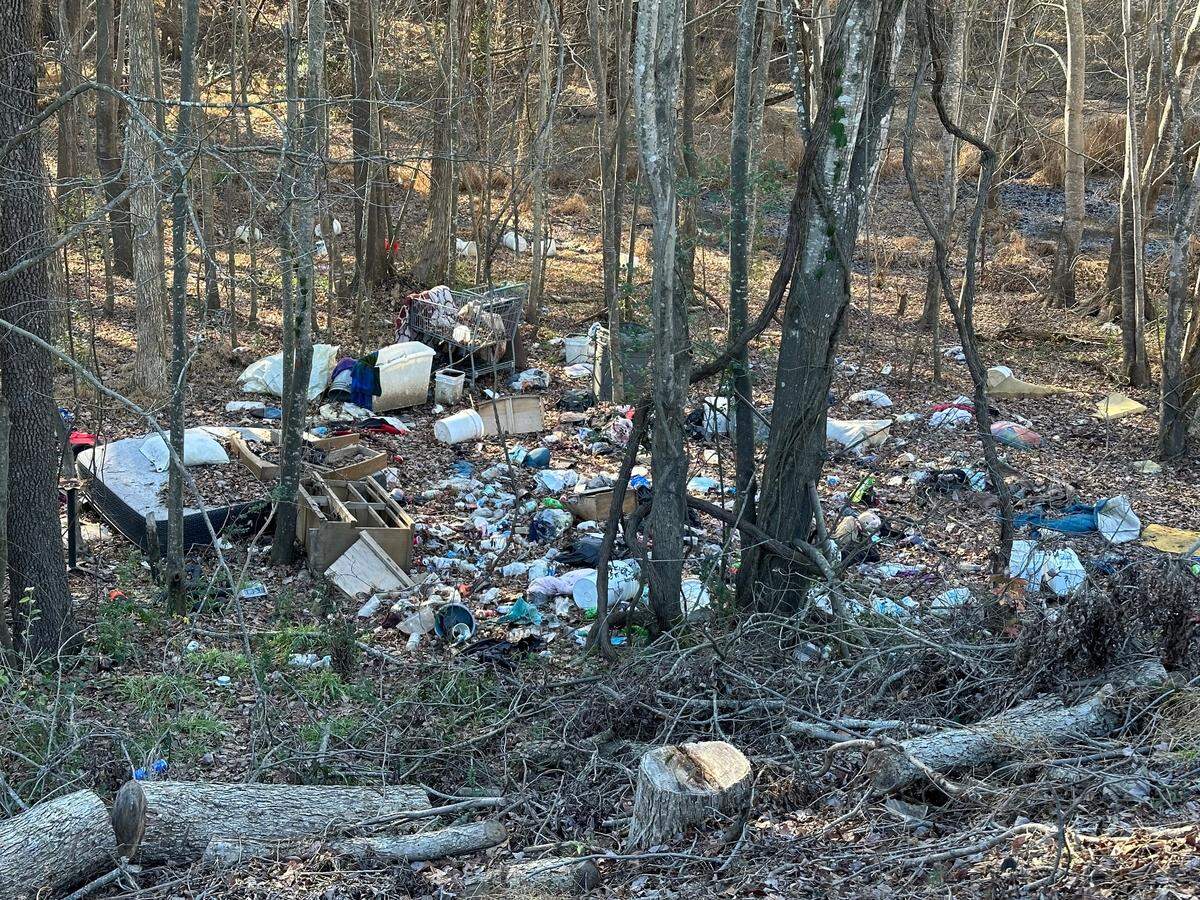
Most of the debris is on property owned by the N.C. Department of Transportation. NCDOT became aware of the site a couple of years ago, says Brandon Jones, the top engineer for the region, but it appears the amount of trash has grown significantly in the last several months.
NCDOT has developed an approach for clearing such sites that it first used with a large homeless camp at I-540 and Capital Boulevard starting in 2022. NCDOT contractors eventually removed some 600 cubic yards of trash and debris from that interchange, including 400 shopping carts, at a cost of more than $100,000.
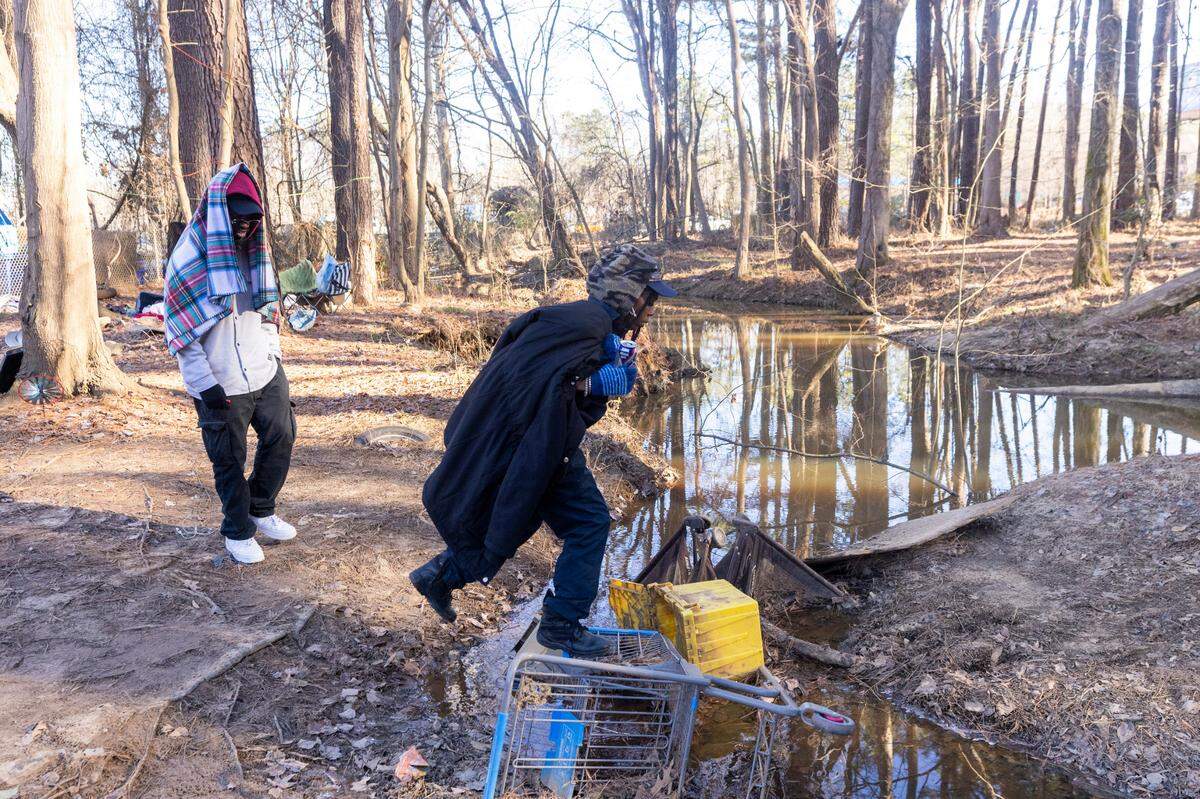
Before it brings in trash bins, NCDOT works with police and social service agencies to ensure that people living in the camp have been offered help with housing and other needs and that no one is still living there, Jones said.
“The goal is to get you to voluntarily leave and accept the assistance we are providing,” he said. “And that works most of the time. The folks there either accept it or they know that site is short-term and they move on.”
In Raleigh, NCDOT relies on the city’s ACORNS program, a team of social workers and police officers who connect people experiencing homelessness, substance abuse or mental health problems with organizations that can help them.
When it first went to the site last winter, the ACORNS unit found a dozen tents used by between 15 and 20 people, according to Raleigh police spokesman Jason Borneo. Some were living on land owned by Kane Realty Corp. and were offered help before an eviction notice was enforced in February, Borneo wrote in an email.
ACORNS went back in September and determined that six to 10 people were still living in tents on the NCDOT property, Borneo wrote.
“The Raleigh Police Department is committed to providing assistance to those who are unsheltered in this area,” he wrote. “All of the residents have been advised that they must vacate the property, and those who were interested were connected with services.”
Camp next to interchange poses safety risk, NCDOT says
Jones said it appeared everyone had left the South Saunders Street encampment; a woman who emerged from a tent in the woods nearby on Wednesday said she thought the same thing.
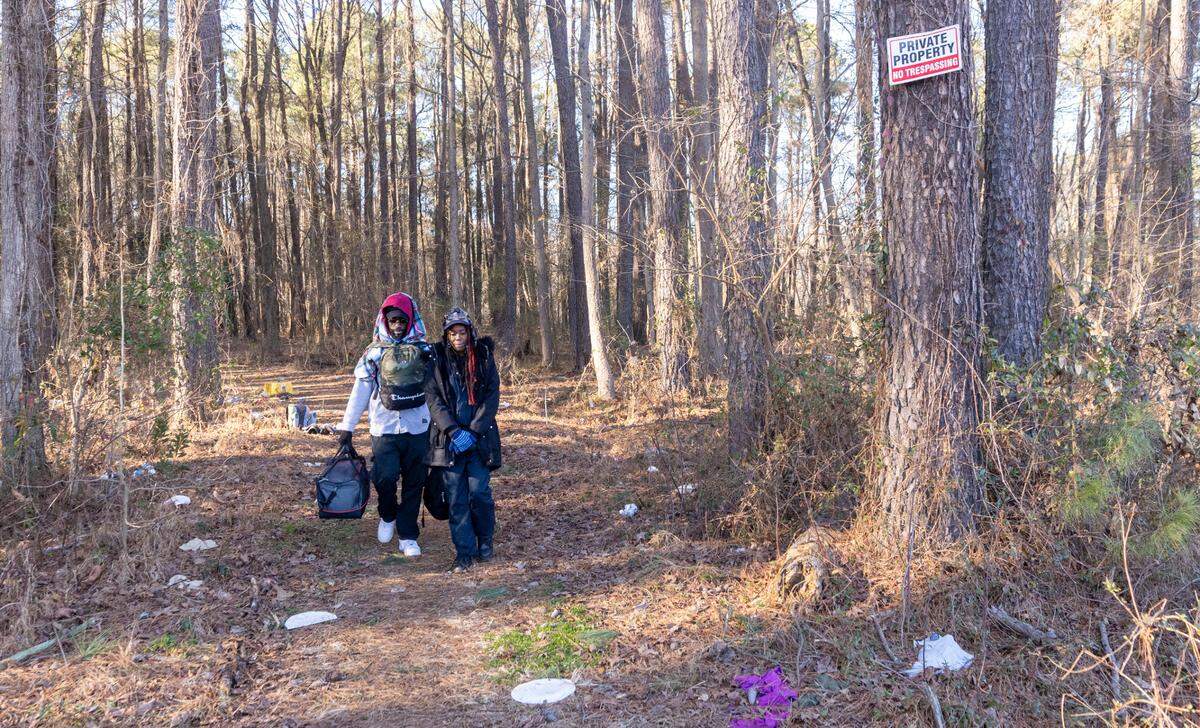
But at least two people, a man and woman who gave their names as Sesame and Wiz, were staying there this week. They said they were aware police had visited the camp and that it would be cleared at some point, though they thought it was because the land was going to be developed.
Sesame said she had stayed at the interchange on and off for about a year, which highlights a challenge in determining whether a camp is really abandoned. Borneo said the ACORNS team has continued to visit in case someone was still there.
Once it is confident everyone is gone, NCDOT will post “no trespassing” signs and begin clearing the debris, likely later this winter or early spring, Jones said.
The build-up of trash is not the only reason NCDOT would like to see people removed from its property next to the exit ramp, Jones said. People living near busy roads and darting in and out of traffic as they move about the interchange pose a risk not only to themselves but to drivers, he said.
Gangi, the Garner resident who passes the site daily, would like to see it addressed for several reasons, not least because it reflects poorly on the community’s handling of people who live in squalor and need help.
“Mainly it’s the neglect for the homeless community and the amount of support they’re getting,” he said. “What’s the plan as far as cleaning it up or giving these unfortunate people somewhere to go, somewhere safe that’s managed properly?”
People will simply move to another camp
Right now, there is no place for many unsheltered people to go, said Tammy Mauldin, director of emergency services for Triangle Family Services, which provides food, clothing and other basics to people living outdoors. Shelters are full, and Wake County doesn’t have enough housing that people with little or no income can afford, Mauldin said.
“The truth is, there’s no solution right now because we don’t have any place for these folks to find shelter,” she said in an interview. “So when that day comes, when they have to leave this particular encampment, they’re going to pack up what they can and just transition to another encampment.”
Homeless camps are challenging, agreed Chris Budnick, executive director of Healing Transitions, an agency that helps homeless people with addiction problems, including some who have lived at South Saunders Street.
“It is a difficult job for NCDOT because solutions to homeless encampments depend upon a system of care that can accommodate the unique and diverse needs of unhoused citizens,” Budnick wrote in an email. “Are there adequate emergency shelter beds? Are there emergency shelter options that accommodate couples and those with pets? Is there enough affordable housing? These are real questions everyone is wrestling with right now.”
Homeless people living along highways and at interchanges is a growing problem for NCDOT statewide, Jones said. Homelessness began rising across the country before the COVID-19 pandemic, according to the U.S. Department of Housing and Urban Development, and an annual count found 12% more people who are homeless nationwide last winter compared to the year before.
NCDOT is aware of other encampments along its right-of-way in Wake County, but they aren’t as large or pose the same safety risks as the South Saunders Street camp, Jones said.
The site of the large encampment at I-540 and Capital Boulevard has not been resettled, in part because NCDOT removed the trees and brush that helped make it an attractive place to camp. Jones said he hopes the no-trespassing signs at South Saunders Street will be a deterrent and a prompt for police and the department to keep people from moving back in.
But Mauldin at Triangle Family Services notes that clearing these sites doesn’t solve the underlying problems that result in people living in the woods in the first place. And that’s not NCDOT’s fault, she said.
“If we had more shelters, if we had more funding, if we had affordable housing, we could resolve some of this,” she said. “We wouldn’t have so many people living outside.”