Do Raleigh leaders pay too much attention to downtown versus the rest of the city?
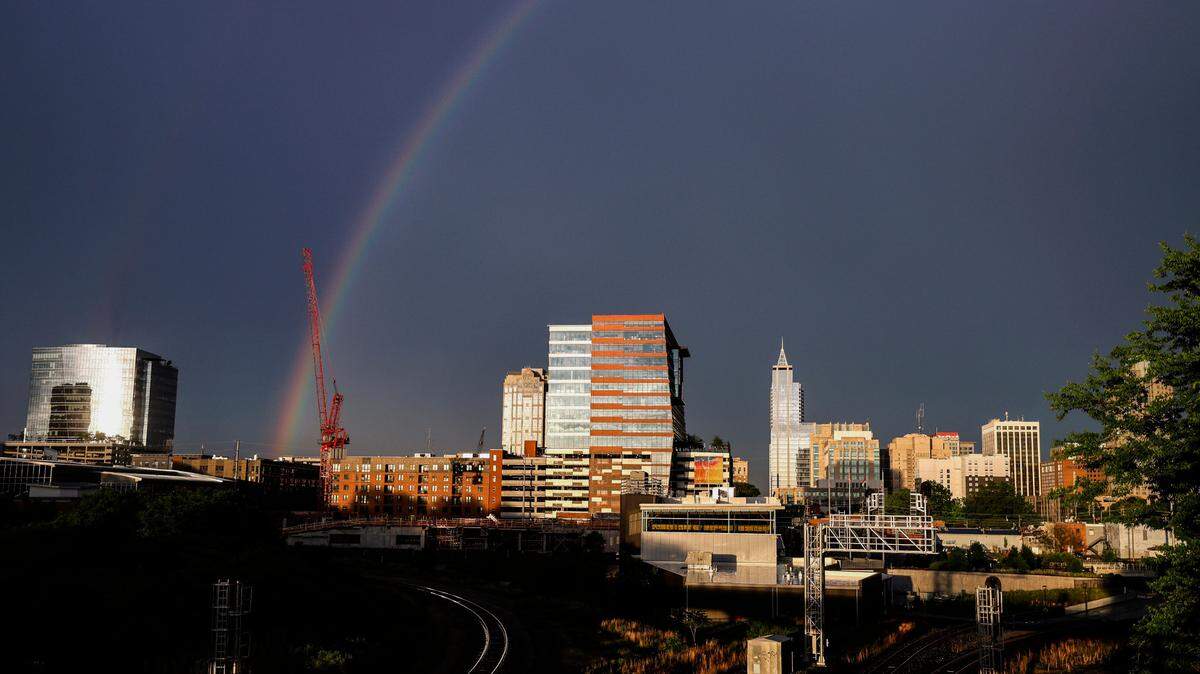
Downtown Raleigh is important.
City leaders all agree that the vibrancy of the urban core is essential to Raleigh’s overall success.
They are less clear on whether the rest of the city is being overlooked.
The Raleigh City Council debated whether to spend $1.1 million on downtown improvements like new trash bins, tree grates and a permanent dog park at Moore Square. Some council members were uneasy about spending more downtown without considering the rest of the city and other council priorities.
Raleigh already provided more than $4.1 million in federal money for downtown improvements, including upgrading downtown Wi-Fi, working on a traffic safety study in Glenwood South and improving City Plaza.
On Tuesday, city staff recommended spending $1.1 million of $1.35 million in capital reserves on downtown projects. Capital reserves can be used for one-time expenses.
What could be funded downtown?
Many of the ideas came from a detailed plan for enlivening Fayetteville Street, released by the city and the Downtown Raleigh Alliance in February. The plan included wider sidewalks, public restrooms and more public parking.
Other suggested improvements include:
- A permanent dog park at Moore Square, costing $100,000. There is a pop-up dog park there now.
- 10 new intersection murals, costing $190,000, and 10 new sidewalk murals, costing $10,000.
- Replacing 20 “Bigbelly” trash cans and 45 standard trash cans, costing a total of $325,000. Replacing and adding cigarette trash bins, costing $5,000, and a shared “commercial waste pilot project” costing $200,000.
- Adding 100 flexi-pave tree wells, which are flexible enough to allow roots to grow but porous enough for trees to still get water, costing $80,000, and 19 new bike and scooter corrals, costing $114,000.
‘Downtown versus everywhere else’
The rest of the city will not succeed if downtown Raleigh is not successful, said Mayor Pro Tem Jonathan Melton.
Homeowners pay lower taxes when “our urban cores” are thriving, he said.
“If we are not signaling to the community that we are making investments here to support the small business owners who are there, the residents or the people who are spending their time and money there, the rest of the city is going to hurt,” Melton said.
“It’s not downtown or everywhere else,” he said. “It’s downtown and everywhere else.”
Council member Jane Harrison, who represents southwest Raleigh and part of downtown, said she was happy to see investments in the downtown area but she also represents other areas of Raleigh.
“I feel uncomfortable putting the majority of these funds to downtown, and I really want us to see us look for some other investments that support the rest of the city,” she said.
She pointed to the recent homeless encampment that was forced to move at the Raleigh-Garner border, also in her district, and said she wanted to see more housing assistance.
All the council members want a thriving downtown, said Council member Stormie Forte, but some residents are never going to come downtown regardless of how much money is put into the area.
“But there are folks who do want sidewalks in the community,” she said. “And there has been safety issues where you see people walking in certain areas and there are no sidewalks on either side of the street.”
Several council members agreed that the trash bins, replacing the tree grates and crosswalk murals are safety issues that should be addressed.
“I would argue that the dog park is a safety measure, because it brings people to Moore Square and creates (a) residential neighborhood,” Mayor Mary-Ann Baldwin said, noting past safety issues at Moore Square.
Council members will decide what to do May 21. They could split the money between downtown and other parts of the city, including focusing on housing.
Downtown parking changes
City leaders also punted on whether to expand a program to help small downtown businesses cover their employees’ parking and whether to offer free two-hour parking at some city-owned garages.
Several council members said they support the changes but want more details how to cover the financial gap this would cause.
The two programs would cost about $48,000 a month or $576,000 a year.
Those proposals will be brought back at a future City Council meeting.
This story was originally published May 8, 2024 at 6:00 AM.