What’s at stake if Red Hat Amphitheater leaves downtown Raleigh?
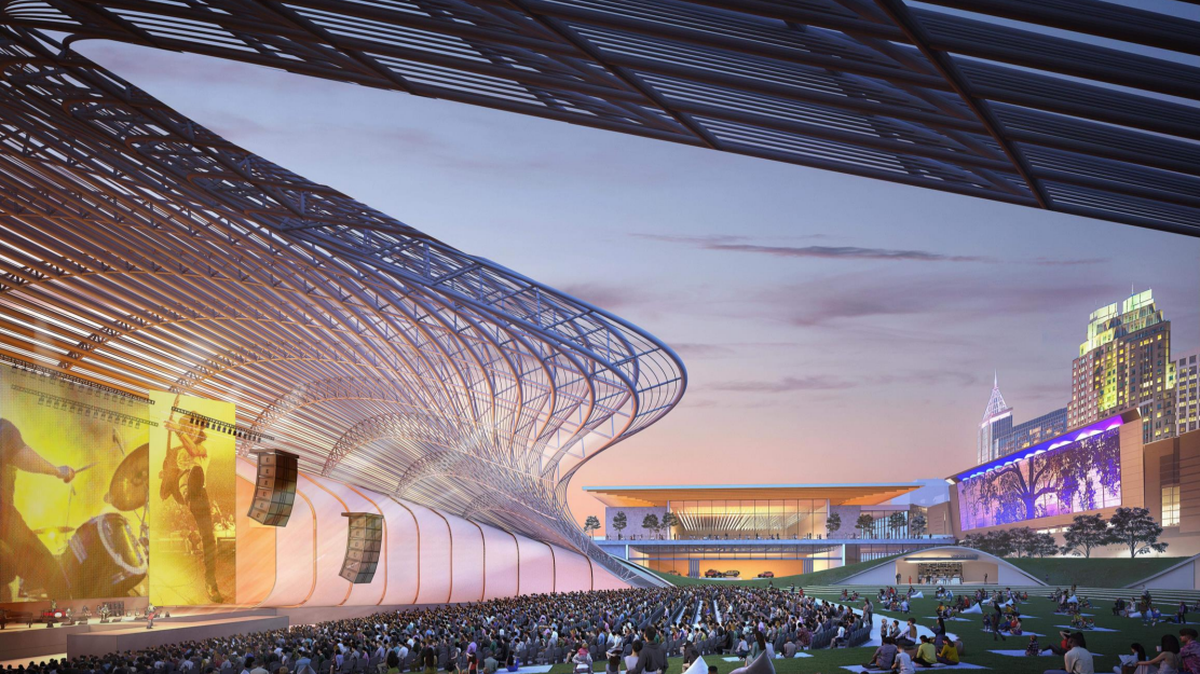
The need to close part of a downtown street is forcing Raleigh to play defense in its plan to move and expand the Red Hat Amphitheater.
Closing a block of South Street should have been a perfunctory action taken by the Raleigh City Council later this year. It’s been in the plan since city and county leaders agreed to spend millions to move the 14-year-old amphitheater a block over to expand the Raleigh Convention Center.
But the news caught some residents, including those in downtown neighborhoods Boylan Heights and Heritage Park, by surprise. That prompted Raleigh to talk to state transportation officials about the possibility of rerouting the street and to hold a community block party July 20, in part to get residents to warm up to the idea.
City staff says the street has to close to allow the outdoor music venue to grow and continue to be an economic driver for downtown and the city.
Raleigh Amphitheater
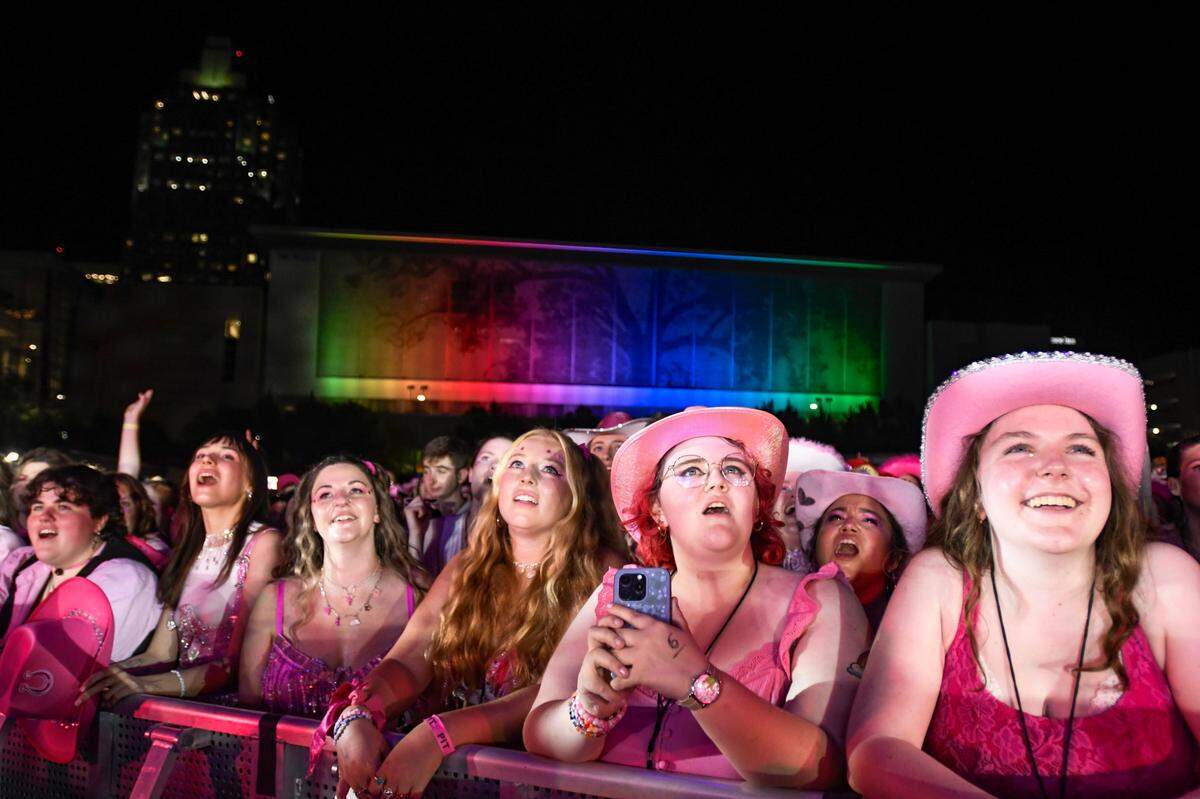
Red Hat Amphitheater, originally called the Raleigh Amphitheater, was built in 2010 as part of a number of public investments downtown, led by former Mayor Charles Meeker. Those investments included the reopening of Fayetteville Street to vehicle traffic, the opening of the convention center and renovations to downtown’s public plazas.
It became Red Hat Amphitheater in 2012 after the N.C. Alcoholic Beverage Control Commission nixed a plan to call it the Bud Light Amphitheater.
In its 14 years in downtown, it’s hosted more than 400 performers, including 51 concerts this season. The city estimates Red Hat generated $17.5 million in economic impact from 26 shows in 2023.
The plan to move the amphitheater to make way for the convention-center expansion has been in the works for years, but was put on pause during the COVID-19 pandemic. City and county leaders agreed last year to spend money generated by tourism to renovate and expand the convention center to where Red Hat is now and expand Red Hat by moving it over a block.
“Red Hat is one of those things that’s really, really important to our downtown business community,” Mayor Mary-Ann Baldwin said. “If you think about it, 51 events, right, that’s bringing them food sales, retail sales and bar sales. And a lot of them have said if it wasn’t for Red Hat, we wouldn’t be in business.”
The expansion would let the amphitheater grow from nearly 6,000 seats to 7,000 seats, expand the loading dock and backstage areas and increase the amount of concessions sold.
Dix Park Amphitheater
Mayoral candidate Janet Cowell, the CEO of the Dix Park Conservancy, recently wrote to some City Council members worried about the partial closure of South Street and how it would affect connections between downtown and Dix Park.
“I want you to know about absence of public input, the general opinion that this is short-sighted and counter to everything the city believes in and values when folks do hear about it, and the potential for long-term damage to southern downtown — on top of past urban renewal damage,” Cowell said in a June email.
And some residents have wondered if a reference to an outdoor amphitheater at Dix Park could or should impact the plans at Red Hat.
The park’s master plan divides the 308-acre park into sections including “The Valley.” where the steam plant and railroad lines sit today. The plan calls for an elevated pedestrian connection called The Trestle, overlooking a proposed 7,000 seat outdoor amphitheater.
“The bowl-like topography of the Valley makes it ideally suited for large group events, ranging from outdoor yoga classes to school graduation ceremonies to movie screenings to concerts and music festivals,” according to the master plan. “An amphitheater would accommodate such programs and give the landscape a focus.”
The master plan specifically mentions the Dix Park amphitheater as a “potential alternative to Downtown’s Red Hat Amphitheater, which is not anticipated to be a permanent facility.”
But Baldwin said a lot has changed since 2019, and they have the Dreamville festival as a test for live music in the park.
“How it is now is perfect, with the big lawn and they’ve worked it out really well,” she said. “We get a lot of complaints from the neighborhoods during Dreamville. The question I have to ask myself is, do the neighborhoods really want to have Dix Park activated with 50-plus concerts in a given year? And would that be more disruptive? It’s my guess, yes, but we are looking at all of that.”
Bill King, president and CEO of the Downtown Raleigh Alliance, was on the master plan committee and is “a big fan” of Dix Park.
“An amphitheater in the park replacing ours, you would lose that economic impact. I think it would more resemble the experience of going to Koka Booth (in Cary), which is you drive out there, you park in the parking lot, you tailgate and you go home. So I think we would have a diminished economic impact from moving out there.”
A loss for downtown
Crank Arm Brewing is a block away from the outdoor music venue, and, on a show day, can see business double or triple.
“In the summertime, it’s crucial,” said co-owner Adam Eckhardt. “It’s slower with a lot of people out of town, headed to the beach or lake. It’s imperative for us and other members of the downtown business economy to have Red Hat shows.”
He considered the Red Hat expansion a “done deal” when city and county leaders agreed to use the tourism money on the amphitheater and other projects.
“If the option is now well, Red Hat either goes one block south or it goes somewhere else, a mile or more away from you, then I say you just closed my business,” Eckhardt said. “You’ve severely handicapped myself and a number of other business owners, if not the entirety of business owners downtown.”
And it wouldn’t just be a loss for downtown, but the city as a whole, King said.
“I don’t think Raleigh would be a winner in that. I think the winner would be Koka Booth and Cary would get more shows. And I think you’d see an neighboring jurisdiction build a replacement to Red Hat, whether that’s in Durham or somewhere else.”
He pointed to Durham’s gain when it built the Durham Performing Arts Center in 2008.
“We lost Broadway shows 20 years ago, and it’s given that facility an advantage that ours doesn’t have anymore,” he said. “I think we’d be making a mistake. So I understand. I don’t love closing the street. And I am interested in making sure that we have good connectivity. But I don’t think we can let the amphitheater leave downtown.”
According to a memo from city staff to the Raleigh City Council, it’s likely Koka Booth wouldn’t be able to absorb the number of shows since it already has a full calendar.
“In the absence of Red Hat, representatives from Live Nation, the City’s booking partner, have indicated that many touring shows would likely travel from Wilmington (Greenfield Lake Amphitheater) to Charlotte (PNC Music Pavilion) — skipping the Raleigh region entirely — as there would be no other venue in the region with the ability to accommodate the volume of dates and capacity needs for these concerts.”
This story was originally published July 19, 2024 at 3:35 PM.