
A nightclub closed in Downtown Raleigh. Now the owner is suing the city for harassment
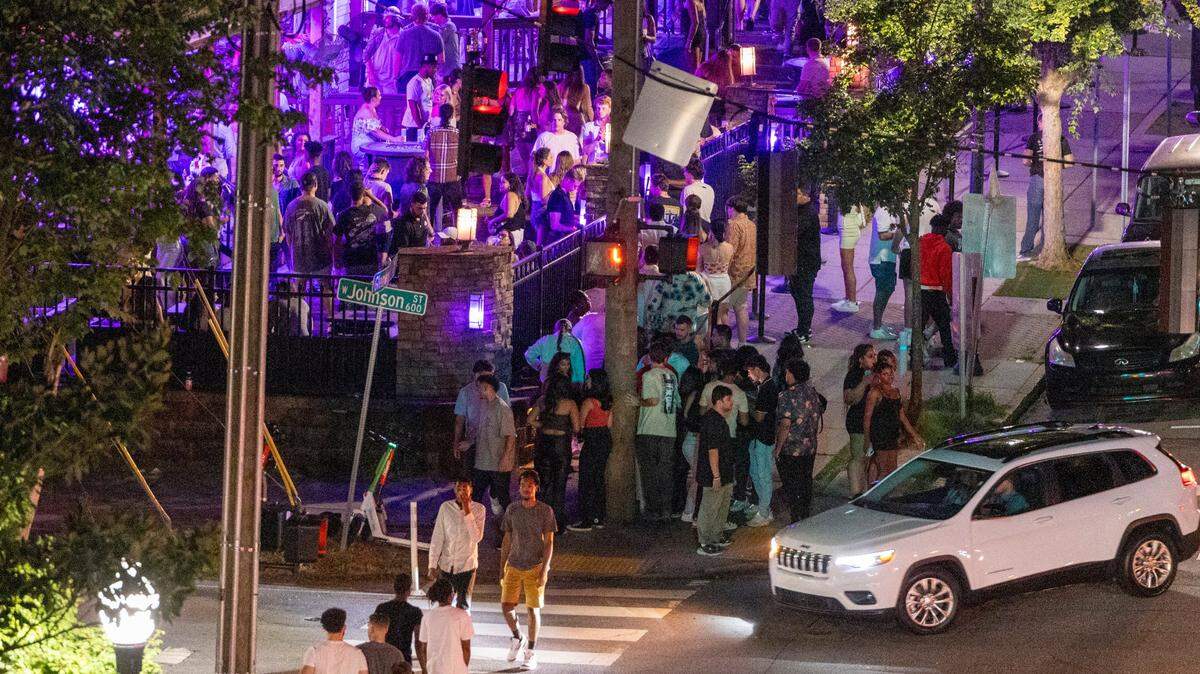
Two years after a nightlife complex closed in Raleigh’s Glenwood South district, the owner is suing the city for what he says are violations of his First Amendment rights.
Dan Lovenheim, the owner of several bars and clubs in the entertainment district, said he closed The Village, and partially closed Glenwood nightclub Alchemy, due to a “repeated pattern of harassment, threats, and eventually, false enforcement actions” by city officials.
In his lawsuit, Lovenheim accuses the city of trying to “compel compliance with a now repealed unconstitutional, convoluted, self-contradictory and vague” noise ordinance and wrongly issuing other citations against his two businesses.
The Village dance club opened in March 2020 shortly before the pandemic began and operated out of 616 Glenwood Avenue, and 513 and 517 West Peace St. The Village reopened at the end of the summer and has already received 10 noise complaints and criminal citations from Raleigh police, according to the complaint.
Lovenheim co-owns several bars in the Glenwood South district including The Avenue, Whiskey Rose, Cornerstone Tavern, The Milk Bar and Pine State Public House. He is also the CEO of the Oak City Group, according to Triangle Business Journal, which first reported the lawsuit filed on Oct. 3.
The lawsuit’s plaintiffs, Lovenheim and his businesses Alchemy and The Village, seek monetary damages.
The complaint names the defendants as the City of Raleigh, City Manager Marchell Adams-Davis, Raleigh Police Capt. Robert Bowen, former City Attorney Robin Tatum, and a city special events staff member, Whitney Shoenfeld.
The city did not comment on the lawsuit. Mike Tadych of Stevens, Martin, Vaughn and Tadych, representing Lovenheim and his businesses, did not respond to a comment request.
What does the lawsuit allege?
Thousands of people enjoy bars, restaurants and clubs in the Glenwood South district stretching five blocks between Hillsborough and Peace streets. Though the area has a reputation for high crime, gun violence specifically has not been that common until the last two years. What is common are noise complaints from neighboring communities.
The city prohibits bars and nightclubs from playing music or other sounds through outdoor speakers or windows at any time during the day or night and they must stay within the city’s decibel limit. The city adopted new noise rules this year with harsher penalties.
The former noise rule received complaints from some Raleigh residents who said it was too relaxed. That rule used decibel readings that could not exactly pinpoint where the noise was coming from and was tough for police to enforce, according to Mayor Mary-Ann Baldwin.
Lovenheim’s 87-page complaint said the city was selective and arbitrary in the enforcement of its noise ordinance and alleges its “amplified entertainment regulatory schemes [were] constitutionally indefensible.”
The document details the creation of The Village, its openings and closures due to the COVID-19 pandemic, and when the noise complaints, citations, violations and the thousands of emails sent by Lovenheim and his businesses to city officials started.
After the bar reopened in September 2020 and again in 2021, Lovenheim said the club began receiving noise complaints from neighbors. The lawsuit says Lovenheim’s Village and its managers were cited on over a dozen occasions for noise citations and accused of criminal and civil violations of those warnings.
The complaint alleges that Raleigh police “refused to identify the complainants, the times of the complaints, the sound readings taken, or any other justification for issuance of the notices of violation.”
The lawsuit also says Bowen “began and escalated a personal campaign” to get Lovenheim’s businesses to comply with the city’s ordinances through “multiple angry, threatening confrontations,” trespassing and other threats including asserting that the dance leotard outfits worn by two servers at the Alchemy bar needed “adult entertainment permits.”
In the fall of 2022, the city began issuing building and zoning violation citations to the Alchemy bar at 606 Glenwood Avenue. Lovenheim says he was forced to close The Village and the back patio of the Alchemy “as a direct and proximate result of Defendants’ conduct.”
He says the closure of the bars resulted in emotional and monetary damages.
Raleigh police called to bars more than 20 times
Between March 2020 and September 2024, Raleigh police have been called to The Village and the Alchemy over 20 times.
Calls for service included larceny, welfare checks, disturbances and noise complaints, assault and sex offenses, drug overdoses, fights, lost property and other issues.
Police were called to The Village dozens of times between March 2020 and the end of September 2024.
Years before the issues between Lovenheim, his businesses and the city were documented in the complaint, the city told Lovenheim that he could no longer park his white Lamborghini in the valet zone in front of Alchemy. The city received several complaints about the parked sports car that reached the City Council in 2018.