‘Cool stuff.’ Converting a Raleigh tunnel into a bridge takes lots of gravel
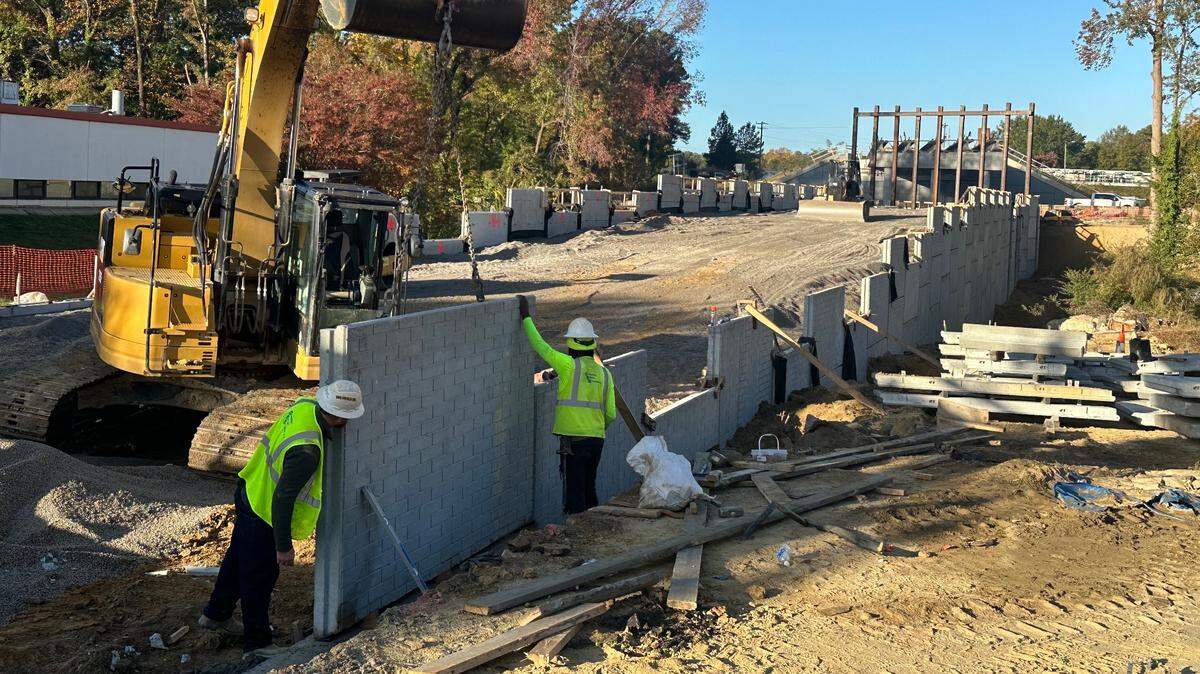
Since the early 1960s, Ligon Street has passed under the Raleigh Beltline through a tunnel so low and narrow that cars — and only cars — could pass through in one direction at a time.
Now, as part of the years-long effort to widen Interstate 440 to six lanes, the tunnel is being replaced with a two-lane bridge with sidewalks on both sides. The bridge will make Ligon Street a viable option for crossing the Beltline between Blue Ridge and Method roads, avoiding busier Western Boulevard and Hillsborough Street.
Raising Ligon Street from the level of a tunnel to a height where it can clear the highway is no small feat. Contractors for the N.C. Department of Transportation are bringing in about 23,000 tons of pea-size gravel, or about 1,150 truckloads, and building walls up to 45 feet high to support the new roadbed, according to Cody Winkler, NCDOT’s resident engineer.
The 652 concrete panels that make up the walls will be held in place by steel straps that extend behind them. As gravel is poured onto the straps, the tension locks in the panels, Winkler said.
“It’s cool stuff,” he said.
The bridge will improve connections between N.C. State University’s main campus and several university buildings west of the Beltline, including the JC Raulston Arboretum. One of those buildings is the university’s main warehouse, which is served by trucks that couldn’t fit under the highway, said Lisa Johnson, who oversees campus planning as university architect.
“They couldn’t go straight to campus,” Johnson said. “They had to go a roundabout way because you couldn’t bring any trucks through the tunnel.”
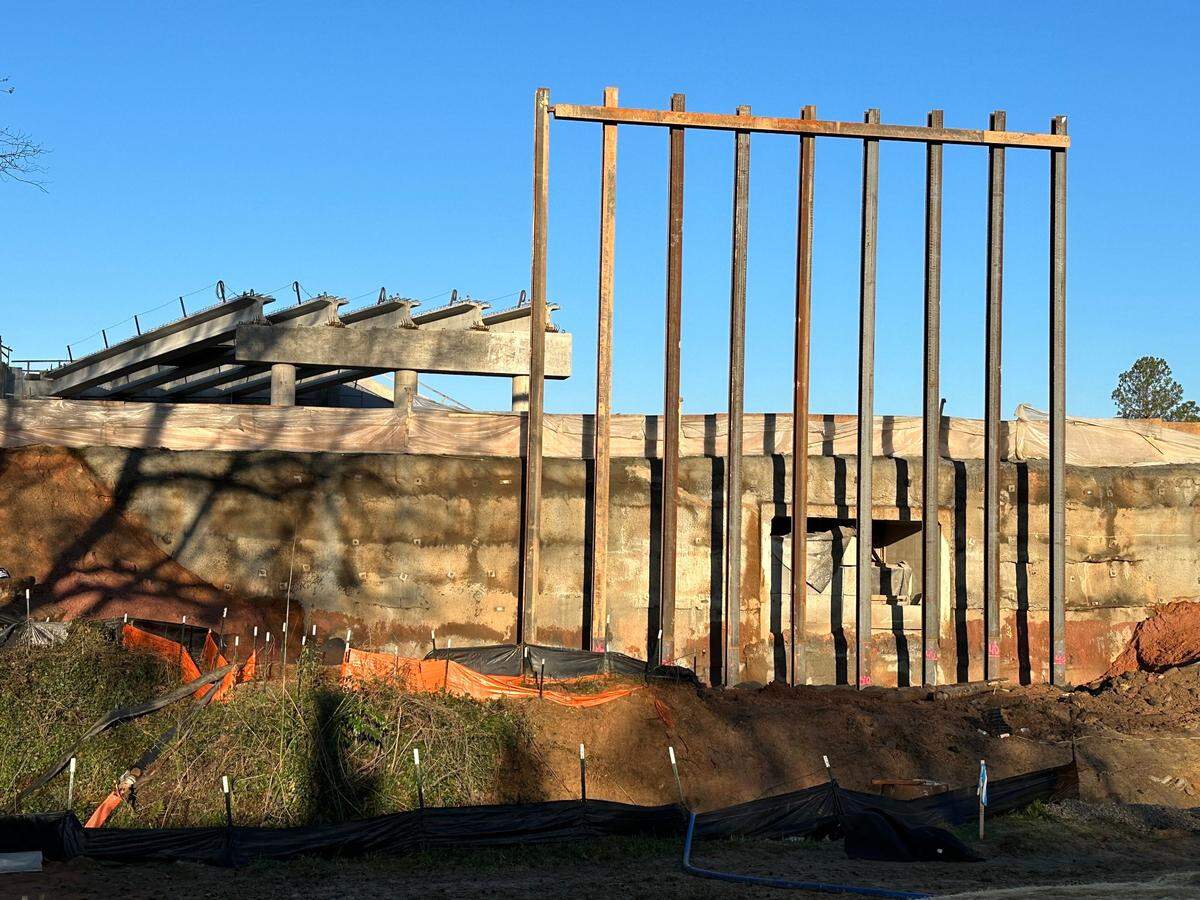
The Ligon Street tunnel was an anachronism. It was narrow, like a one-lane bridge, but with the added challenge of being a tunnel. It was as long as the Beltline was wide but was straight; most drivers came almost to a stop before entering to look for either headlights or the silhouette of a car coming the other way.
The tunnel dates to the early 1960s when the highway was built as a bypass around the city. The passage connected the Method neighborhood on the east side with the community’s Oak Grove Cemetery on the west.
NCSU also had fields and orchards west of the highway, land that eventually became research labs, greenhouses and the arboretum. A two-way lighted bridge with room for cyclists and pedestrians will serve not only those facilities but will also provide another way to get between the main campus and the athletic facilities and College of Veterinary Medicine off Blue Ridge Road, Johnson said.
“We’re anticipating that will be a good connection for faculty, staff and students,” she said.
Bridge girders hit by truck must be replaced
The Ligon Street bridge and the approaches on either side will cost about $3.54 million and should be completed by late next summer, Winkler said.
One complication is that girders for the first span across the Beltline, from the west, will have to be replaced. Four of the five girders were hit by the raised bed of a dump truck that a driver forgot to lower before driving under them early one morning last March.
Replacing the 88-foot reinforced concrete girders will cost roughly $105,000. Winkler said the contractor will have to cover the replacement cost, not NCDOT.
As for the old tunnel, it was closed in April 2022 and filled with concrete before the entrances at either end were buried under gravel. That reduces the chance that the tunnel might someday cave in deep under the highway.
This story was originally published November 30, 2024 at 8:00 AM.