
Raleigh rolls out e-bike voucher program. But will it continue?
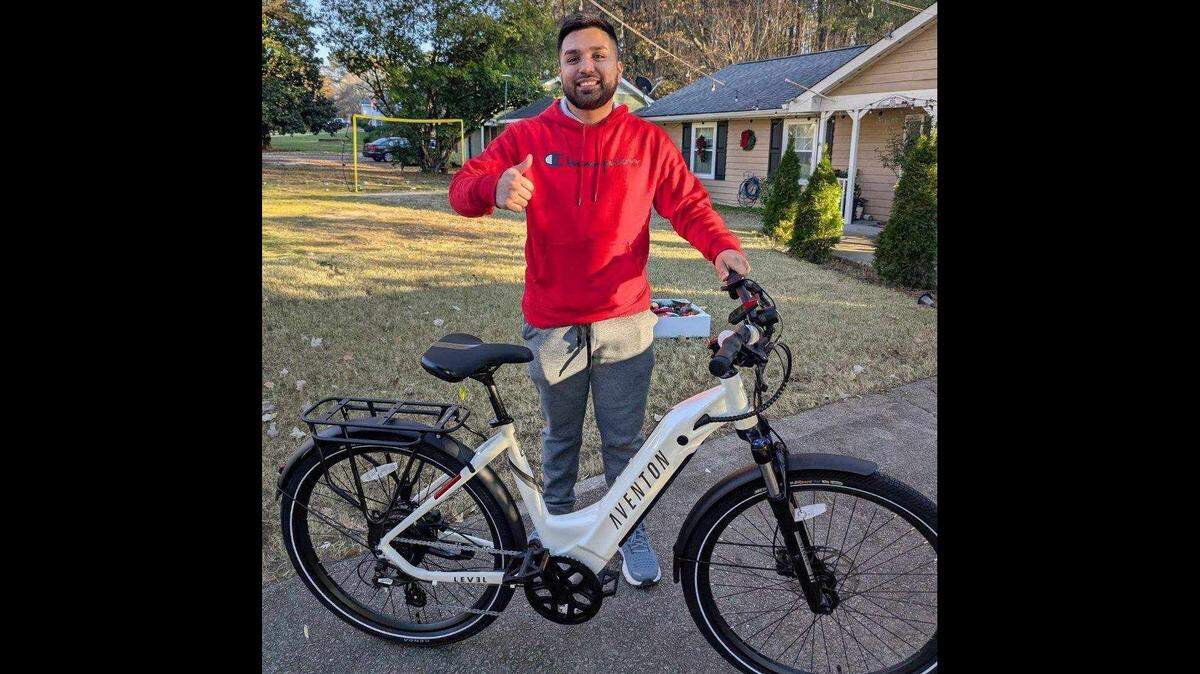
Growing up in Raleigh, Jason Peña-Hernandez always took his bike to meet friends at parks or ride on the city’s greenways.
He was familiar with standard bikes, but when he learned about the features of an electric bike, he knew he had to get one.
“I stumbled across a YouTube video about a year ago, and another cyclist was talking about how you should look into your local government website for e-bike incentives,” he said.
The timing aligned last summer when the city announced plans to launch an E-Bike Rebate Program to encourage Raleigh residents to diversify their modes of transportation and cut down on greenhouse gas emissions from cars.
This fall, the city began accepting applications for 150 vouchers. It received an overwhelming 1,418 applications.
The vouchers come in two categories: 75 vouchers worth $500 for permanent residents over 18, and 75 vouchers worth $1,500 for residents who meet an income qualification.
Peña-Hernandez, a customer service representative who lives in northeast Raleigh, received a $1,500 voucher he used to buy an Aventon Level 2 ST Polar E-Bike at The Bicycle Chain in Raleigh for a little over $1,300. The bike can travel up to 22 mph and has a comfortable seat, and he can use the money left over for things like a helmet or safety lights.
“I definitely think it’s going to save me money on gas,” Peña-Hernandez said. “I already rode it to a friend’s house and my girlfriend’s house. It was a 20-minute ride, but it was fun.”
Raleigh’s e-bike program
Electric-powered bikes have a battery and small motor to help riders pedal faster and farther and to help on hills. E-bikes sales topped $1.3 billion in 2022.
The bikes come in different styles including cargo, with a compartment for carrying things; mountain bikes, commuting bikes; and folding bikes.
The city has given out 50 vouchers so far and will distribute the remaining 100 vouchers in January, according to the city’s Transportation Department. Recipients have 60 days to redeem them.
“We are very happy with the number of people who applied for vouchers. It shows that our community is hungry for these types of programs,” said Andrea Epstein, community relations manager with the city’s Transportation Department. “We want folks to know we are listening, as we continue to invest in efforts to make our city greener,. “
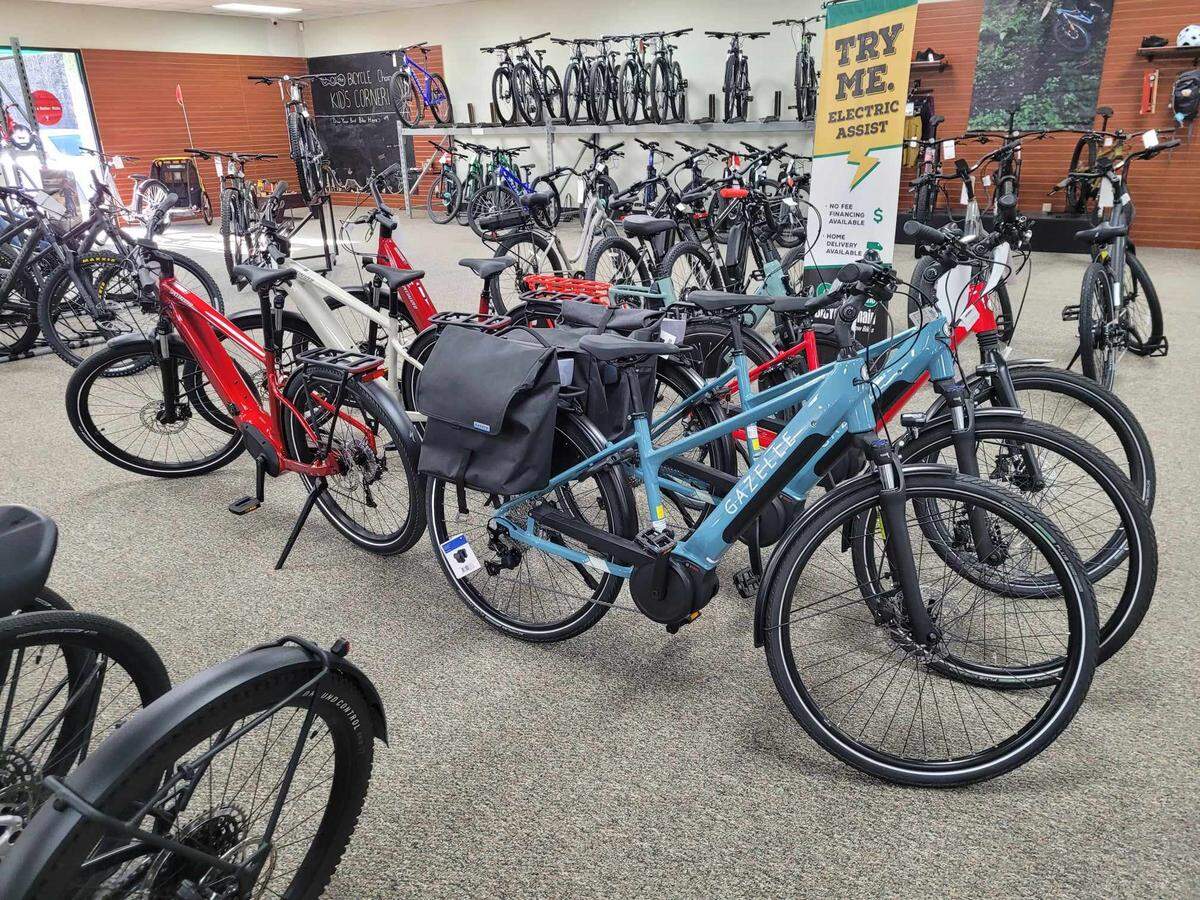
E-bikes can run anywhere from $499 to over $4,000. The price depends on the frame’s material, the gears, chains, brakes and shifters, and the quality of the motor, said Steve Trotter, a manager with The Bicycle Chain, one of seven Raleigh bike shops in the voucher program.
“The higher the quality of those components, the better, the more expensive the bike is,” Trotter said.
Many e-bikes are targeted toward older people who may not be able to ride as well as they once could, he said.
“The pedal-assist bikes that also have the throttles were a good way to get them to be 10 years old again,” Trotter said. “And that’s a phrase we hear a lot. So it’s a really fun segment of the bike industry.”
Plans for a permanent program
City Councilman Jonathan Melton said e-bikes reduce traffic and congestion, and while they cost more than regular bicycles, they are still more affordable than a car.
Melton, who heads Raleigh’s Transportation and Transit Committee, said the city will continue to make it easier for residents to get around the city safely without a car.
“So more bike lanes, continuing to build out more greenway connections, protected bike lanes, more sidewalk connections, [and] modifying our curb cuts so they’re ADA-compliant,” he said.
The city used a $150,000 federal grant for the rebate program from the Energy Efficiency and Conservation Block Grant. Melton, who owns an e-scooter, has asked city staff to identify additional funding options to continue the program.
“I would love to see this become an annual program, or maybe even twice a year, whatever we can figure out how to fund,” Melson said.
An ongoing program could mean more e-bike riders and protected bike lanes to help people like Peña-Hernandez ride to work.
“I feel like the price is the reason people don’t get e-bikes, but it’s worth it,” he said. “And with the greenway bike infrastructure, I think it’d be perfect to jump on the opportunity.”