Raleigh extends 2-hour free parking downtown. Here’s for how long.
Jamie Radar was skeptical that offering free, two-hour parking would bring enough people to downtown Raleigh to help local businesses.
“Within two days of that starting, we had people in the store telling us that was the reason, that they were downtown that day was because of the two-hour parking,” said Radar, co-owner of Munjo Munjo, an apparel and gift shop featuring local artists. “They were now making points to come out and shop and browse downtown.”
In the three months of the pilot program, Radar’s seen customers who’ve used the free parking just to visit the store and others who have stumbled in looking for things to do downtown.
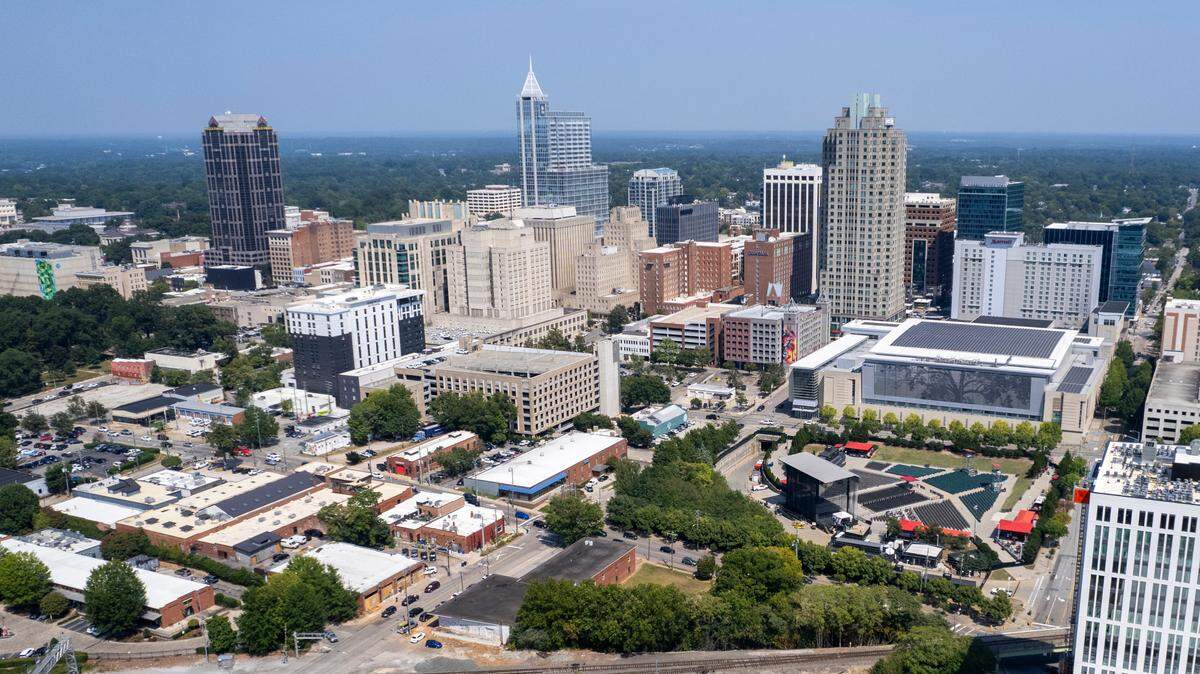
The city is testing free, two-hour parking in five city-owned parking garages from mid-November through the end of February. On Tuesday, the Raleigh City Council voted to extend the program through the end of the calendar year.
Downtown business owners and visitors like the program and want to keep it, according to a Downtown Raleigh Alliance survey.
“We’ve seen really positive feedback, and feel really strongly that it’s been a powerful tool just in its short period of time for helping downtown,” said Bill King, CEO and president of the alliance.
More cars downtown
Several of the garages saw more cars compared to the same period a year ago. Between November and January, there was an average increase of 17%. Information about February was not available.
The five parking decks in the pilot program are:
- Blount Street Deck, 314 Blount St.
- City Center Deck, 429 S. Wilmington St.
- Moore Square Deck, 233 S. Wilmington St.
- Municipal Complex Deck, 201 W. Morgan St.
- Wilmington Street Station Deck, 117 S. Wilmington St.
The Downtown Raleigh Alliance survey found 88% of respondents said the program increased the likelihood of visiting downtown, and 95% of community members and 97% of businesses supported making it permanent.
But it’s more than just potential customers and visitors, King said.
“There’s also an effect on safety when you have more people downtown,” he said. “That’s more eyes on the street. It feels better. Same for the decks.”
Some office businesses anecdotally shared that the program made it easier on clients visiting the businesses.
Joy Pariz spoke on behalf of Poyner YMCA, located on Fayetteville Street. They’ve seen thousands of additional “scans” into their gym under two-hour free parking.
When they opened in 2018 they relied on downtown office workers and residents, and it was easy to explain why they didn’t have free parking.
“We lost a significant portion of our membership when a lot of downtown companies moved to work from home,” she said during the council meeting. “We made changes in how we promoted our classes to bring people in the doors, but that involved more people driving downtown and considering Poyner destination (YMCA). As we continue to build our membership with those coming back to downtown and with the growing resident population, we still want to be able to serve those that see us as a destination, and coming downtown and the free parking helps with that.”
Lost parking revenue
But the program is costing the city money.
The city’s parking program is an enterprise fund, meaning it operates like a private business meant to pay for itself.
But downtown parking has not fully recovered since the COVID-19 pandemic and rise in working from home. The city subsidized its parking fund with $2.7 million in this year’s budget.
The city is losing about $20,000 a month from the pilot program, and making up that money could mean increasing hourly parking rates and/or extending paid parking hours.
“Obviously, with two-hour, free parking, there is some revenue lost to the parking program for the city,” King said. “So how do you pay for that? What does that look like? And I think that’s where it’s probably a much more complicated conversation than the impact of the program, which seems to be pretty strong. And we have a lot of information and data that shows it’s impactful.”
It will likely take a longer conversation with downtown visitors, businesses and residents to help figure out how to pay for it, he said.
At the meeting, council member Jonathan Lambert-Melton said the city may be looking at this idea through “too narrow of a lens.” Sales tax data, increased safety and foot traffic should all factor into the future of the program, he said.
“We’re talking about a $2.7 million deficit,” he said. “This is $240,000. We need a long-term strategy on our parking funds and decks and whether we want to be in the parking businesses. But this program itself is a drop in the bucket compared to the overall conversation we’re having.”
This story was originally published February 18, 2025 at 9:00 AM.