Raleigh recognizing LGBTQ+ history as Trump administration removes it
As the Trump administration removes references to LGBTQ+ history on some federal agency websites, the city of Raleigh is finishing a years-long endeavor to recognize local, historic LGBTQ+ places.
The 200-page report, which gives a historical overview of the LGBTQ+ community in Raleigh, identifies 20 locations significant to the gay, lesbian, bisexual and transgender community that could become local historic landmarks.
One is the Unitarian Universalist Fellowship of Raleigh, which hosted meetings by the Gay Club of Raleigh and the state’s first support group for people with AIDS. It also owned a house used by the Women’s Collective Coffeehouse, a lesbian-focused organization.
Thomas Karches, a member of the LGBTQIA+ Inclusion Team at the fellowship, attended a final community meeting about the city report Monday night.
“This is a time for us to be getting the word out about what’s going on and providing support for people who are feeling endangered,” he said. “I have a transgender daughter and many, many gay friends. These are people I love.”
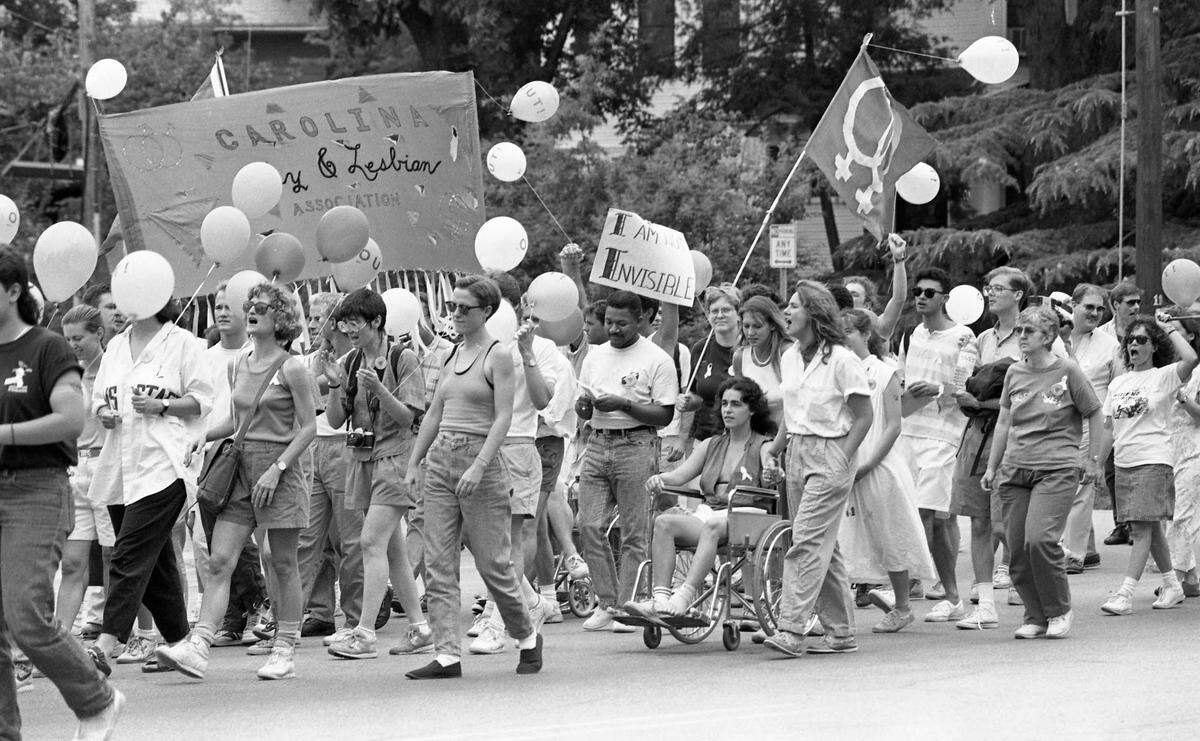
Megan Cherry, who uses they/them pronouns, is an associate professor at N.C. State University who is teaching a graduate course on queer public history this semester. It’s in high demand and important because there’s been so “little done in the past on spotlighting queer lives within American history.”
This city’s project was funded with local money in 2019, so there isn’t fear it will “be in danger of the same kinds of erasure that is happening at federally funded institutions, Cherry said.
“There’s a real outcry in the field of public history right now about how lives and stories of marginalized people are just literally being erased, often from from our national narratives,” they said.
Willie Pilkington, one of the founders of Gay Club of Raleigh, contributed to the city’s report.
“There has never really been a focus on who we are,” he said. “It gets destroyed in this Triangle thing. It’s destroyed in this North Carolina vein. This is us, and we really need to hear this, read this, know about this, and be able to talk with a sense of pride; that we have existed, do exist, and we have had people work their rear ends off, getting us to where we are today.”
The federal government’s actions, like the National Park Service’s recent removal of some references to Durham-raised human rights activist Pauli Murray from its website, doesn’t mean LGBTQ+ people will go away, Pilkington said.
“It doesn’t change who we are,” he said. “It doesn’t change our recognition. It doesn’t change our status as people. It doesn’t change what the truth is. That’s why that report is more important than anything that has happened thus far.”
The report will be shared with the Raleigh City Council on April 15.
The 20 LGBTQIA+ sites
These sites were selected as potential local landmarks based on location, connection to the LGBTQ+ community and if the physical building still stands. Letters were sent to the property owners to see if they’d be interested in their sites becoming local landmarks.
- The Androgyny Center, 220 N. Boylan Ave.: LGBTQIA+ mental health services
- Cameron Court Apartments, “Queens Court,” 804 W. Hargett St.: LGBTQIA+ residences
- Capital Corral & Glitter Gulch, 313 W. Hargett St.: gay bars
- Community United Church of Christ, 814 Dixie Trail: affirming congregation and meeting space
- Flex/Fallout Shelter, 2 S. West St.: bar for LGBTQIA+ people including drag queens
- Gay & Lesbian Helpline of Wake County, 608 W. Johnson St.: emergency mental health services to LGBTQ+ people
- Hustead House, 3104 Orton Place: hospice house for people with AIDS
- J. C. Raulston Home, 318 E. Davie St.: home of N.C. State professor and LGBTQ+ ally
- Legends, 330 W. Hargett St.: long-running LGBTQ+ bar in Raleigh’s Warehouse District
- LGBTQ Pride Center, 2610 Cates Ave.: formerly the N.C. State GLBT Center
- The Mousetrap, 1622 Glenwood Ave.: location of several LGBTQIA+ bars
- Nash Square Park, 200 S. McDowell St: site of Raleigh Police Department sting operation to arrest gay men
- Power Company, 3141 North Blvd.: bar for women and African Americans
- Pullen Memorial Baptist Church, 1801 Hillsborough St.: funerals for people who died of AIDS and gathering place
- Rialto Theater, 1620 Glenwood Ave.: home of “The Rocky Horror Picture Show” screenings
- Sir Walter Raleigh Hotel, 400 Fayetteville St.: catered to out-of-towners for discrete meet-ups
- Triangle Gay Alliance, 41 Kinsley Ave.: a communal house
- Unitarian Universalist Fellowship of Raleigh, 3313 Wade Ave: an ally for the LGBTQIA+ community
Unitarian Universalist Women’s Coffeehouse, 119 Hawthorne Road: a social gathering spot
White Rabbit Books & Things / The Front Page Newspaper, 309 W Martin St: a gay bookstore
Find the full study on the city’s website at raleighnc.gov/projects.
Reporter Kristen Johnson contributed to this article..
In the Spotlight designates ongoing topics of high interest that are driven by The News & Observer’s focus on accountability reporting.
This story was originally published March 25, 2025 at 8:24 AM.